
Life of Edwin Forrest, the American Tragedian. Volume 2 (of 2)
William Rounseville Alger & Horatio, Jr. Alger
THE CLASSIC COLLECTION · 1888
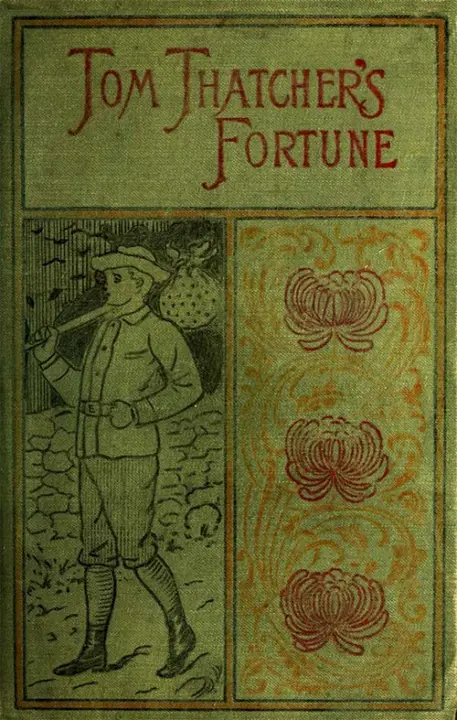
"Tom Thatcher's Fortune" by Horatio Alger, Jr. is a novel written in the late 19th century. This coming-of-age tale revolves around Tom Thatcher, a sixteen-year-old boy who works in a shoe factory to support his family after his father's mysterious death during a gold rush in California. The story explores themes of social class, ambition, and resilience as Tom navigates his challenges and seeks a better life for himself and his family. The opening of the novel introduces us to Tom Thatcher, a hardworking boy who has just come home from a long day at the shoe factory, where he earns a meager wage. He shares dinner with his mother and little sister Tillie, conveying the family's struggles after losing their father. Through a conversation about his father's last letter and his missed fortune, we learn about Tom's determination to uncover the truth about his father's disappearance. The narrative sets the stage for Tom's journey filled with rivalry, self-discovery, and a yearning for a brighter future, while hinting at the contrast between his humble life and that of the wealthy characters in his world.
Introduction adapted from the source catalogue; source summaries may be automatically generated.
Free to read · English · 75,554 words · No account needed
MAKE TIME FOR A GOOD BOOK
On by default. Untick to stop anonymous reading totals. Each page counts after 10 seconds in view. How this works.
Anonymous counting is on unless you have switched it off.
This was what Tom saw on looking behind him:
A very tall man, bestriding a raw-boned horse, who looked as if, like Dr. Tanner, he had just emerged from a forty days’ fast.
The man was very nearly as thin as the horse, with a long face, set off, but scarcely adorned, by a rough, red beard. He was attired in a suit of rusty black, and looked not unlike a wandering missionary.
“He’s tryin’ to catch up with us, Tom,” said Mr. Brush. “Suppose we halt and give him a better show.”
Tom had no objections. In their lonely journey it was rather agreeable to meet a new acquaintance, however unprepossessing he might appear.
“Good morning, fellow pilgrims,” said the new-comer, as he came up abreast of our two friends.
“Good mornin’ yourself,” said Brush. “What’s the news?”
“Just what I would like to know,” said the other. “I haven’t heard a word from civilization for weeks. Whom have I the honor of addressing?”
“My name is Peter Brush, at your service. This boy is my friend, Tom Thatcher. We are on our way to Californy, and we may get there if we don’t run a-foul of any murderous Indians. I ain’t quite ready to part with my scalp yet, so I hope they’ll keep away.”
“It’s very painful, being scalped,” said the new arrival, meditatively.
“I reckon so.”
“I know it. For I had that little operation performed on me.”
Peter Brush drew in his horse, and stared at the stranger in profound
surprise.
“What was that you were sayin’?” he ejaculated.
“I’ve been scalped myself, and I know how it seems.”
“Stranger----”
“Lycurgus B. Spooner, M.D. That is my name and title.”
“Then Mr. Spooner--or, Dr. Spooner--won’t you oblige me by removin’
your hat?”
Dr. Spooner did so, and displayed a thick mass of red hair.
“I don’t see any signs of scalpin’,” said Mr. Brush, puzzled.
The doctor removed his wig, and displayed the marks of the unpleasant surgical operation to which he had been subjected by the Indians.
“How was it you didn’t die?” asked Tom.
“The confounded redskins thought I was dead, and left me lying on the prairie. But I wasn’t so far gone as they supposed. After awhile I came to, and a party of travelers coming up, took care of me. I recovered after a time, and tried to make up for my loss by a wig.”
“How long ago was that?”
“Four years.”
“And how do you get along without a scalp?” asked Peter Brush,
curiously.
Your reading position is saved on this browser. Take it to another device with a library code. Reading pages adapt to text, rather than matching a printed edition.
William Rounseville Alger & Horatio, Jr. Alger

William Rounseville Alger & Horatio, Jr. Alger

Horatio, Jr. Alger

Horatio, Jr. Alger
BEHIND THE BOOK
This eBook is for the use of anyone anywhere in the United States and most other parts of the world at no cost and with almost no restrictions whatsoever. You may copy it, give it away or re-use it under the terms of the Project Gutenberg License included with this eBook or online at www.gutenberg.org. If you are not located in the United States, you will have to check the laws of the country where you are located before using this eBook. Read the source licence.
The original source file, including credits and licence, is retained by this library. Request an original-format copy at no charge. Please include the book title and Project Gutenberg identifier #56896.
KEEP YOUR CURIOSITY GOING
Cécile Tormay

Moritz Busch
Coulson Kernahan
John L. Ransom

Maurice Baring
Frances Wright