
Life of Edwin Forrest, the American Tragedian. Volume 2 (of 2)
William Rounseville Alger & Horatio, Jr. Alger
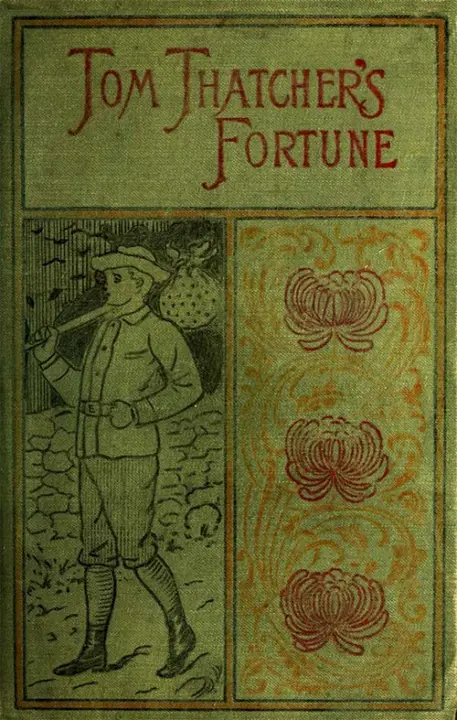
THE CLASSIC COLLECTION · 1888
"Tom Thatcher's Fortune" by Horatio Alger, Jr. is a novel written in the late 19th century. This coming-of-age tale revolves around Tom Thatcher, a sixteen-year-old boy who works in a shoe factory to support his family after his father's mysterious death during a gold rush in California. The story explores themes of social class, ambition, and resilience as Tom navigates his challenges and seeks a better life for himself and his family. The opening of the novel introduces us to Tom Thatcher, a hardworking boy who has just come home from a long day at the shoe factory, where he earns a meager wage. He shares dinner with his mother and little sister Tillie, conveying the family's struggles after losing their father. Through a conversation about his father's last letter and his missed fortune, we learn about Tom's determination to uncover the truth about his father's disappearance. The narrative sets the stage for Tom's journey filled with rivalry, self-discovery, and a yearning for a brighter future, while hinting at the contrast between his humble life and that of the wealthy characters in his world.
Introduction adapted from the source catalogue; source summaries may be automatically generated.
Free to read · English · 75,554 words · No account needed
MAKE TIME FOR A GOOD BOOK
On by default. Untick to stop anonymous reading totals. Each page counts after 10 seconds in view. How this works.
Anonymous counting is on unless you have switched it off.
Several persons were standing near Tom, but no one who looked like his nocturnal acquaintance of Wilton.
“I suppose I am ahead of time,” thought our hero.
Just then a well-dressed gentleman, swinging a light bamboo cane, approached and tapped Tom lightly on the arm.
“I see you are on hand my young friend,” said the new-comer.
Tom glanced quickly at the man who had spoken to him.
He saw a gentleman, handsomely dressed, with a heavy gold chain depending from his waistcoat, and having every appearance of a man not only well-to-do, but rich.
“Haven’t you made a mistake, sir?” he asked, in a puzzled manner.
“No, I think not. You are Thomas Thatcher, from Wilton, are you not?”
“Yes, sir.”
“And you don’t remember me?”
“Surely, you are not----”
“Darius Darke, at your service. So you didn’t know me?”
“No, sir; you don’t look much like the man I saw in Wilton the night of
the fire.”
“Speak low,” said the other. “I don’t care, for reasons of my own, to be identified as that man. We must continue our conversation in a place more retired. Come up to my room;” and he turned to enter the hotel.
“Do you live here?” asked Tom, amazed, for to live in the Astor House, as he understood, required a long purse.
“Yes; follow me.”
He led the way up-stairs, and introduced Tom into a pleasant room on
the third floor.
“Now, sit down, Thomas, and make yourself at home. Confess, you are surprised at my transformation?”
“I certainly am, sir.”
“Did you expect to see the same disreputable-looking tramp who appeared to you on that eventful evening?”
“Well, not exactly, sir, for your sending me the ten-dollar bill--for which I thank you--showed that you must have improved in your circumstances.”
“But you were not prepared for quite so great a change?” said Darius Darke, as he drew out a handsome gold watch and noted the time.
“No, sir; but then, of course, I knew very little about you.”
“You thought I was burned with the old barn, eh?”
“Yes.”
“How did John Simpson account to his neighbors for the fire?”
“He said he had let you sleep in the barn, and neglected to caution you about smoking. He thought you had set the building on fire in that way.”
Darius Darke laughed grimly.
“John Simpson is a crafty man,” he said, “but he overreached himself this time, or perhaps I should say that I overreached him. My young friend, I may say to you that I have not smoked for years--certainly, I did not smoke on that eventful night.”
Your reading position is saved on this browser. Take it to another device with a library code. Reading pages adapt to text, rather than matching a printed edition.
William Rounseville Alger & Horatio, Jr. Alger

William Rounseville Alger & Horatio, Jr. Alger

Horatio, Jr. Alger

Horatio, Jr. Alger
BEHIND THE BOOK
This eBook is for the use of anyone anywhere in the United States and most other parts of the world at no cost and with almost no restrictions whatsoever. You may copy it, give it away or re-use it under the terms of the Project Gutenberg License included with this eBook or online at www.gutenberg.org. If you are not located in the United States, you will have to check the laws of the country where you are located before using this eBook. Read the source licence.
The original source file, including credits and licence, is retained by this library. Request an original-format copy at no charge. Please include the book title and Project Gutenberg identifier #56896.
KEEP YOUR CURIOSITY GOING
Cécile Tormay

Moritz Busch
Coulson Kernahan
John L. Ransom

Maurice Baring
Frances Wright