
Life of Edwin Forrest, the American Tragedian. Volume 2 (of 2)
William Rounseville Alger & Horatio, Jr. Alger
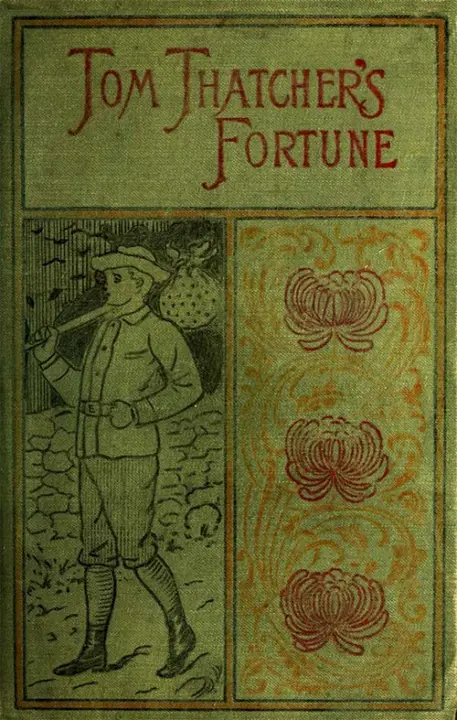
THE CLASSIC COLLECTION · 1888
"Tom Thatcher's Fortune" by Horatio Alger, Jr. is a novel written in the late 19th century. This coming-of-age tale revolves around Tom Thatcher, a sixteen-year-old boy who works in a shoe factory to support his family after his father's mysterious death during a gold rush in California. The story explores themes of social class, ambition, and resilience as Tom navigates his challenges and seeks a better life for himself and his family. The opening of the novel introduces us to Tom Thatcher, a hardworking boy who has just come home from a long day at the shoe factory, where he earns a meager wage. He shares dinner with his mother and little sister Tillie, conveying the family's struggles after losing their father. Through a conversation about his father's last letter and his missed fortune, we learn about Tom's determination to uncover the truth about his father's disappearance. The narrative sets the stage for Tom's journey filled with rivalry, self-discovery, and a yearning for a brighter future, while hinting at the contrast between his humble life and that of the wealthy characters in his world.
Introduction adapted from the source catalogue; source summaries may be automatically generated.
Free to read · English · 75,554 words · No account needed
MAKE TIME FOR A GOOD BOOK
On by default. Untick to stop anonymous reading totals. Each page counts after 10 seconds in view. How this works.
Anonymous counting is on unless you have switched it off.
In ten minutes Tom found himself sitting at the hospitable board of his two friends. It was literally a board. A broad plank, or rather two side by side, were stretched across the tops of two barrels, and upon this humble table Peter Brush spread a plain but substantial supper.
Cold meat, bread and butter and tea--that was all it consisted of, but of these there was plenty, and Tom made a fierce onslaught upon them.
“I’m sorry we haven’t any pudding or pie, Tom,” said Mr. Brush. “I know somethin’ about cookin’, but I ain’t up to that.”
“Brush made a pie once,” said the doctor, shuddering. “It looked pretty well, but I tasted it, and the taste is still in my mouth. He tried to eat it himself, but couldn’t. A pig came along, and we gave it to him. I never saw that pig again. I suspect he died of the colic.”
Peter Brush laughed good-naturedly at this story, and only retorted:
“How much better would you have succeeded, doctor?”
“Worse, if possible. Don’t suppose I’m running down your culinary skill, friend Brush. I freely admit that it exceeds mine.”
“I never tasted anything so good in my life,” said Tom, with a large
sense of enjoyment.
“Hunger is a good sauce, my lad. To-morrow you may be more critical.”
Supper was over at length, and the three friends sat down before the
cabin door.
“Tom, now I come to look at you,” said Brush, “you are the most complete ragamuffin I ever saw. Isn’t he, doctor?”
Tom laughed and looked rather ruefully at his dilapidated garb.
“I’ve worn this suit seven or eight months,” he said, “through woods and underbrush, sleeping in it at night when I lived with the Indians, and roughing it as I never expected to. Do you see those shoes?”
They scarcely hung about his feet, while his suit was torn, soiled and
tattered.
“If mother should see me now, she would be in despair,” he said, “and that isn’t the worst of it.”
“What is the worst of it, Tom?”
“I am not only ragged, but penniless.”
Peter Brush and the doctor exchanged a look of satisfaction. They were glad that Tom was penniless, because their help would be so much the more welcome.
“How is that, my lad?” asked Lycurgus. “The Indians didn’t take away your money, did they?”
Your reading position is saved on this browser. Take it to another device with a library code. Reading pages adapt to text, rather than matching a printed edition.
William Rounseville Alger & Horatio, Jr. Alger

William Rounseville Alger & Horatio, Jr. Alger

Horatio, Jr. Alger

Horatio, Jr. Alger
BEHIND THE BOOK
This eBook is for the use of anyone anywhere in the United States and most other parts of the world at no cost and with almost no restrictions whatsoever. You may copy it, give it away or re-use it under the terms of the Project Gutenberg License included with this eBook or online at www.gutenberg.org. If you are not located in the United States, you will have to check the laws of the country where you are located before using this eBook. Read the source licence.
The original source file, including credits and licence, is retained by this library. Request an original-format copy at no charge. Please include the book title and Project Gutenberg identifier #56896.
KEEP YOUR CURIOSITY GOING
Cécile Tormay

Moritz Busch
Coulson Kernahan
John L. Ransom

Maurice Baring
Frances Wright