
Life of Edwin Forrest, the American Tragedian. Volume 2 (of 2)
William Rounseville Alger & Horatio, Jr. Alger
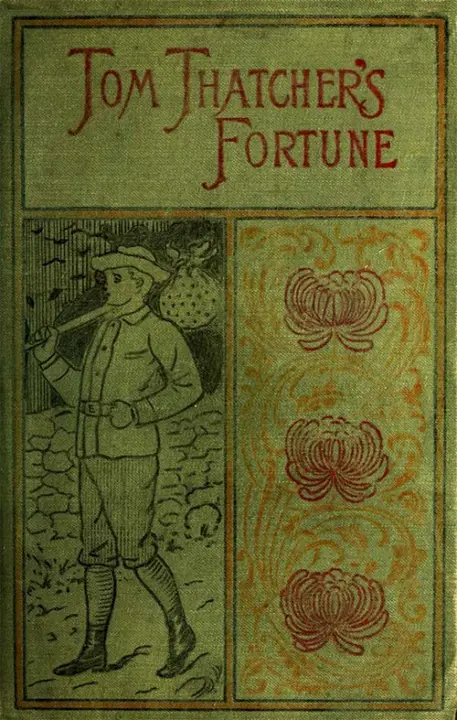
THE CLASSIC COLLECTION · 1888
"Tom Thatcher's Fortune" by Horatio Alger, Jr. is a novel written in the late 19th century. This coming-of-age tale revolves around Tom Thatcher, a sixteen-year-old boy who works in a shoe factory to support his family after his father's mysterious death during a gold rush in California. The story explores themes of social class, ambition, and resilience as Tom navigates his challenges and seeks a better life for himself and his family. The opening of the novel introduces us to Tom Thatcher, a hardworking boy who has just come home from a long day at the shoe factory, where he earns a meager wage. He shares dinner with his mother and little sister Tillie, conveying the family's struggles after losing their father. Through a conversation about his father's last letter and his missed fortune, we learn about Tom's determination to uncover the truth about his father's disappearance. The narrative sets the stage for Tom's journey filled with rivalry, self-discovery, and a yearning for a brighter future, while hinting at the contrast between his humble life and that of the wealthy characters in his world.
Introduction adapted from the source catalogue; source summaries may be automatically generated.
Free to read · English · 75,554 words · No account needed
MAKE TIME FOR A GOOD BOOK
On by default. Untick to stop anonymous reading totals. Each page counts after 10 seconds in view. How this works.
Anonymous counting is on unless you have switched it off.
Not less powerful was the effect produced upon the Indian warriors by this unexpected action of the sick boy.
They gazed upon him almost in stupefaction. Then they began to murmur expressions of wonder, not unmingled with awe. To their superstitious minds it seemed like a direct interposition of God in Tom’s favor. And who shall say that it was not so? Who shall say that the kindly and compassionate impulse which led Miantonimo to Tom’s rescue was not God’s work?
New hope sprang up in Tom’s heart as he felt the arms of the Indian boy closely encircling him. He knew that Miantonimo was the chief’s son, and likely to prove a powerful intercessor. He would have returned the embrace if he could, but his arms were pinioned, or failing that, have thanked him warmly, but he knew the Indian boy could not understand him.
“Miantonimo!” he said, softly, and his eyes were full of gratitude, which the boy chief could understand.
Miantonimo, still encircling Tom with his arms, turned his head, and in the Indian language, said:
“Save him, my father, let him be my brother.”
“The Great Spirit has spoken through my son,” said Wanuka, the chief,
gravely.
“Then shall he live?”
“He shall live. No harm shall come to him,” said the chief. “Unbind him. He shall stay with us, and be brother of Miantonimo.”
This decision seemed to please the Indian braves, who murmured in
approval.
Two of them, at a signal from Wanuka advanced, and loosened the ropes that confined the boy prisoner.
Peter Brush and Lycurgus B. Spooner looked on with joy, not unmingled
with amazement.
“It is wonderful!” ejaculated Brush.
“Wonderful, indeed, friend Brush. It seems to me like a direct interposition of the Almighty.”
“That Indian boy is a trump. I’d like to shake hands with him.”
“So would I, but it might be misunderstood. It will be best to keep quiet and let things take their course.”
No sooner was Tom unbound, than with boyish warmth of heart he threw his arms around the neck of Miantonimo and gave him a brotherly embrace.
Wanuka and the Indian warriors looked on with approval, for was not Tom to remain with them and become the brother of their future chief. Their satisfaction was increased by the improved looks of Miantonimo. He no longer looked sick, but his manner was sprightly and his eyes sparkled. It was difficult to believe that he was the same boy who for days reclined, weak and spiritless, by the log-fire, wrapped in blankets.
“The Great Spirit has cured him!” went from mouth to mouth.
Your reading position is saved on this browser. Take it to another device with a library code. Reading pages adapt to text, rather than matching a printed edition.
William Rounseville Alger & Horatio, Jr. Alger

William Rounseville Alger & Horatio, Jr. Alger

Horatio, Jr. Alger

Horatio, Jr. Alger
BEHIND THE BOOK
This eBook is for the use of anyone anywhere in the United States and most other parts of the world at no cost and with almost no restrictions whatsoever. You may copy it, give it away or re-use it under the terms of the Project Gutenberg License included with this eBook or online at www.gutenberg.org. If you are not located in the United States, you will have to check the laws of the country where you are located before using this eBook. Read the source licence.
The original source file, including credits and licence, is retained by this library. Request an original-format copy at no charge. Please include the book title and Project Gutenberg identifier #56896.
KEEP YOUR CURIOSITY GOING
Cécile Tormay

Moritz Busch
Coulson Kernahan
John L. Ransom

Maurice Baring
Frances Wright