
Life of Edwin Forrest, the American Tragedian. Volume 2 (of 2)
William Rounseville Alger & Horatio, Jr. Alger
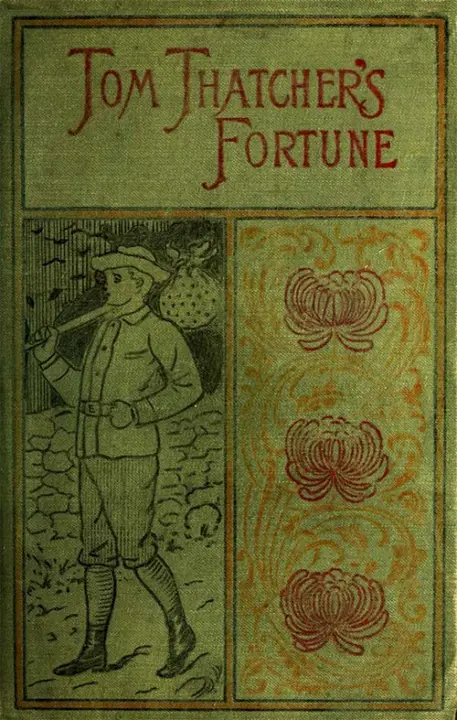
THE CLASSIC COLLECTION · 1888
"Tom Thatcher's Fortune" by Horatio Alger, Jr. is a novel written in the late 19th century. This coming-of-age tale revolves around Tom Thatcher, a sixteen-year-old boy who works in a shoe factory to support his family after his father's mysterious death during a gold rush in California. The story explores themes of social class, ambition, and resilience as Tom navigates his challenges and seeks a better life for himself and his family. The opening of the novel introduces us to Tom Thatcher, a hardworking boy who has just come home from a long day at the shoe factory, where he earns a meager wage. He shares dinner with his mother and little sister Tillie, conveying the family's struggles after losing their father. Through a conversation about his father's last letter and his missed fortune, we learn about Tom's determination to uncover the truth about his father's disappearance. The narrative sets the stage for Tom's journey filled with rivalry, self-discovery, and a yearning for a brighter future, while hinting at the contrast between his humble life and that of the wealthy characters in his world.
Introduction adapted from the source catalogue; source summaries may be automatically generated.
Free to read · English · 75,554 words · No account needed
MAKE TIME FOR A GOOD BOOK
On by default. Untick to stop anonymous reading totals. Each page counts after 10 seconds in view. How this works.
Anonymous counting is on unless you have switched it off.
The curtain falls, shutting out our view of Tom, as, day by day, he wends his slow way from the great barren plains west of the Mississippi valley toward the modern Golconda.
He had been fortunate in joining a company of emigrants, who treated him kindly, accepting his company as welcome, for he was the only boy in the party, and to more than one he brought to mind boys of their own left behind in homes far east.
He feared that Wanuka, angry at his desertion, would pursue him, and perchance attack the party to which he had joined himself. But Miantonimo prevented that. Indian boy as he was, he was a true and unselfish friend, and repressed the sadness and loneliness which he felt for the sake of the white boy whom he had learned to love as David loved Jonathan.
The curtain rises disclosing a different scene.
We see a valley hemmed in on nearly every side by high mountains. Tall pines, straight as a flag-staff, rise here and there. Bowlders, projected above the earth’s surface by some former upheaval, dating back thousands of centuries it may be, dot the slope of the hills and the shelving valley, and this is probably the reason why the place received years since, and still bears, the name of Rocky Gulch.
It is not uninhabited now, for there is a small village. Most of the houses are occupied by miners, for the treasures of the place are not exhausted.
In one of these cabins, rude enough in its construction, live two men
whom we have met before.
That tall figure, in a rather close-fitting suit, with an old sombrero crowning a head and covering a face which evidently belonged to a man of thought and culture, must surely be Dr. Lycurgus B. Spooner, physician and wanderer by profession. And that other figure, shorter, stouter, broader-shouldered, surmounted by a bronzed, honest face, can belong to none other than Peter Brush.
Together they sit in the twilight, which comes earlier in the shadow of the hills, at the door of their humble residence, smoking clay pipes at the close of their day’s labor.
For a time they are silent. Then Mr. Brush lays aside his pipe, and turning to his companion, says, slowly:
“Doctor, I don’t know why it is, but to-day I’ve been thinkin’ more than usual of poor Tom.”
“So have I, friend Brush. I don’t know why it is, but when I was at my work, his image kept rising before me.”
“How long have we been here, doctor?”
“Three months to-day, friend Brush.”
Your reading position is saved on this browser. Take it to another device with a library code. Reading pages adapt to text, rather than matching a printed edition.
William Rounseville Alger & Horatio, Jr. Alger

William Rounseville Alger & Horatio, Jr. Alger

Horatio, Jr. Alger

Horatio, Jr. Alger
BEHIND THE BOOK
This eBook is for the use of anyone anywhere in the United States and most other parts of the world at no cost and with almost no restrictions whatsoever. You may copy it, give it away or re-use it under the terms of the Project Gutenberg License included with this eBook or online at www.gutenberg.org. If you are not located in the United States, you will have to check the laws of the country where you are located before using this eBook. Read the source licence.
The original source file, including credits and licence, is retained by this library. Request an original-format copy at no charge. Please include the book title and Project Gutenberg identifier #56896.
KEEP YOUR CURIOSITY GOING
Cécile Tormay

Moritz Busch
Coulson Kernahan
John L. Ransom

Maurice Baring
Frances Wright