
Life of Edwin Forrest, the American Tragedian. Volume 2 (of 2)
William Rounseville Alger & Horatio, Jr. Alger
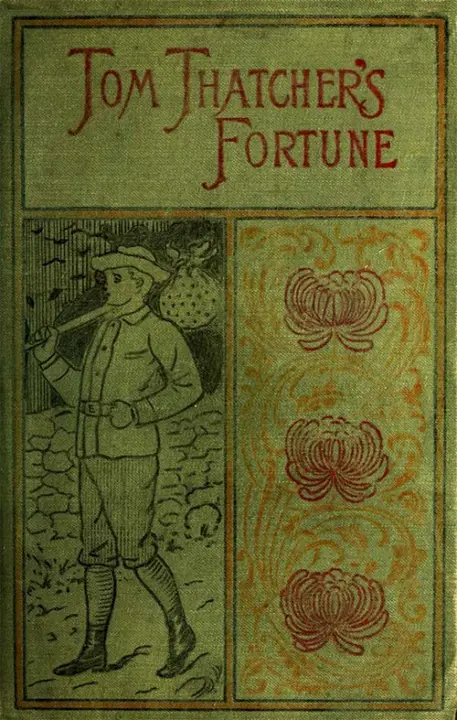
THE CLASSIC COLLECTION · 1888
"Tom Thatcher's Fortune" by Horatio Alger, Jr. is a novel written in the late 19th century. This coming-of-age tale revolves around Tom Thatcher, a sixteen-year-old boy who works in a shoe factory to support his family after his father's mysterious death during a gold rush in California. The story explores themes of social class, ambition, and resilience as Tom navigates his challenges and seeks a better life for himself and his family. The opening of the novel introduces us to Tom Thatcher, a hardworking boy who has just come home from a long day at the shoe factory, where he earns a meager wage. He shares dinner with his mother and little sister Tillie, conveying the family's struggles after losing their father. Through a conversation about his father's last letter and his missed fortune, we learn about Tom's determination to uncover the truth about his father's disappearance. The narrative sets the stage for Tom's journey filled with rivalry, self-discovery, and a yearning for a brighter future, while hinting at the contrast between his humble life and that of the wealthy characters in his world.
Introduction adapted from the source catalogue; source summaries may be automatically generated.
Free to read · English · 75,554 words · No account needed
MAKE TIME FOR A GOOD BOOK
On by default. Untick to stop anonymous reading totals. Each page counts after 10 seconds in view. How this works.
Anonymous counting is on unless you have switched it off.
As Tom plodded along beside his employer, who did not deign to utter a word, he could not help doubting whether he had done wisely in selling his independence for twelve dollars a week. Had he understood Burnett’s real character and disposition, he would not have engaged with him. As matters stood he thought it best to remain for the present in his service.
“Mr. Burnett may be annoyed about something, and that may be the reason of his being so cross,” Tom reflected. “To-morrow he may be different.”
Tom was destined soon to be undeceived, and in a manner far from
pleasant.
The wood through which they were passing was about a mile in width. When they had reached the middle point, Burnett halted.
“Stop here!” said he.
Tom looked at him in surprise. He could not conceive of any reason for stopping, unless, indeed, Mr. Burnett was tired, which was hardly probable, as they had scarcely walked a mile.
“Stop here?” he said, interrogatively.
“That is what I said.”
“Very well, sir. Shall we sit down?”
There was a fallen tree lying beside the road, or rather lane, through which they were walking, and Tom made a motion to sit down.
“Never mind about sitting down,” said Burnett, with an incomprehensible smile. “I want to transact a little business with you.”
Tom was getting more and more at a loss to comprehend his companion’s meaning, but he only said:
“Very well.”
“How much money have you?” demanded Burnett.
“What do you mean?” asked Tom, with quick suspicion.
“You seem very stupid. Whatever money you have with you you may give to
me. Do you hear?”
“I prefer to keep it myself,” said Tom, firmly.
“And I consider it safer in my hands. Hand it over.”
“I do not choose to, Mr. Burnett,” said Tom, resolutely.
“Do you dare refuse?” demanded Burnett, angrily. “Am I not your master?”
“No, sir; I have no master.”
“I pay you wages. I am your employer. That is the same thing.”
“It seems to me you want me to pay you wages,” said Tom, shrewdly.
“Don’t bandy words with me, boy; I won’t allow it. Give me your money, and that quickly!”
Burnett’s purpose was now plain to Tom. The man wanted to rob him. For that purpose he had inveigled him into this lonely place, where there was little chance of his obtaining assistance. He must depend upon himself, but the chances of success were not flattering.
Your reading position is saved on this browser. Take it to another device with a library code. Reading pages adapt to text, rather than matching a printed edition.
William Rounseville Alger & Horatio, Jr. Alger

William Rounseville Alger & Horatio, Jr. Alger

Horatio, Jr. Alger

Horatio, Jr. Alger
BEHIND THE BOOK
This eBook is for the use of anyone anywhere in the United States and most other parts of the world at no cost and with almost no restrictions whatsoever. You may copy it, give it away or re-use it under the terms of the Project Gutenberg License included with this eBook or online at www.gutenberg.org. If you are not located in the United States, you will have to check the laws of the country where you are located before using this eBook. Read the source licence.
The original source file, including credits and licence, is retained by this library. Request an original-format copy at no charge. Please include the book title and Project Gutenberg identifier #56896.
KEEP YOUR CURIOSITY GOING
Cécile Tormay

Moritz Busch
Coulson Kernahan
John L. Ransom

Maurice Baring
Frances Wright