
Life of Edwin Forrest, the American Tragedian. Volume 2 (of 2)
William Rounseville Alger & Horatio, Jr. Alger
THE CLASSIC COLLECTION · 1888
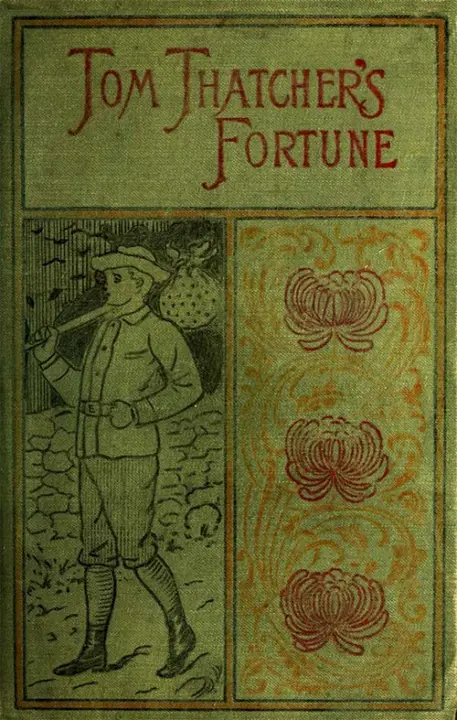
"Tom Thatcher's Fortune" by Horatio Alger, Jr. is a novel written in the late 19th century. This coming-of-age tale revolves around Tom Thatcher, a sixteen-year-old boy who works in a shoe factory to support his family after his father's mysterious death during a gold rush in California. The story explores themes of social class, ambition, and resilience as Tom navigates his challenges and seeks a better life for himself and his family. The opening of the novel introduces us to Tom Thatcher, a hardworking boy who has just come home from a long day at the shoe factory, where he earns a meager wage. He shares dinner with his mother and little sister Tillie, conveying the family's struggles after losing their father. Through a conversation about his father's last letter and his missed fortune, we learn about Tom's determination to uncover the truth about his father's disappearance. The narrative sets the stage for Tom's journey filled with rivalry, self-discovery, and a yearning for a brighter future, while hinting at the contrast between his humble life and that of the wealthy characters in his world.
Introduction adapted from the source catalogue; source summaries may be automatically generated.
Free to read · English · 75,554 words · No account needed
MAKE TIME FOR A GOOD BOOK
On by default. Untick to stop anonymous reading totals. Each page counts after 10 seconds in view. How this works.
Anonymous counting is on unless you have switched it off.
Twenty-four hours later the party left the prairie, and came to a
region more uneven and wooded.
“It seems pleasant,” said Tom, “to get away from the prairie.”
“It may be pleasanter,” said the doctor, “but it is not so safe.”
“Why not?” asked Tom.
“Your friend Brush will tell you as I do, that we are more liable to encounter Indians. They naturally seek the woods and hills.”
“Yet the two travelers whom we buried were on the prairie.”
“That is true; of course, the savages roam over the prairies at times, but even there they may be seen long beforehand. Here one may come upon them suddenly.”
“What the doctor says is gospel truth,” said Peter Brush, gravely. “I feel more anxious in my mind than I did yesterday. But it isn’t best to worry overmuch. I’ve been over the plains--at least as far as Utah--half a dozen times, and I’ve never been in the clutches of the redskins yet.”
“I hope I shall be as lucky, Mr. Brush,” said Tom.
“I hope so, too. To my mind they are a set of poisonous reptiles that ought to be exterminated. I don’t know what they were made for, anyway.”
“Your views are extreme, friend Brush,” said Lycurgus Spooner. “I have no great liking for the redmen myself, but it is certain that the fault is not wholly on their side. They have been badly treated by our race.”
“No more than they deserved,” said Mr. Brush, stubbornly, for he was strongly prejudiced. “I’d like to argy the point.”
“No occasion for that. We will each hold to our own opinions, and I hope we may have no cause to think more ill of them.”
Tom and his friend Brush found Mr. Spooner an entertaining companion. He was an educated man, had read a great deal, and seen a good deal of the world, having pursued his professional studies in part at Paris and Vienna. It must be confessed that he looked like a tramp, but one who judged him by his outward appearance would make a great mistake.
It was toward the close of the afternoon. They had just forded a narrow stream, and safely landed on the other side, were about to resume their journey, when, in a little inlet half-hidden by the trees, they saw an object which startled them.
It was an Indian canoe.
“Do you see that, Tom?” said Brush, quickly.
“Yes; it is a canoe, isn’t it?”
“Yes, and it means that the Indians are not far away. Am I right, Dr.
Spooner?”
“Probably you are, friend Brush.”
“What shall we do?” asked Tom.
Your reading position is saved on this browser. Take it to another device with a library code. Reading pages adapt to text, rather than matching a printed edition.
William Rounseville Alger & Horatio, Jr. Alger

William Rounseville Alger & Horatio, Jr. Alger

Horatio, Jr. Alger

Horatio, Jr. Alger
BEHIND THE BOOK
This eBook is for the use of anyone anywhere in the United States and most other parts of the world at no cost and with almost no restrictions whatsoever. You may copy it, give it away or re-use it under the terms of the Project Gutenberg License included with this eBook or online at www.gutenberg.org. If you are not located in the United States, you will have to check the laws of the country where you are located before using this eBook. Read the source licence.
The original source file, including credits and licence, is retained by this library. Request an original-format copy at no charge. Please include the book title and Project Gutenberg identifier #56896.
KEEP YOUR CURIOSITY GOING
Cécile Tormay

Moritz Busch
Coulson Kernahan
John L. Ransom

Maurice Baring
Frances Wright