
Life of Edwin Forrest, the American Tragedian. Volume 2 (of 2)
William Rounseville Alger & Horatio, Jr. Alger
THE CLASSIC COLLECTION · 1888
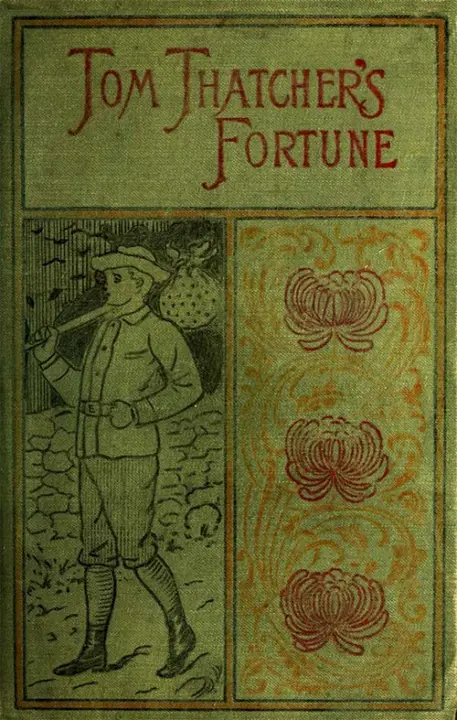
"Tom Thatcher's Fortune" by Horatio Alger, Jr. is a novel written in the late 19th century. This coming-of-age tale revolves around Tom Thatcher, a sixteen-year-old boy who works in a shoe factory to support his family after his father's mysterious death during a gold rush in California. The story explores themes of social class, ambition, and resilience as Tom navigates his challenges and seeks a better life for himself and his family. The opening of the novel introduces us to Tom Thatcher, a hardworking boy who has just come home from a long day at the shoe factory, where he earns a meager wage. He shares dinner with his mother and little sister Tillie, conveying the family's struggles after losing their father. Through a conversation about his father's last letter and his missed fortune, we learn about Tom's determination to uncover the truth about his father's disappearance. The narrative sets the stage for Tom's journey filled with rivalry, self-discovery, and a yearning for a brighter future, while hinting at the contrast between his humble life and that of the wealthy characters in his world.
Introduction adapted from the source catalogue; source summaries may be automatically generated.
Free to read · English · 75,554 words · No account needed
MAKE TIME FOR A GOOD BOOK
On by default. Untick to stop anonymous reading totals. Each page counts after 10 seconds in view. How this works.
Anonymous counting is on unless you have switched it off.
“That’s so, Tom. There don’t seem to be any post-offices near by,
that’s a fact.”
“I am afraid mother will worry about me, when she has to go so long without getting a letter. She’ll think I’m either sick or dead.”
“I don’t b’lieve she will. She will trust to Providence, that is, if she’s a religious woman, and goes to church, as most mothers do.”
“My mother is the best woman in the world!” said Tom, warmly.
“I don’t doubt it--not a mite. She’s got a pretty good son, and when you see a good son you’ll generally find he has a good mother.”
“I am glad you have so good an opinion of me, Mr. Brush, but I’m afraid I don’t deserve it.”
“Suppose we argy that point.”
“Never mind,” said Tom, smiling, “I’m perfectly willing you should think so. How soon do you think I can write a letter home?”
“There’s a place about a hundred miles further on. We’ll get there within a week. When you get there, you can write a long letter.”
“I will; I will try to make up for lost time. I shall have a great deal
to write.”
“So you will, Tom.”
“Sha’n’t you write, too, Mr. Brush?”
“I haven’t got anybody to write to,” answered Peter Brush.
“There’s your boy.”
“I never writ a letter to him in my life. Fact is, Tom, I ain’t much on writin’; I can handle a rifle a good deal better than a pen. My boy doesn’t expect a letter from me.”
“It seems to me if my father were away traveling, I should want to hear
from him.”
“I reckon you would, but there’s a difference in families. Ours isn’t a writin’ family.”
“When did you see your boy last?”
“Only a few weeks ago.”
“And when do you expect to see him again?”
“In a year, likely, if things come round right. He’s all right, and got good care taken of him, so there’s no use worryin’. Your mother’s well fixed, too, isn’t she?”
“Yes, I suppose she’s very comfortable. She is keeping house for a rich farmer, and wants for nothing.”
“Then, don’t you go to borrering trouble.”
Just then the two friends heard a steady tramp behind, as if another horseman were on their track.
Peter Brush looked round, and his curiosity seemed to be excited.
“Tom,” said he, “look round. There’s a queer-lookin’ critter on our
track.”
Your reading position is saved on this browser. Take it to another device with a library code. Reading pages adapt to text, rather than matching a printed edition.
William Rounseville Alger & Horatio, Jr. Alger

William Rounseville Alger & Horatio, Jr. Alger

Horatio, Jr. Alger

Horatio, Jr. Alger
BEHIND THE BOOK
This eBook is for the use of anyone anywhere in the United States and most other parts of the world at no cost and with almost no restrictions whatsoever. You may copy it, give it away or re-use it under the terms of the Project Gutenberg License included with this eBook or online at www.gutenberg.org. If you are not located in the United States, you will have to check the laws of the country where you are located before using this eBook. Read the source licence.
The original source file, including credits and licence, is retained by this library. Request an original-format copy at no charge. Please include the book title and Project Gutenberg identifier #56896.
KEEP YOUR CURIOSITY GOING
Cécile Tormay

Moritz Busch
Coulson Kernahan
John L. Ransom

Maurice Baring
Frances Wright