
Life of Edwin Forrest, the American Tragedian. Volume 2 (of 2)
William Rounseville Alger & Horatio, Jr. Alger
THE CLASSIC COLLECTION · 1888
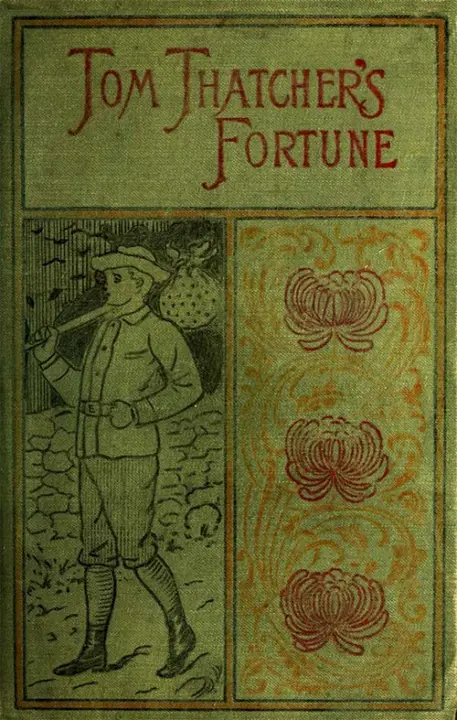
"Tom Thatcher's Fortune" by Horatio Alger, Jr. is a novel written in the late 19th century. This coming-of-age tale revolves around Tom Thatcher, a sixteen-year-old boy who works in a shoe factory to support his family after his father's mysterious death during a gold rush in California. The story explores themes of social class, ambition, and resilience as Tom navigates his challenges and seeks a better life for himself and his family. The opening of the novel introduces us to Tom Thatcher, a hardworking boy who has just come home from a long day at the shoe factory, where he earns a meager wage. He shares dinner with his mother and little sister Tillie, conveying the family's struggles after losing their father. Through a conversation about his father's last letter and his missed fortune, we learn about Tom's determination to uncover the truth about his father's disappearance. The narrative sets the stage for Tom's journey filled with rivalry, self-discovery, and a yearning for a brighter future, while hinting at the contrast between his humble life and that of the wealthy characters in his world.
Introduction adapted from the source catalogue; source summaries may be automatically generated.
Free to read · English · 75,554 words · No account needed
MAKE TIME FOR A GOOD BOOK
On by default. Untick to stop anonymous reading totals. Each page counts after 10 seconds in view. How this works.
Anonymous counting is on unless you have switched it off.
The Indians numbered not far from twenty. The dusky warriors sat in silence, wearing their usual look of gravity. Among all races there is probably not one less social than the American Indian. A garrulous Indian would be a curiosity.
The three travelers gazed as if fascinated upon the group of savages. In spite of the dire peril in which they stood, their curiosity was excited by one member of the dusky company.
It was a boy, about as old as Tom, apparently, who was incased in a blanket, and lay close to the fire. I say incased to indicate how closely the blanket was folded around his boyish form.
Beside him sat a tall, stalwart warrior, who gazed on the boy with a
look of evident anxiety.
The boy’s thin features, and a certain contraction of his brow, indicated that he was sick and in pain. Lycurgus Spooner and Peter Brush judged that he was the chief’s son, or, at least, the son of a man of distinction.
While taking their observations, our three pilgrims had halted their
horses. Thus far they had not attracted the attention of the Indian
braves.
What was to be done?
They did not dare to consult audibly, lest the sound of their voices should reach the quick ears of the Indians.
Peter Brush, with an inquiring glance, extended his hand in the direction of the river which they had just forded. Lycurgus Spooner, understanding the unspoken question, bowed his head affirmatively.
The three turned their horses, and were about to retrace their steps, when Tom’s horse gave a slight whinny.
Instantly the Indians raised their heads, and our travelers were discovered. Without a word the redmen sprang to their feet, and, with a wild whoop, that was well calculated to send terror to the hearts of the fugitives, started in pursuit.
When the three reached the river-bank the Indians were close behind.
“Stop!” shouted the foremost Indian, the tall warrior who had been
seated beside the boy.
It was one of the four English words which he knew.
The command might not have been obeyed, but that it was reinforced by a gun drawn to the shoulder and leveled at Lycurgus Spooner, whom he took to be the leader of the party, in virtue of his age and dignified bearing.
“The game’s up,” said Brush. “We may as well give ourselves up, and not wait till we are shot.”
“There is no hope of escape,” said Lycurgus, reigning in his horse by
the river-bank.
“We might get across,” said Tom.
“And be shot in doing it? No; it’s a bad business, but it can’t be
helped.”
Your reading position is saved on this browser. Take it to another device with a library code. Reading pages adapt to text, rather than matching a printed edition.
William Rounseville Alger & Horatio, Jr. Alger

William Rounseville Alger & Horatio, Jr. Alger

Horatio, Jr. Alger

Horatio, Jr. Alger
BEHIND THE BOOK
This eBook is for the use of anyone anywhere in the United States and most other parts of the world at no cost and with almost no restrictions whatsoever. You may copy it, give it away or re-use it under the terms of the Project Gutenberg License included with this eBook or online at www.gutenberg.org. If you are not located in the United States, you will have to check the laws of the country where you are located before using this eBook. Read the source licence.
The original source file, including credits and licence, is retained by this library. Request an original-format copy at no charge. Please include the book title and Project Gutenberg identifier #56896.
KEEP YOUR CURIOSITY GOING
Cécile Tormay

Moritz Busch
Coulson Kernahan
John L. Ransom

Maurice Baring
Frances Wright