
Life of Edwin Forrest, the American Tragedian. Volume 2 (of 2)
William Rounseville Alger & Horatio, Jr. Alger
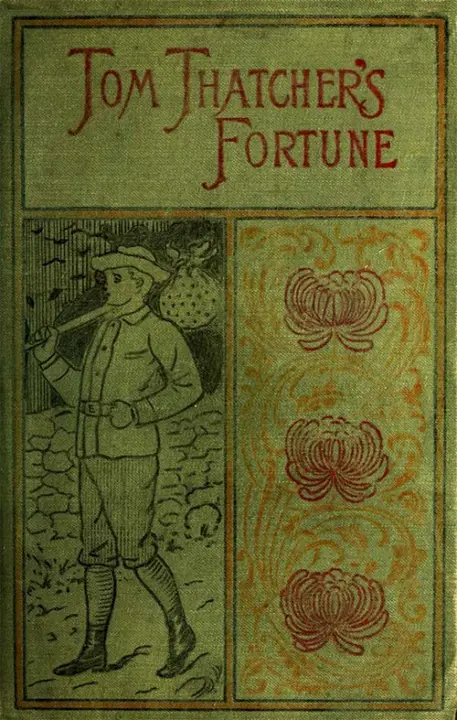
THE CLASSIC COLLECTION · 1888
"Tom Thatcher's Fortune" by Horatio Alger, Jr. is a novel written in the late 19th century. This coming-of-age tale revolves around Tom Thatcher, a sixteen-year-old boy who works in a shoe factory to support his family after his father's mysterious death during a gold rush in California. The story explores themes of social class, ambition, and resilience as Tom navigates his challenges and seeks a better life for himself and his family. The opening of the novel introduces us to Tom Thatcher, a hardworking boy who has just come home from a long day at the shoe factory, where he earns a meager wage. He shares dinner with his mother and little sister Tillie, conveying the family's struggles after losing their father. Through a conversation about his father's last letter and his missed fortune, we learn about Tom's determination to uncover the truth about his father's disappearance. The narrative sets the stage for Tom's journey filled with rivalry, self-discovery, and a yearning for a brighter future, while hinting at the contrast between his humble life and that of the wealthy characters in his world.
Introduction adapted from the source catalogue; source summaries may be automatically generated.
Free to read · English · 75,554 words · No account needed
MAKE TIME FOR A GOOD BOOK
On by default. Untick to stop anonymous reading totals. Each page counts after 10 seconds in view. How this works.
Anonymous counting is on unless you have switched it off.
“That was foolish,” he said. “All the gold dust has been gathered long ago, and there could be no advantage in going there.”
“I wanted to find out something, if I could, about my poor father’s disappearance,” said Tom, gravely.
“Then you wasted your time,” said Simpson, nervously.
“No; I learned something.”
“What was it?” asked the rich man, in a voice slightly tremulous.
“I learned that while my father was asleep, one whom he supposed to be a friend stole upon him, attacked him, and left him for dead, carrying away a large sum belonging to my poor father.”
“That is a lie!” said Simpson, his face livid with dismay, rising from
his chair.
The door opened and Tom’s father entered the room.
“It is true, John Simpson,” he said, sternly, “and you are the guilty man who stole in upon my unprotected slumbers, and sought to kill me.”
“Great heavens! Whence do you come?” demanded Simpson, hoarsely.
“I come from California, where for eight years and more I lived bereft of reason in consequence of your cruel assault.”
“You need not tell me that,” said Simpson, with a bold inspiration. “Your story is evidently the tale of a crazy man, and will not be believed. I am glad you are alive, but your attempt to levy blackmail will not succeed,” and he sat down with a smile of gratified malice.
“If such is the case and my father’s story is untrue, why did you give five hundred dollars to Darius Darke to keep your secret, about a year ago?”
This was another surprise. How could Tom know this? Certainly not from the man who had received the money, for he had been burned in the old barn.
“Who told you this cock-and-bull story?” demanded Mr. Simpson, defiantly. “It is clearly a bold invention of yours.”
Another door opened, and John Simpson stared aghast at the man whom he had supposed to have been burned alive in the conflagration.
“It is no invention, John Simpson,” said the new-comer.
“Where do you come from?” asked Simpson, with staring eyes and parched
lips.
“From Europe. You were very cunning, John Simpson, in your attempt, by destroying my life, to silence forever the tongue of one who might have appeared against you, but Providence did not suffer you to succeed. I did not sleep in the old barn; I passed the night in your stable, which I found more comfortable.”
“And set my barn on fire! That explains it,” said Simpson, desperately.
Your reading position is saved on this browser. Take it to another device with a library code. Reading pages adapt to text, rather than matching a printed edition.
William Rounseville Alger & Horatio, Jr. Alger

William Rounseville Alger & Horatio, Jr. Alger

Horatio, Jr. Alger

Horatio, Jr. Alger
BEHIND THE BOOK
This eBook is for the use of anyone anywhere in the United States and most other parts of the world at no cost and with almost no restrictions whatsoever. You may copy it, give it away or re-use it under the terms of the Project Gutenberg License included with this eBook or online at www.gutenberg.org. If you are not located in the United States, you will have to check the laws of the country where you are located before using this eBook. Read the source licence.
The original source file, including credits and licence, is retained by this library. Request an original-format copy at no charge. Please include the book title and Project Gutenberg identifier #56896.
KEEP YOUR CURIOSITY GOING
Cécile Tormay

Moritz Busch
Coulson Kernahan
John L. Ransom

Maurice Baring
Frances Wright