
Life of Edwin Forrest, the American Tragedian. Volume 2 (of 2)
William Rounseville Alger & Horatio, Jr. Alger
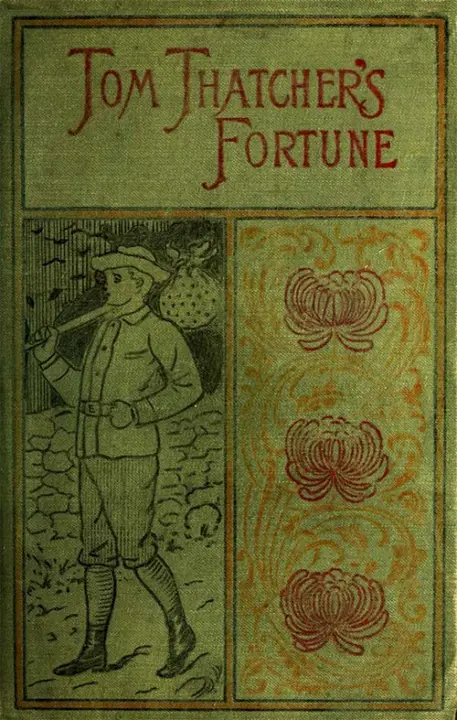
THE CLASSIC COLLECTION · 1888
"Tom Thatcher's Fortune" by Horatio Alger, Jr. is a novel written in the late 19th century. This coming-of-age tale revolves around Tom Thatcher, a sixteen-year-old boy who works in a shoe factory to support his family after his father's mysterious death during a gold rush in California. The story explores themes of social class, ambition, and resilience as Tom navigates his challenges and seeks a better life for himself and his family. The opening of the novel introduces us to Tom Thatcher, a hardworking boy who has just come home from a long day at the shoe factory, where he earns a meager wage. He shares dinner with his mother and little sister Tillie, conveying the family's struggles after losing their father. Through a conversation about his father's last letter and his missed fortune, we learn about Tom's determination to uncover the truth about his father's disappearance. The narrative sets the stage for Tom's journey filled with rivalry, self-discovery, and a yearning for a brighter future, while hinting at the contrast between his humble life and that of the wealthy characters in his world.
Introduction adapted from the source catalogue; source summaries may be automatically generated.
Free to read · English · 75,554 words · No account needed
MAKE TIME FOR A GOOD BOOK
On by default. Untick to stop anonymous reading totals. Each page counts after 10 seconds in view. How this works.
Anonymous counting is on unless you have switched it off.
“Nonsense, Mrs. Thatcher. It wouldn’t bring over six hundred.”
“I can hardly believe that.”
“I will strain a point and give you that sum,” said Mr. Simpson, who knew very well that he would be making an excellent bargain.
“I can’t decide upon so important a matter without consulting my son.”
To Mr. Simpson’s amazement she went to the foot of the stairs and
called “Tom.”
“Has Tom got home?” asked the rich man, looking disturbed.
“He got home last night.”
Before Mr. Simpson had a chance to ask any further questions, Tom entered the room. He was looking healthy and manly, but he was shabbily dressed.
“He has returned as poor as he went,” thought John Simpson.
“So you’ve got home,” said he coldly.
“Yes, sir.”
“And you are probably convinced by this time that you were a fool to
leave home.”
“No, sir; I have seen something of the world. Besides, there was
nothing for me to do here.”
“Where did you go?”
“To California.”
Mr. Simpson started, and carefully scrutinized Tom’s face, but it told
him nothing.
“There was nothing for me to do here,” continued Tom.
“Mr. Simpson said the other day that he would take you back into his shop,” said Mrs. Thatcher.
Tom looked inquiringly at the rich man, who said, coldly: “At present there is no vacancy. There may not be any for some months.”
“But how am I to live in the meantime?” asked Tom.
“On the money I will advance to your mother on the place.”
Mrs. Thatcher repeated the offer which Mr. Simpson had made, and asked: “Shall I accept, Tom?”
“No,” answered Tom, promptly.
“Do you propose to be guided by the advice of this young jackanapes, Mrs. Thatcher?” asked John Simpson, angrily.
“Tom knows more about business than I do.”
“He looks like it--a ragged tramp like him!” said the rich man, with a sneer. “After that display of impudence I refuse altogether to employ him. Now you can do as you please--accept my offer or starve with him.”
“Mother,” said Tom, quietly, “will you be kind enough to leave me alone with Mr. Simpson? I wish to speak to him in private.”
“Certainly, Tom.”
Very much to his surprise, Mr. Simpson found himself left alone with Tom, whose manner was self-possessed and grave.
“What does all this mean?” he asked, imperiously.
“Be patient, Mr. Simpson, I have something to say which you ought to hear. When I was in California I visited a place called Rocky Gulch.”
John Simpson’s ruddy face paled, and he made a visible start, but he recovered himself by an effort.
Your reading position is saved on this browser. Take it to another device with a library code. Reading pages adapt to text, rather than matching a printed edition.
William Rounseville Alger & Horatio, Jr. Alger

William Rounseville Alger & Horatio, Jr. Alger

Horatio, Jr. Alger

Horatio, Jr. Alger
BEHIND THE BOOK
This eBook is for the use of anyone anywhere in the United States and most other parts of the world at no cost and with almost no restrictions whatsoever. You may copy it, give it away or re-use it under the terms of the Project Gutenberg License included with this eBook or online at www.gutenberg.org. If you are not located in the United States, you will have to check the laws of the country where you are located before using this eBook. Read the source licence.
The original source file, including credits and licence, is retained by this library. Request an original-format copy at no charge. Please include the book title and Project Gutenberg identifier #56896.
KEEP YOUR CURIOSITY GOING
Cécile Tormay

Moritz Busch
Coulson Kernahan
John L. Ransom

Maurice Baring
Frances Wright