THE CLASSIC COLLECTION✦Preston Fight; or, The Insurrection of 1715CLASSIC FREE BOOKS
Preston Fight; or, The Insurrection of 1715
William Harrison Ainsworth
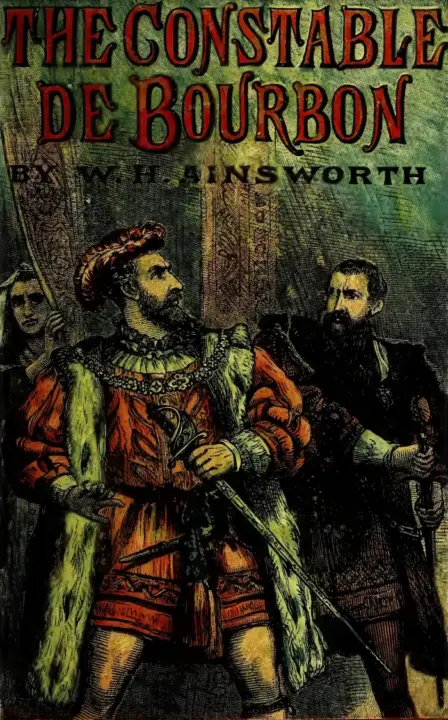
THE CLASSIC COLLECTION · 1866
"The Constable De Bourbon" by William Harrison Ainsworth is a historical novel written in the mid-19th century. The narrative unfolds in the context of 16th-century France, focusing on the titular character, Charles de Bourbon, the Constable of France, who navigates the tumultuous political and personal betrayals at the royal court. Themes of ambition, rivalry, and the quest for power resonate throughout the story, highlighting Bourbon's struggles with King François I and the Duchess d'Angoulême. At the start of the novel, we are introduced to a grand cavalcade entering the Forest of Fontainebleau, heralding the arrival of Charles de Bourbon amidst a backdrop of royal and noble pageantry. As the opening unfolds, it meticulously details Bourbon’s illustrious yet contentious background, his noble stature, and the complicated relationships he maintains with the court, especially with the king and the duchess. Bourbon's discontent with his treatment at court, highlighted by past grievances and ambitions, sets the stage for a conflict that alludes to a potential rebellion against the king's authority, suggesting a menacing path forward filled with intrigue and dramatic confrontation.
Introduction adapted from the source catalogue; source summaries may be automatically generated.
Free to read · English · 118,233 words · No account needed
MAKE TIME FOR A GOOD BOOK
On by default. Untick to stop anonymous reading totals. Each page counts after 10 seconds in view. How this works.
Anonymous counting is on unless you have switched it off.
“You are bound to aid in capturing rebels and traitors,” rejoined Warthy. “But I will not talk longer with you now. To-morrow I shall have more to say.”
“To-morrow I will speak freely,” returned Lallières, “for then my friends will be out of your reach. Meantime, it shall not be said that I neglected the rites of hospitality. Will you sup before you retire to rest?--or shall my intendant conduct you at once to a sleeping-chamber?”
“I do not mean to retire to rest,” replied Warthy. “I shall visit the guard in person throughout the night, to assure myself that strict watch is kept. Let supper be served here.”
Lallières then withdrew. Left alone, Warthy took a few turns in the great hall, and then flung himself into a chair. While doing so, he found that the keys incommoded him, so, removing them from his girdle, he laid them upon the table.
Presently afterwards a chamberlain appeared, followed by four serving-men, charged with the materials of a plentiful repast. While serving the dishes to Warthy, who ate all that was offered him, and emptied several goblets of wine, the chamberlain remarked the keys lying on the table, and it instantly occurred to him that he might be able to secure them.
While replenishing Warthy's goblet he threw a napkin over the keys, and immediately afterwards took it up again so cautiously that no sound was audible, and then quitted the hall, ostensibly for the purpose of fetching another flask of wine.
Warthy was too much engaged with his repast to remark what had taken place, and he was still sedulously occupied when the chamberlain returned, bringing with him another flask of wine, and also a second bunch of keys--somewhat resembling those he had carried off--and while moving about he let them drop on the floor.
“Ha! give me those keys!” cried Warthy, angrily.
And taking them from the chamberlain, who apologised for the inadvertence, he thrust them into his girdle.
Just then Lallières entered the hall, accompanied by Marcelline.
“This lady has desired me to bring her to you, sir,” said the châtelain. “She has a favour to ask of you.”
“Indeed!” exclaimed Warthy, rising and bowing. “I trust it may be in my power to grant it.”
“It is merely that I may be permitted to quit the castle,” said
Marcelline.
“Alone, fair lady, at this hour?” rejoined Warthy. “I have too much consideration for you to grant the request.”
“Were I to depart alone, I should have no fear,” she replied, “but I shall have three attendants with me.”
Your reading position is saved on this browser. Take it to another device with a library code. Reading pages adapt to text, rather than matching a printed edition.
William Harrison Ainsworth
William Harrison Ainsworth
William Harrison Ainsworth

William Harrison Ainsworth
BEHIND THE BOOK
This eBook is for the use of anyone anywhere in the United States and most other parts of the world at no cost and with almost no restrictions whatsoever. You may copy it, give it away or re-use it under the terms of the Project Gutenberg License included with this eBook or online at www.gutenberg.org. If you are not located in the United States, you will have to check the laws of the country where you are located before using this eBook. Read the source licence.
The original source file, including credits and licence, is retained by this library. Request an original-format copy at no charge. Please include the book title and Project Gutenberg identifier #49681.
KEEP YOUR CURIOSITY GOING
Cécile Tormay

Moritz Busch
Coulson Kernahan
John L. Ransom

Maurice Baring
Frances Wright