THE CLASSIC COLLECTION✦Preston Fight; or, The Insurrection of 1715CLASSIC FREE BOOKS
Preston Fight; or, The Insurrection of 1715
William Harrison Ainsworth
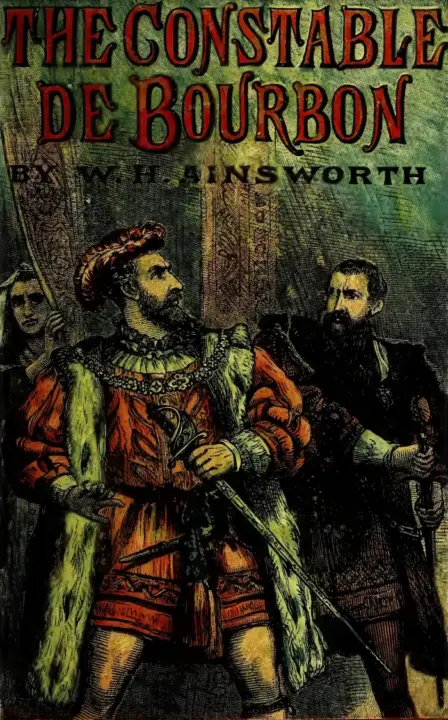
THE CLASSIC COLLECTION · 1866
"The Constable De Bourbon" by William Harrison Ainsworth is a historical novel written in the mid-19th century. The narrative unfolds in the context of 16th-century France, focusing on the titular character, Charles de Bourbon, the Constable of France, who navigates the tumultuous political and personal betrayals at the royal court. Themes of ambition, rivalry, and the quest for power resonate throughout the story, highlighting Bourbon's struggles with King François I and the Duchess d'Angoulême. At the start of the novel, we are introduced to a grand cavalcade entering the Forest of Fontainebleau, heralding the arrival of Charles de Bourbon amidst a backdrop of royal and noble pageantry. As the opening unfolds, it meticulously details Bourbon’s illustrious yet contentious background, his noble stature, and the complicated relationships he maintains with the court, especially with the king and the duchess. Bourbon's discontent with his treatment at court, highlighted by past grievances and ambitions, sets the stage for a conflict that alludes to a potential rebellion against the king's authority, suggesting a menacing path forward filled with intrigue and dramatic confrontation.
Introduction adapted from the source catalogue; source summaries may be automatically generated.
Free to read · English · 118,233 words · No account needed
MAKE TIME FOR A GOOD BOOK
On by default. Untick to stop anonymous reading totals. Each page counts after 10 seconds in view. How this works.
Anonymous counting is on unless you have switched it off.
|The king was ushered into the sick man's chamber. It was large and gloomy, wainscoted with oak as black as ebony, and the panels were adorned with portraits of the Constable's illustrious ancestors, commencing with Robert, Comte de Clermont, sixth son of Saint Louis, and Beatrix de Bourgogne, daughter of John de Bourgogne, and heiress of Bourbon-l'Archambaud, from whom the house of Bourbon derived its name, and concluding with the father of the Constable, Gilbert de Montpensier, slain at Pozzuoli in the war against Naples by Charles VIII., and Clara de Gonzaga, the Constable's mother, a princess remarkable for her beauty.
On a couch, at the farther end of this sombre apartment, lay the sick man, wrapped in a loose gown of quilted silk, trimmed with sable. He had a black taffeta cap on his head, and a furred velvet mantle was thrown over his knees. Beside him, on a table placed within reach, stood a crystal flagon containing a dark-coloured liquid, and several small phials. The only person with him at the moment was his principal physician, Jean de l'Hôpital.
On the entrance of the king, who was ceremoniously announced by the chamberlain, Bourbon, aided by his physician, arose, and bowing, thanked his majesty for his gracious visit.
“I am sorry to find you so unwell, cousin,” replied the king, regarding him as closely as the gloom of the chamber would permit, and coming to the conclusion that his illness was simulated.
Bourbon bore the scrutiny without embarrassment.
“The saints be praised that your majesty has come at a time when the fit has just left me,” he said, “and when I am secure from the attack lor a few hours. But I am greatly prostrated,” he added, feebly--“greatly prostrated.”
The king bade him be seated, adding, that he desired to confer with him in private, whereupon Bourbon signed to his attendants to withdraw.
Before quitting the chamber, Jean de l'Hôpital observed, in an undertone to the king, “His highness has been dangerously ill, sire, and is not yet out of danger.”
Then making an obeisance, he retired.
The chamberlain having placed a chair for the king near Bourbon's couch, likewise bowed and withdrew.
After glancing round to make sure they were quite alone, François said,
“I will deal plainly with you, cousin. Some disclosures have been made to me respecting your practices which I would willingly not believe, and before taking any steps to ascertain the truth of the reports, I have resolved to give you an opportunity of explanation.”
“My enemies have been at work, I perceive, sire,” said Bourbon, without manifesting the slightest uneasiness. “What has been told your majesty?”
Your reading position is saved on this browser. Take it to another device with a library code. Reading pages adapt to text, rather than matching a printed edition.
William Harrison Ainsworth
William Harrison Ainsworth
William Harrison Ainsworth

William Harrison Ainsworth
BEHIND THE BOOK
This eBook is for the use of anyone anywhere in the United States and most other parts of the world at no cost and with almost no restrictions whatsoever. You may copy it, give it away or re-use it under the terms of the Project Gutenberg License included with this eBook or online at www.gutenberg.org. If you are not located in the United States, you will have to check the laws of the country where you are located before using this eBook. Read the source licence.
The original source file, including credits and licence, is retained by this library. Request an original-format copy at no charge. Please include the book title and Project Gutenberg identifier #49681.
KEEP YOUR CURIOSITY GOING
Cécile Tormay

Moritz Busch
Coulson Kernahan
John L. Ransom

Maurice Baring
Frances Wright