THE CLASSIC COLLECTION✦Preston Fight; or, The Insurrection of 1715CLASSIC FREE BOOKS
Preston Fight; or, The Insurrection of 1715
William Harrison Ainsworth
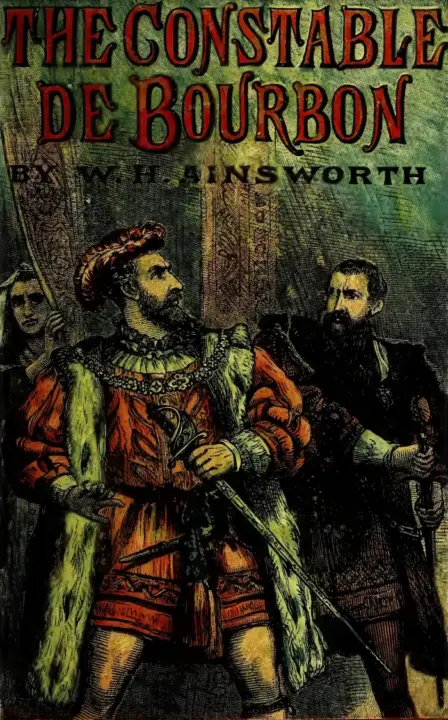
THE CLASSIC COLLECTION · 1866
"The Constable De Bourbon" by William Harrison Ainsworth is a historical novel written in the mid-19th century. The narrative unfolds in the context of 16th-century France, focusing on the titular character, Charles de Bourbon, the Constable of France, who navigates the tumultuous political and personal betrayals at the royal court. Themes of ambition, rivalry, and the quest for power resonate throughout the story, highlighting Bourbon's struggles with King François I and the Duchess d'Angoulême. At the start of the novel, we are introduced to a grand cavalcade entering the Forest of Fontainebleau, heralding the arrival of Charles de Bourbon amidst a backdrop of royal and noble pageantry. As the opening unfolds, it meticulously details Bourbon’s illustrious yet contentious background, his noble stature, and the complicated relationships he maintains with the court, especially with the king and the duchess. Bourbon's discontent with his treatment at court, highlighted by past grievances and ambitions, sets the stage for a conflict that alludes to a potential rebellion against the king's authority, suggesting a menacing path forward filled with intrigue and dramatic confrontation.
Introduction adapted from the source catalogue; source summaries may be automatically generated.
Free to read · English · 118,233 words · No account needed
MAKE TIME FOR A GOOD BOOK
On by default. Untick to stop anonymous reading totals. Each page counts after 10 seconds in view. How this works.
Anonymous counting is on unless you have switched it off.
Already the entire host of Bourbon was under arms, and impatient for the assault. The captains were forming their men in masses before the long dark line of walls which they were about to scale.
Grim and menacing did those walls and bastions look now, as they were thronged with armed men, and bristled with cannon. But they inspired no terror on the bands gathered before them. Sullen and stern in the grey light of morning loomed the Castle of Saint Angelo, but the fierce host Had no dread of its guns.
As the shades of night disappeared, and daylight revealed to them the fierce bands gathered before the Aurelian Wall, and forming a long line, extending from the Janiculum Hill to the rear of the Basilica of Saint Peter's and the Vatican, those stationed on the ramparts and bastions, though valiant men, were seized with dread, the aspect of the host being truly formidable.
Scarcely had it become light when word was passed along the whole line that the assault was about to be made, and the manifestations of impatience, heretofore exhibited, were increased in a tenfold degree, the men becoming so fiercely excited that they could be scarcely restrained by their captains.
While they were all eagerly awaiting the signal, a movement was made in the centre of the line, and Bourbon appeared, fully accoutred, and wearing his emblazoned surcoat over his armour. He was attended by his standard-bearer, carrying his banner, which was of yellow taffety, embroidered with flaming swords, and bearing the motto, “Espérance, Espérance.”
Close behind came Pomperant, while in front ran several Spanish soldiers with a long scaling-ladder, which they reared against the wall at the appointed spot.
All this was accomplished with the utmost rapidity. A charge was then sounded loudly by the trumpeters, and Bourbon, sword in hand, mounted the ladder, shouting in a loud voice, “Follow me, my brave fellows! On! on!”
But he had not ascended many steps when the barrel of an arquebuss
was protruded over the ramparts, and the next moment the discharge was
heard.
The shot struck the duke below the gorget and traversed his right side. Feeling himself mortally wounded, he made an effort to descend, but, unable to retain his hold of the ladder, he fell to the ground.
As he dropped, Benvenuto Cellini, with his face lighted up by a fierce exulting smile, was seen looking down from above.
“Saints be praised! the first shot has told,” cried the sculptor. “I
have killed him.”
As the words were uttered, a hundred bullets from the infuriated soldiers whistled about his ears, but not one hit its mark.
Your reading position is saved on this browser. Take it to another device with a library code. Reading pages adapt to text, rather than matching a printed edition.
William Harrison Ainsworth
William Harrison Ainsworth
William Harrison Ainsworth

William Harrison Ainsworth
BEHIND THE BOOK
This eBook is for the use of anyone anywhere in the United States and most other parts of the world at no cost and with almost no restrictions whatsoever. You may copy it, give it away or re-use it under the terms of the Project Gutenberg License included with this eBook or online at www.gutenberg.org. If you are not located in the United States, you will have to check the laws of the country where you are located before using this eBook. Read the source licence.
The original source file, including credits and licence, is retained by this library. Request an original-format copy at no charge. Please include the book title and Project Gutenberg identifier #49681.
KEEP YOUR CURIOSITY GOING
Cécile Tormay

Moritz Busch
Coulson Kernahan
John L. Ransom

Maurice Baring
Frances Wright