THE CLASSIC COLLECTION✦Preston Fight; or, The Insurrection of 1715CLASSIC FREE BOOKS
Preston Fight; or, The Insurrection of 1715
William Harrison Ainsworth
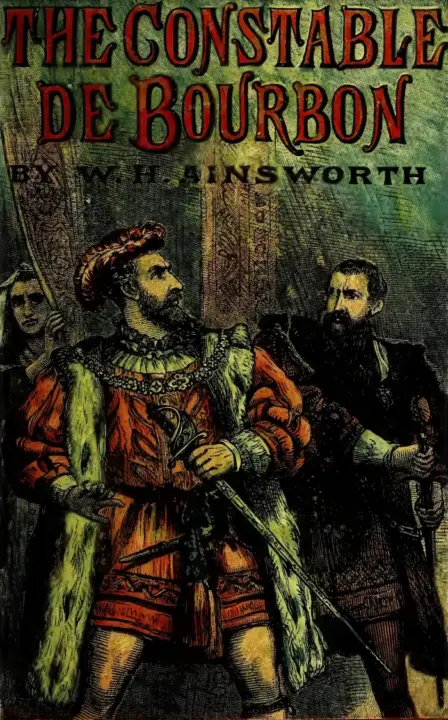
THE CLASSIC COLLECTION · 1866
"The Constable De Bourbon" by William Harrison Ainsworth is a historical novel written in the mid-19th century. The narrative unfolds in the context of 16th-century France, focusing on the titular character, Charles de Bourbon, the Constable of France, who navigates the tumultuous political and personal betrayals at the royal court. Themes of ambition, rivalry, and the quest for power resonate throughout the story, highlighting Bourbon's struggles with King François I and the Duchess d'Angoulême. At the start of the novel, we are introduced to a grand cavalcade entering the Forest of Fontainebleau, heralding the arrival of Charles de Bourbon amidst a backdrop of royal and noble pageantry. As the opening unfolds, it meticulously details Bourbon’s illustrious yet contentious background, his noble stature, and the complicated relationships he maintains with the court, especially with the king and the duchess. Bourbon's discontent with his treatment at court, highlighted by past grievances and ambitions, sets the stage for a conflict that alludes to a potential rebellion against the king's authority, suggesting a menacing path forward filled with intrigue and dramatic confrontation.
Introduction adapted from the source catalogue; source summaries may be automatically generated.
Free to read · English · 118,233 words · No account needed
MAKE TIME FOR A GOOD BOOK
On by default. Untick to stop anonymous reading totals. Each page counts after 10 seconds in view. How this works.
Anonymous counting is on unless you have switched it off.
“This is a stratagem to get Bourbon out of the castle,” thought Warthy. “But I will defeat it and secure my prey at the same time. When do you desire to depart?' he added to Marcelline.
“An hour hence,” she replied.
“Well, you have my permission. You have three attendants, you say?”
“Yes, three,” she answered. “You can see them before they quit the
castle.”
“Of course I shall see them,” he returned. “They cannot depart till I am satisfied. Go fetch the warder,” he added to an attendant.
Presently the personage in question entered the hall, and Warthy told him he had granted permission to the Demoiselle d'Herment to quit the château with three attendants.
“To-night?” asked the warder.
“Ay, to-night, at any hour she pleases,” said Warthy.
The warder bowed, and retired.
“I am much beholden to you, messire,” said Marcelline.
“Nay, fair lady, I am happy to oblige you,” he returned, gallantly.
Marcelline then withdrew, accompanied by Lallières, both looking well
pleased.
“I have him now,” thought Warthy, as he was left alone. “It is needless to give any further instructions to the warder. He cannot unlock the gate without coming to me,” he added, satisfying himself that the keys were safe.
He then resumed his seat and finished his repast, and when the table had been cleared by the serving-men, he reclined back in his chair, and presently fell into a doze.
While thus slumbering, he fancied he heard the trampling of horses in the court, but he did not disturb himself on that account, as he felt certain no one could get out of the castle without his aid. After he had slumbered on for nearly two hours, he was aroused by the entrance of the warder.
“I have brought the keys, monseigneur,” said the man.
“You have come for them, you mean, sirrah,” rejoined Warthy, ascertaining that the bunch of keys was hanging from his girdle.
“I mean what I say, monseigneur,” returned the warder, laying down the
keys before him.
“What, then, are these?” cried Warthy, holding up the other bunch.
“Those are not the keys of the castle gate,” returned the other.
“Ha! I have been duped!” cried Warthy, the truth beginning to flash upon him. “Answer me, villain,” he roared. “You have not allowed the Demoiselle d'Herment and her attendants to depart?”
“Yes, I have. I concluded they had your lordship's full permission,” replied the warder, trembling. “They brought the keys with them, and told me to unlock the gate. I am sorry if I have done wrong, but I fully believed they had your sanction, and so did the guard, or we should have stopped them.”
Your reading position is saved on this browser. Take it to another device with a library code. Reading pages adapt to text, rather than matching a printed edition.
William Harrison Ainsworth
William Harrison Ainsworth
William Harrison Ainsworth
William Harrison Ainsworth
BEHIND THE BOOK
This eBook is for the use of anyone anywhere in the United States and most other parts of the world at no cost and with almost no restrictions whatsoever. You may copy it, give it away or re-use it under the terms of the Project Gutenberg License included with this eBook or online at www.gutenberg.org. If you are not located in the United States, you will have to check the laws of the country where you are located before using this eBook. Read the source licence.
The original source file, including credits and licence, is retained by this library. Request an original-format copy at no charge. Please include the book title and Project Gutenberg identifier #49681.
KEEP YOUR CURIOSITY GOING
Cécile Tormay

Moritz Busch
Coulson Kernahan
John L. Ransom

Maurice Baring
Frances Wright