THE CLASSIC COLLECTION✦Preston Fight; or, The Insurrection of 1715CLASSIC FREE BOOKS
Preston Fight; or, The Insurrection of 1715
William Harrison Ainsworth
THE CLASSIC COLLECTION · 1866
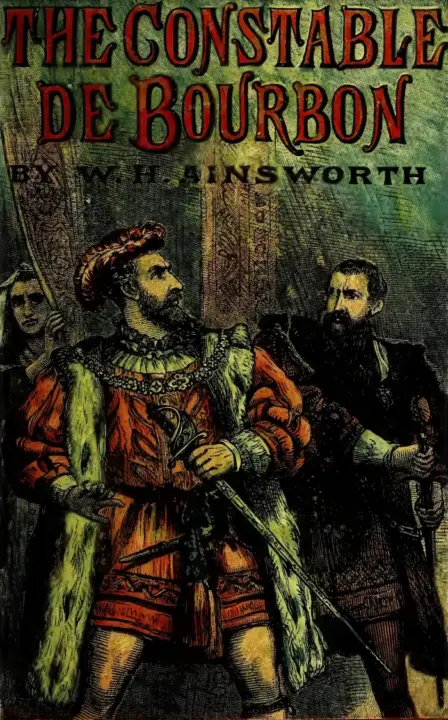
"The Constable De Bourbon" by William Harrison Ainsworth is a historical novel written in the mid-19th century. The narrative unfolds in the context of 16th-century France, focusing on the titular character, Charles de Bourbon, the Constable of France, who navigates the tumultuous political and personal betrayals at the royal court. Themes of ambition, rivalry, and the quest for power resonate throughout the story, highlighting Bourbon's struggles with King François I and the Duchess d'Angoulême. At the start of the novel, we are introduced to a grand cavalcade entering the Forest of Fontainebleau, heralding the arrival of Charles de Bourbon amidst a backdrop of royal and noble pageantry. As the opening unfolds, it meticulously details Bourbon’s illustrious yet contentious background, his noble stature, and the complicated relationships he maintains with the court, especially with the king and the duchess. Bourbon's discontent with his treatment at court, highlighted by past grievances and ambitions, sets the stage for a conflict that alludes to a potential rebellion against the king's authority, suggesting a menacing path forward filled with intrigue and dramatic confrontation.
Introduction adapted from the source catalogue; source summaries may be automatically generated.
Free to read · English · 118,233 words · No account needed
MAKE TIME FOR A GOOD BOOK
On by default. Untick to stop anonymous reading totals. Each page counts after 10 seconds in view. How this works.
Anonymous counting is on unless you have switched it off.
|Next morning, Maulévrier delivered up the keys of the château to the chamberlain, and, without seeking any further interview with the Constable, set off for Normandy.
By noon both the Grand-Master and the Duke de Longueville had quitted Moulins with their men, and were marching towards La Palisse. Saint-Vallier accompanied them. Warthy, however, remained, and Bourbon submitted to the annoyance of his frequent visits. If Jean de l'Hôpital could be believed, no improvement had taken place in the Constable's health.
Three days passed in this manner, but, on the morning of the fourth, Warthy made his appearance in a riding-dress, booted and spurred, and informed the Constable, who was lying on his couch as usual, and attended by his physicians, that he was about to set out for Lyons to make a report in person to the king.
“Express my profound regrets to his majesty that I am not able to join him,” said Bourbon, secretly overjoyed by the anticipated departure of his tormentor, “As you yourself must have perceived, I am rather worse than better, and my physicians tell me--and indeed I myself perceive--that there is no prospect of immediate improvement, I would pray the king, therefore, not to wait for me longer, but to set out on his expedition.”
“I will convey your highness's message,” replied Warthy. “But I know the king will be grievously disappointed.”
“My own disappointment is greater than his majesty's can be, sir. I pray you assure him so,” rejoined Bourbon.
A slightly incredulous smile passed over Warthy's shrewd features at this observation. However, he made no remark, but, taking leave of the Constable, set out on his journey, mounted on a fleet steed, which soon carried him several leagues on his way.
No sooner was Bourbon freed from the restraint imposed upon him by the importunate spy, than he commenced preparations, and despatched a body of men with arms and ammunition, under the command of Captain Saint-Saphorin, to his château of Chantelle, instructing them to put that fortress at once into a state of complete defence.
“I shall be there myself in a few days,” he said to Saint-Saphorin. “Moulins, I find, is quite untenable.”
This state of repose was not of long continuance. Warthy, who had been provided with relays of the fleetest horses, was back again in an incredibly short time, and Bourbon, to his infinite annoyance, was obliged to resume his couch. He received the spy in a very ill humour, but Warthy did not appear to heed his displeasure.
Your reading position is saved on this browser. Take it to another device with a library code. Reading pages adapt to text, rather than matching a printed edition.
William Harrison Ainsworth
William Harrison Ainsworth
William Harrison Ainsworth
William Harrison Ainsworth
BEHIND THE BOOK
This eBook is for the use of anyone anywhere in the United States and most other parts of the world at no cost and with almost no restrictions whatsoever. You may copy it, give it away or re-use it under the terms of the Project Gutenberg License included with this eBook or online at www.gutenberg.org. If you are not located in the United States, you will have to check the laws of the country where you are located before using this eBook. Read the source licence.
The original source file, including credits and licence, is retained by this library. Request an original-format copy at no charge. Please include the book title and Project Gutenberg identifier #49681.
KEEP YOUR CURIOSITY GOING
Cécile Tormay

Moritz Busch
Coulson Kernahan
John L. Ransom

Maurice Baring
Frances Wright