THE CLASSIC COLLECTION✦Preston Fight; or, The Insurrection of 1715CLASSIC FREE BOOKS
Preston Fight; or, The Insurrection of 1715
William Harrison Ainsworth
THE CLASSIC COLLECTION · 1866
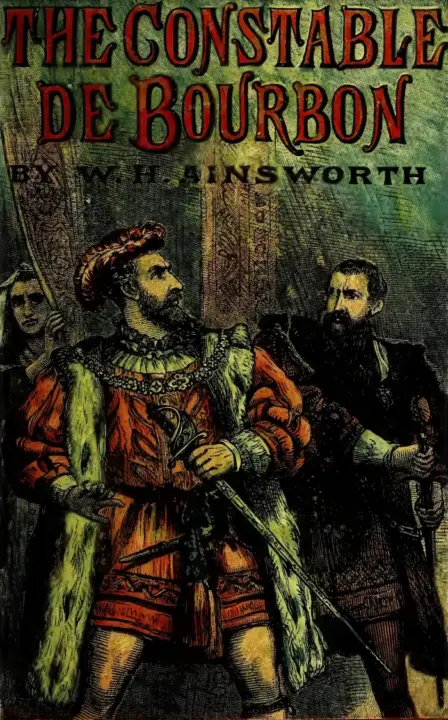
"The Constable De Bourbon" by William Harrison Ainsworth is a historical novel written in the mid-19th century. The narrative unfolds in the context of 16th-century France, focusing on the titular character, Charles de Bourbon, the Constable of France, who navigates the tumultuous political and personal betrayals at the royal court. Themes of ambition, rivalry, and the quest for power resonate throughout the story, highlighting Bourbon's struggles with King François I and the Duchess d'Angoulême. At the start of the novel, we are introduced to a grand cavalcade entering the Forest of Fontainebleau, heralding the arrival of Charles de Bourbon amidst a backdrop of royal and noble pageantry. As the opening unfolds, it meticulously details Bourbon’s illustrious yet contentious background, his noble stature, and the complicated relationships he maintains with the court, especially with the king and the duchess. Bourbon's discontent with his treatment at court, highlighted by past grievances and ambitions, sets the stage for a conflict that alludes to a potential rebellion against the king's authority, suggesting a menacing path forward filled with intrigue and dramatic confrontation.
Introduction adapted from the source catalogue; source summaries may be automatically generated.
Free to read · English · 118,233 words · No account needed
MAKE TIME FOR A GOOD BOOK
On by default. Untick to stop anonymous reading totals. Each page counts after 10 seconds in view. How this works.
Anonymous counting is on unless you have switched it off.
The keys were then brought him by the warder, and having seen the gate locked, and placed two of his own men on guard beside it, he thrust the bunch of keys in his girdle, and returned to Lallières, by whom he was conducted to a large hall on the ground floor. The attendants kept at a respectful distance, so that what passed between them was unheard.
“Seigneur de Lallières,” said Warthy, “I have reason to believe that the arch-traitor, Charles de Bourbon, has sought shelter beneath your roof. Those who screen him share his guilt. Deliver him up, and I will save you from all ill consequences. Attempt to shield him from justice, and you will incur the severest displeasure of the king.”
“Search the castle, and if you find the prince, take him,” replied
Lallières, sternly.
“Then you do not deny that he is here?” said Warthy.
“I neither deny it, nor admit it,” rejoined Lallières. “Search the castle, I say. I shall not hinder you. I have no other answer to make.”
“Your answer is insolent, seigneur, and shall be reported to the king,”
said Warthy.
“Be it so,” rejoined Lallières.
Warthy called the intendant, whom he recognised by his wand, and ordered him to conduet him over the castle. The old man did not dare to refuse compliance. But though the châtelain's private room was visited in the course of the perquisition, no discovery was made.
“Are you satisfied, sir?” inquired Lallières, as Warthy returned to the hall, after his unsuccessful search.
“I am satisfied that Bourbon is hidden somewhere in the château,” replied Warthy, “but he shall not escape me. To-morrow I will institute a more rigorous search. I understand you have some guests in the chateau. Where are they?”
“The only person now here is the Demoiselle Marcelline d'Herment,” replied Lallières. “The others are gone.”
“Who are gone?” demanded Warthy.
“Those you seek. They departed on foot.”
“At what time?” said Warthy.
“Scarce half an hour before your arrival,” returned Lallières. “I counselled them not to stay, and I am thankful they took my advice.”
“Was Bourbon one of them?” demanded Warthy.
Lallières remained silent, and Warthy repeated the question yet more
authoritatively.
“I refuse to answer,” replied the châtelain. “I have said that the persons who came hither are gone. That is all I choose to tell you. Follow them, if you think proper, or remain here. You do not expect me to put you on their track.”
Your reading position is saved on this browser. Take it to another device with a library code. Reading pages adapt to text, rather than matching a printed edition.
William Harrison Ainsworth
William Harrison Ainsworth
William Harrison Ainsworth
William Harrison Ainsworth
BEHIND THE BOOK
This eBook is for the use of anyone anywhere in the United States and most other parts of the world at no cost and with almost no restrictions whatsoever. You may copy it, give it away or re-use it under the terms of the Project Gutenberg License included with this eBook or online at www.gutenberg.org. If you are not located in the United States, you will have to check the laws of the country where you are located before using this eBook. Read the source licence.
The original source file, including credits and licence, is retained by this library. Request an original-format copy at no charge. Please include the book title and Project Gutenberg identifier #49681.
KEEP YOUR CURIOSITY GOING
Cécile Tormay

Moritz Busch
Coulson Kernahan
John L. Ransom

Maurice Baring
Frances Wright