THE CLASSIC COLLECTION✦Preston Fight; or, The Insurrection of 1715CLASSIC FREE BOOKS
Preston Fight; or, The Insurrection of 1715
William Harrison Ainsworth
THE CLASSIC COLLECTION · 1866
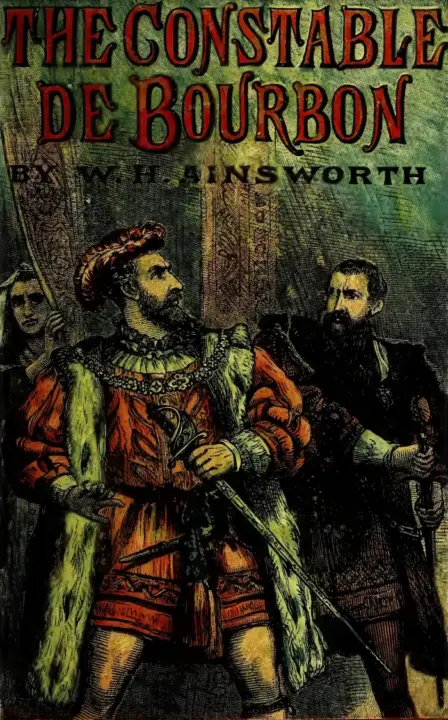
"The Constable De Bourbon" by William Harrison Ainsworth is a historical novel written in the mid-19th century. The narrative unfolds in the context of 16th-century France, focusing on the titular character, Charles de Bourbon, the Constable of France, who navigates the tumultuous political and personal betrayals at the royal court. Themes of ambition, rivalry, and the quest for power resonate throughout the story, highlighting Bourbon's struggles with King François I and the Duchess d'Angoulême. At the start of the novel, we are introduced to a grand cavalcade entering the Forest of Fontainebleau, heralding the arrival of Charles de Bourbon amidst a backdrop of royal and noble pageantry. As the opening unfolds, it meticulously details Bourbon’s illustrious yet contentious background, his noble stature, and the complicated relationships he maintains with the court, especially with the king and the duchess. Bourbon's discontent with his treatment at court, highlighted by past grievances and ambitions, sets the stage for a conflict that alludes to a potential rebellion against the king's authority, suggesting a menacing path forward filled with intrigue and dramatic confrontation.
Introduction adapted from the source catalogue; source summaries may be automatically generated.
Free to read · English · 118,233 words · No account needed
MAKE TIME FOR A GOOD BOOK
On by default. Untick to stop anonymous reading totals. Each page counts after 10 seconds in view. How this works.
Anonymous counting is on unless you have switched it off.
|Ever sinee the departure of the two deputies to Avignon, Pomperant had been kept in strict confinement in the Tour de Saint Paul. One morning the door of his dungeon was opened by an officer, whose sombre looks proclaimed his errand.
“You are come to bid me prepare for death, I perceive, captain,” said Pomperant, with as much composure as he could command.
“You have guessed rightly, monseigneur,” replied the officer. “The two deputies have been captured, and unless they are liberated before noon you will be executed. A message has been sent to that effect to the Duke de Bourbon.”
“At least the commanders will let me die as becomes a gentleman--not as a common malefactor?” said Pom-perant.
“I cannot give you that consolation, monseigneur,” rejoined the officer. “You are to be hanged from the summit of this tower in face of the hostile army. The execution will take place precisely at noon. You have yet an hour to live.”
“An hour! Is that all?” mentally ejaculated Pom-perant.
“Send a priest to me, I pray you, captain,” he said, with forced calmness. “I would fain make my peace with Heaven.”
The officer then withdrew, and shortly afterwards a priest entered, who received the prisoner's confession, and gave him absolution.
“I will leave you now, my son,” said the holy man, “but I shall remain without, and will attend you at the last.”
Pomperant had not been long alone, when the door of the cell again opened, and gave admittance to Marcelline. A sad greeting passed between them.
“I have striven to save you,” she said, in a voice half suffocated by emotion. “I have been to Renzo da Ceri, and have implored him, on my bended knees, to spare your life--but in vain. He will not even grant you the respite of an hour. All I could obtain was permission to hold this brief interview with you.”
“I thank him for the grace--it is more than I expected,” replied Pomperant, gazing at her with the deepest affection. “Oh! Marcelline, you have made life so dear to me that I grieve to lose it. But the thought that you love me will soothe the pangs of death.”
“It may console you to be assured that I will wed no other,” she rejoined. “I will be true to your memory--doubt it not. As soon as this siege is ended, I will enter a convent, and devote myself to Heaven.”
At this moment the priest entered the cell.
“Daughter,” said the good man, looking compassionately at her, “you must bid your lover an eternal farewell.”
“Oh no, no--do not say so, father!” she rejoined. “Grant me a few more
minutes.”
Your reading position is saved on this browser. Take it to another device with a library code. Reading pages adapt to text, rather than matching a printed edition.
William Harrison Ainsworth
William Harrison Ainsworth
William Harrison Ainsworth
William Harrison Ainsworth
BEHIND THE BOOK
This eBook is for the use of anyone anywhere in the United States and most other parts of the world at no cost and with almost no restrictions whatsoever. You may copy it, give it away or re-use it under the terms of the Project Gutenberg License included with this eBook or online at www.gutenberg.org. If you are not located in the United States, you will have to check the laws of the country where you are located before using this eBook. Read the source licence.
The original source file, including credits and licence, is retained by this library. Request an original-format copy at no charge. Please include the book title and Project Gutenberg identifier #49681.
KEEP YOUR CURIOSITY GOING
Cécile Tormay

Moritz Busch
Coulson Kernahan
John L. Ransom

Maurice Baring
Frances Wright