THE CLASSIC COLLECTION✦Preston Fight; or, The Insurrection of 1715CLASSIC FREE BOOKS
Preston Fight; or, The Insurrection of 1715
William Harrison Ainsworth
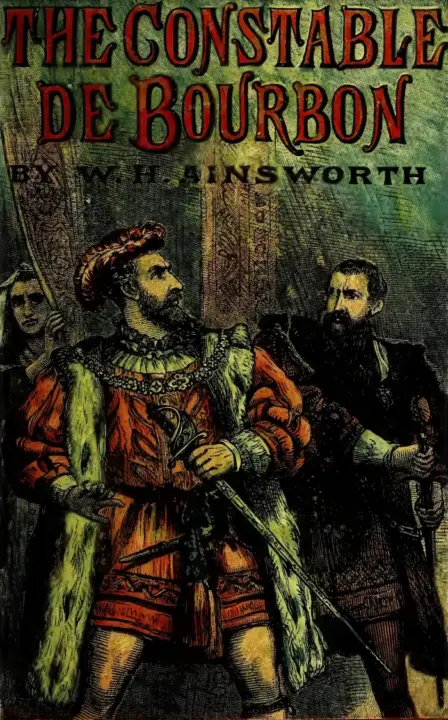
THE CLASSIC COLLECTION · 1866
"The Constable De Bourbon" by William Harrison Ainsworth is a historical novel written in the mid-19th century. The narrative unfolds in the context of 16th-century France, focusing on the titular character, Charles de Bourbon, the Constable of France, who navigates the tumultuous political and personal betrayals at the royal court. Themes of ambition, rivalry, and the quest for power resonate throughout the story, highlighting Bourbon's struggles with King François I and the Duchess d'Angoulême. At the start of the novel, we are introduced to a grand cavalcade entering the Forest of Fontainebleau, heralding the arrival of Charles de Bourbon amidst a backdrop of royal and noble pageantry. As the opening unfolds, it meticulously details Bourbon’s illustrious yet contentious background, his noble stature, and the complicated relationships he maintains with the court, especially with the king and the duchess. Bourbon's discontent with his treatment at court, highlighted by past grievances and ambitions, sets the stage for a conflict that alludes to a potential rebellion against the king's authority, suggesting a menacing path forward filled with intrigue and dramatic confrontation.
Introduction adapted from the source catalogue; source summaries may be automatically generated.
Free to read · English · 118,233 words · No account needed
MAKE TIME FOR A GOOD BOOK
On by default. Untick to stop anonymous reading totals. Each page counts after 10 seconds in view. How this works.
Anonymous counting is on unless you have switched it off.
|When Marguerite was admitted by the guard into the chamber in which her royal brother was confined, he was alone, and stretched upon a couch.
“I have good tidings for your majesty,” she cried, flying towards him, and taking his hand. “The Emperor is coming to see you.”
“It is too late,” said François. “He can do me no good now. I have lost all hope. Look here,” he added, taking a paper from beneath the cushion on which he was reclining, “this is an act by which I renounce the crown of France, and place it in the hands of the Dauphin, exhorting my family and my people to regard me as dead--and most likely I shall be dead ere this act can be delivered to my son.”
“I shall not need to take it,” she rejoined. “I am persuaded you will now be able to make terms with the Emperor.”
“I will rather die than submit to his conditions,” rejoined the king.
“Hear me, François,” she said, “and do not think the course I am about to suggest unworthy of you. You must be delivered from this prison at any price.”
“Not at the price of my honour, Marguerite,” he cried. “You cannot
counsel that?”
“You must dissemble with the tyrant, brother,” she rejoined. “You must beat him with his own weapons. A treaty signed in prison cannot be binding on you. The circumstances render it invalid. Promise all the Emperor asks--but perform only what is reasonable and just.
“I must perform all I promise,” said François,
“No,” she rejoined. “You are justified in deceiving a pitiless conqueror who abuses his position. France will absolve you.”
At this moment, the door was thrown open and gave admittance to the Emperor, who was attended by Bourbon, Lannoy, and Gattinara.
Charles V. paused near the door to look at his prisoner, and was sensibly touched by his altered appearance.
“Can this be the magnificent François de Valois?” he muttered to Bourbon. “Mother of Heaven! how he is changed!”
“Sadly changed, indeed, sire,” rejoined Bourbon. “Even I can pity him.”
On beholding the Emperor, François raised himself with his sister's support, and said, in accents of mingled bitterness and reproach, “Your majesty has come to see your prisoner die.”
“No, I have come to bid you live,” rejoined Charles V., hastening towards him, “You are no longer my prisoner, but my friend and brother. From this moment you are free.”
Your reading position is saved on this browser. Take it to another device with a library code. Reading pages adapt to text, rather than matching a printed edition.
William Harrison Ainsworth
William Harrison Ainsworth
William Harrison Ainsworth

William Harrison Ainsworth
BEHIND THE BOOK
This eBook is for the use of anyone anywhere in the United States and most other parts of the world at no cost and with almost no restrictions whatsoever. You may copy it, give it away or re-use it under the terms of the Project Gutenberg License included with this eBook or online at www.gutenberg.org. If you are not located in the United States, you will have to check the laws of the country where you are located before using this eBook. Read the source licence.
The original source file, including credits and licence, is retained by this library. Request an original-format copy at no charge. Please include the book title and Project Gutenberg identifier #49681.
KEEP YOUR CURIOSITY GOING
Cécile Tormay

Moritz Busch
Coulson Kernahan
John L. Ransom

Maurice Baring
Frances Wright