THE CLASSIC COLLECTION✦Preston Fight; or, The Insurrection of 1715CLASSIC FREE BOOKS
Preston Fight; or, The Insurrection of 1715
William Harrison Ainsworth
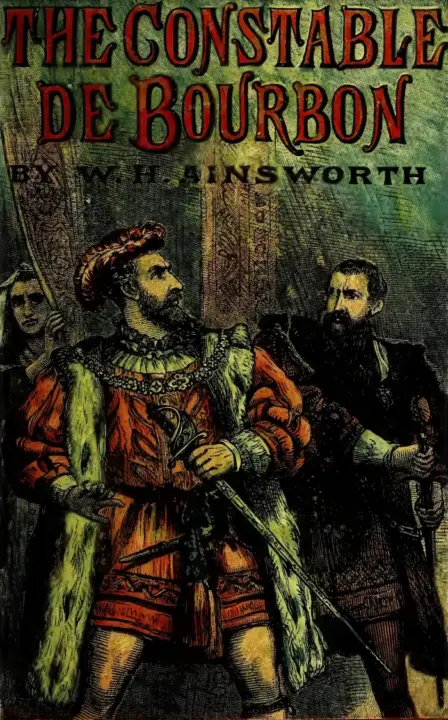
THE CLASSIC COLLECTION · 1866
"The Constable De Bourbon" by William Harrison Ainsworth is a historical novel written in the mid-19th century. The narrative unfolds in the context of 16th-century France, focusing on the titular character, Charles de Bourbon, the Constable of France, who navigates the tumultuous political and personal betrayals at the royal court. Themes of ambition, rivalry, and the quest for power resonate throughout the story, highlighting Bourbon's struggles with King François I and the Duchess d'Angoulême. At the start of the novel, we are introduced to a grand cavalcade entering the Forest of Fontainebleau, heralding the arrival of Charles de Bourbon amidst a backdrop of royal and noble pageantry. As the opening unfolds, it meticulously details Bourbon’s illustrious yet contentious background, his noble stature, and the complicated relationships he maintains with the court, especially with the king and the duchess. Bourbon's discontent with his treatment at court, highlighted by past grievances and ambitions, sets the stage for a conflict that alludes to a potential rebellion against the king's authority, suggesting a menacing path forward filled with intrigue and dramatic confrontation.
Introduction adapted from the source catalogue; source summaries may be automatically generated.
Free to read · English · 118,233 words · No account needed
MAKE TIME FOR A GOOD BOOK
On by default. Untick to stop anonymous reading totals. Each page counts after 10 seconds in view. How this works.
Anonymous counting is on unless you have switched it off.
|Compelled to avoid the public roads, the fugitives, on reaching the valley, traversed an extensive marshy plain, which would have been impassable without a guide, forded the Loire about half a league above Montrond, and after a toilsome journey through a wild and mountainous district, drew near Saint-Simphorien about an hour before midnight. As they could not put up at an auberge, Hugues proposed that they should seek a lodging at a mill which he pointed out on an eminence a short distance from the road.
“I think Maître Benoit, the miller, will take us in,” he said. “He is kind-hearted and hospitable, and his daughter Madelon is the prettiest girl in Saint-Simphorien, and as good as she is pretty.”
“You know her?” said Bourbon.
“I persuade myself I do,” replied Hugues, “I have given my heart to her keeping, and hope one day to make her my wife--that is, if we can obtain Benoit's consent to the marriage.”
“In that case we will go to the mill,” said Bourbon. “You can answer for the miller's daughter, if not for the miller and his wife.”
“I can answer for all three,” replied Hugues. “I will stake my life that your highness shall be safe at the mill---provided we can only get in; and what is more, we shall have a good stable for the horses.”
They then rode towards the mill. Close beside it was Benoit's dwelling--a substantial-looking tenement, which showed he must have thriven in his trade. A little to the rear of the house were a large barn and stable.
As the party approached the miller's abode, the alarm was given by the barking of a couple of fierce dogs in the stable-yard, and just as Hugues, who had dismounted for the purpose, was about to knock against the door with his whip, a chamber window was opened, and Benoit, thrusting forth his head, which was adorned with a tall bonnet de nuit, called out in a gruff voice:
“Hola! my masters, what do you mean by disturbing honest folk at this time of night? Go about your business.”
“Our business is to procure a lodging beneath your roof, père Benoit,” rejoined Hugues. “Don't you know me, my good friend?”
“What! is it Hugues?” cried the miller. “What brings you here, boy, and who have you got with you?”
At this juncture, Pomperant thought proper to interpose, declaring he was a captain of the royal guard of archers, on the way to Vienne, to intercept the flight of the Constable de Bourbon.
The explanation did not appear very satisfactory to honest Benoit, for he rejoined in a sullen tone:
Your reading position is saved on this browser. Take it to another device with a library code. Reading pages adapt to text, rather than matching a printed edition.
William Harrison Ainsworth
William Harrison Ainsworth
William Harrison Ainsworth

William Harrison Ainsworth
BEHIND THE BOOK
This eBook is for the use of anyone anywhere in the United States and most other parts of the world at no cost and with almost no restrictions whatsoever. You may copy it, give it away or re-use it under the terms of the Project Gutenberg License included with this eBook or online at www.gutenberg.org. If you are not located in the United States, you will have to check the laws of the country where you are located before using this eBook. Read the source licence.
The original source file, including credits and licence, is retained by this library. Request an original-format copy at no charge. Please include the book title and Project Gutenberg identifier #49681.
KEEP YOUR CURIOSITY GOING
Cécile Tormay

Moritz Busch
Coulson Kernahan
John L. Ransom

Maurice Baring
Frances Wright