THE CLASSIC COLLECTION✦Preston Fight; or, The Insurrection of 1715CLASSIC FREE BOOKS
Preston Fight; or, The Insurrection of 1715
William Harrison Ainsworth
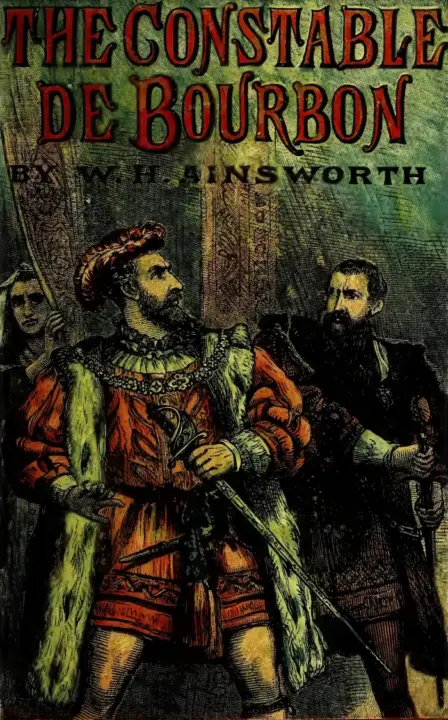
THE CLASSIC COLLECTION · 1866
"The Constable De Bourbon" by William Harrison Ainsworth is a historical novel written in the mid-19th century. The narrative unfolds in the context of 16th-century France, focusing on the titular character, Charles de Bourbon, the Constable of France, who navigates the tumultuous political and personal betrayals at the royal court. Themes of ambition, rivalry, and the quest for power resonate throughout the story, highlighting Bourbon's struggles with King François I and the Duchess d'Angoulême. At the start of the novel, we are introduced to a grand cavalcade entering the Forest of Fontainebleau, heralding the arrival of Charles de Bourbon amidst a backdrop of royal and noble pageantry. As the opening unfolds, it meticulously details Bourbon’s illustrious yet contentious background, his noble stature, and the complicated relationships he maintains with the court, especially with the king and the duchess. Bourbon's discontent with his treatment at court, highlighted by past grievances and ambitions, sets the stage for a conflict that alludes to a potential rebellion against the king's authority, suggesting a menacing path forward filled with intrigue and dramatic confrontation.
Introduction adapted from the source catalogue; source summaries may be automatically generated.
Free to read · English · 118,233 words · No account needed
MAKE TIME FOR A GOOD BOOK
On by default. Untick to stop anonymous reading totals. Each page counts after 10 seconds in view. How this works.
Anonymous counting is on unless you have switched it off.
|The lanz-knechts and Burgundians were now wholly occupied in making prisoners and slaughtering the foe. Heaps of slain lay thick on all sides, the plain was deluged in blood, and the knights rode over the dead and dying.
It was at this terrible crisis that the king's eye, ranging over the field, caught Bonnivet, who instantly rode up to him.
“What orders, sire?” he demanded.
“Hence!” cried François. “Quit my sight for ever. This is your work.”
“Sire,” rejoined Bonnivet, “if I have done wrong it has been unwittingly. Let me die by your side.”
“No, I will not have you near me,” cried François. “Away, false traitor,
away!”
“Sire, by Heaven I am no traitor!” rejoined Bonnivet. “But I will not long survive your displeasure.”
And, without a word more, he dashed into the thick of the enemy.
He had not been gone more than a minute, when the Marshal de Foix rode up, his left arm shattered, his armour sullied, and his steed covered with gore. From his ghastly looks it was evident he was mortally wounded, but he had still strength enough to sit his horse.
“Where is Bonnivet, sire?” he demanded. “I thought I saw him with you.”
“He is gone,” rejoined the king. “What would you with him?”
“Slay him--slay him with this sword dyed in the blood of our enemies,” rejoined De Foix. “It is he who has brought this dire calamity on France. But for him this disastrous battle would not have been fought. If I can slay him, I shall die content. Where is he, sire? Show him to me.”
“Ride from the battle while you can, and seek a surgeon--'twere best,”
said the king.
“No, I will first slay Bonnivet,” rejoined De Foix.
“Then seek him yonder,” said the king, pointing to the thickest part of
the strife.
And while De Foix rode off, he himself renewed the combat. Scarcely knowing whither he was going, De Foix was quickly surrounded by several Burgundian lances, when he found himself confronted by a knight in black armour.
“Yield you, De Foix?” said this knight. And, raising his visor, he disclosed the features of Bourbon.
“I yield,” replied the other. “But you had better let your men finish me. There is not an hour's life in me.”
“Nay, I trust you are not so badly hurt as that,” said Bourbon. “Let him be taken at once to Pavia and carefully tended. Captain Castaldo, I give him in your charge.”
“Bourbon,” said De Foix, “I will forgive you all the wrong you have done to France, if you will slay Bonnivet.”
“'Tis he I seek,” rejoined Bourbon. “Is he with the king?”
Your reading position is saved on this browser. Take it to another device with a library code. Reading pages adapt to text, rather than matching a printed edition.
William Harrison Ainsworth
William Harrison Ainsworth
William Harrison Ainsworth

William Harrison Ainsworth
BEHIND THE BOOK
This eBook is for the use of anyone anywhere in the United States and most other parts of the world at no cost and with almost no restrictions whatsoever. You may copy it, give it away or re-use it under the terms of the Project Gutenberg License included with this eBook or online at www.gutenberg.org. If you are not located in the United States, you will have to check the laws of the country where you are located before using this eBook. Read the source licence.
The original source file, including credits and licence, is retained by this library. Request an original-format copy at no charge. Please include the book title and Project Gutenberg identifier #49681.
KEEP YOUR CURIOSITY GOING
Cécile Tormay

Moritz Busch
Coulson Kernahan
John L. Ransom

Maurice Baring
Frances Wright