
Love and liberty
Alexandre Dumas
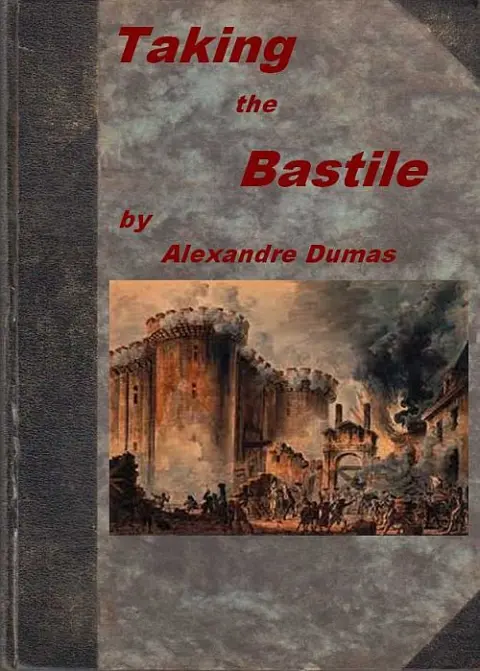
THE CLASSIC COLLECTION · 1891
"Taking the Bastile; Or, Pitou the Peasant" by Alexandre Dumas is a historical novel written in the late 19th century. The story centers around the tumultuous period of the French Revolution, focusing on the character of Ange Pitou, a peasant boy who becomes embroiled in the unfolding events and strives to find his place amidst the chaos. Dumas weaves a tale of heroism, societal change, and the quest for liberty, encapsulated in the dramatic moment of storming the Bastille. The opening portion of the novel introduces us to a young man named Gilbert, who ventures through the snow-covered countryside to find a peasant woman, Madeline Pitou. He brings with him an infant to be raised at her cottage, a child whose birth has been surrounded by tragedy as both parents have died. As Gilbert entrusts the child to Madeline, he expresses both hope and sorrow for the boy's future. Through his interactions with Madeline and her family, we see the warmth and complexities of rural life, as well as the undercurrents of change looming on the horizon. The introduction sets the stage for the emergence of the protagonist, Ange Pitou, hinting at themes of loss, parental bonds, and the significant impact of the upcoming revolution on personal and societal levels.
Introduction adapted from the source catalogue; source summaries may be automatically generated.
Free to read · English · 76,316 words · No account needed
MAKE TIME FOR A GOOD BOOK
On by default. Untick to stop anonymous reading totals. Each page counts after 10 seconds in view. How this works.
Anonymous counting is on unless you have switched it off.
"Neither one, but the nation, at present," rejoined Flesselles, playing
with his ruffles.
"Ah, the nation," repeated the farmer.
"Those gentlemen waiting below there with the wood-choppers and carving-knives; the nation, all the world to me."
"You may be right and there was no mistake in their warranting you to
me as a knowing man."
"Which of the three powers do you belong to?" inquired the trimmer,
bowing.
"Faith, when there is a question for the Grand Spirit and the angels, I apply to the Fountain--head."
"You mean the King? What for?"
"To ask for the release of Dr. Gilbert who is in the Bastile."
"He is one of those pamhleteers I believe," said the aristocratic one
saucily.
"A lover of mankind."
"That is all one. My dear M. Billet, I believe you have little chances of obtaining such a favor from the King. If he put the doctor in his Bastile, he had reasons for it."
"All right," returned Billet; "he shall offer his reasons and I will
match them with mine?"
"My dear sir, the King is so busy that he will not receive you."
"Oh, if he will not let me in, I shall walk in without his leave or
licence."
"But you will find Lord Dreux Breze at the door who will put you away from it. It is true he failed to do that with the National Assembly in a body; but that failure will only the more put him on his mettle and he will take his revenge out of you."
"Then I will apply to the National Assembly."
"The way to Versailles is cut off."
"I will have my three thousand men with me.
"Have a care, my dear fellow, for you will meet on the road four or five thousand Swiss soldiers and two or three thousand Austrians who will make mincemeat of your forces; in a twinkling you will be swallowed."
"What the deuse am I to do, then?"
"Do what you like: but rid me of your three thousand tatterdemalions who are cracking the flagstones with thumps of their halberds, and smoking. In the vaults are seven or eight thousand pounds of gunpowder and a spark may send us all flying to the Eternal Throne."
"In that case, turning this over in my mind," said the farmer, "I will not trouble the King or the Assembly, but call in the nation and take the Bastile myself."
"With what?"
"With the powder you have kindly told me is stored in your cellar."
"You don't tell me that?" sneered Flesselles.
"That is the very thing. The cellar keys, my lord."
"Hello, you are joking," faltered the gentleman.
Your reading position is saved on this browser. Take it to another device with a library code. Reading pages adapt to text, rather than matching a printed edition.
Alexandre Dumas
Alexandre Dumas & Auguste Maquet
Alexandre Dumas
Alexandre Dumas
BEHIND THE BOOK
This eBook is for the use of anyone anywhere in the United States and most other parts of the world at no cost and with almost no restrictions whatsoever. You may copy it, give it away or re-use it under the terms of the Project Gutenberg License included with this eBook or online at www.gutenberg.org. If you are not located in the United States, you will have to check the laws of the country where you are located before using this eBook. Read the source licence.
The original source file, including credits and licence, is retained by this library. Request an original-format copy at no charge. Please include the book title and Project Gutenberg identifier #45424.
KEEP YOUR CURIOSITY GOING
Cécile Tormay

Moritz Busch
Coulson Kernahan
John L. Ransom

Maurice Baring
Frances Wright