
Love and liberty
Alexandre Dumas
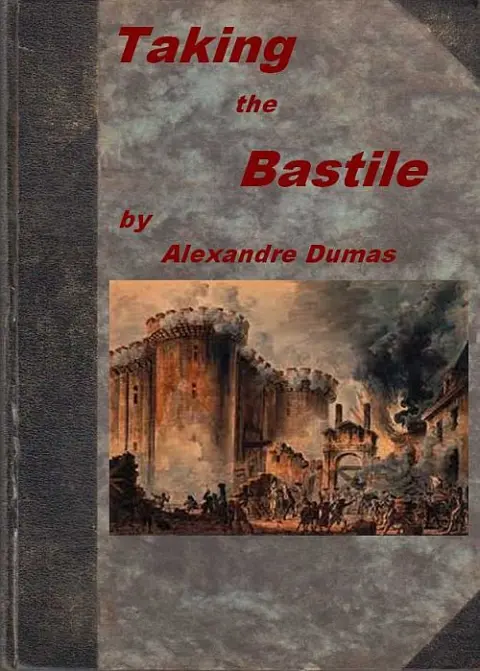
THE CLASSIC COLLECTION · 1891
"Taking the Bastile; Or, Pitou the Peasant" by Alexandre Dumas is a historical novel written in the late 19th century. The story centers around the tumultuous period of the French Revolution, focusing on the character of Ange Pitou, a peasant boy who becomes embroiled in the unfolding events and strives to find his place amidst the chaos. Dumas weaves a tale of heroism, societal change, and the quest for liberty, encapsulated in the dramatic moment of storming the Bastille. The opening portion of the novel introduces us to a young man named Gilbert, who ventures through the snow-covered countryside to find a peasant woman, Madeline Pitou. He brings with him an infant to be raised at her cottage, a child whose birth has been surrounded by tragedy as both parents have died. As Gilbert entrusts the child to Madeline, he expresses both hope and sorrow for the boy's future. Through his interactions with Madeline and her family, we see the warmth and complexities of rural life, as well as the undercurrents of change looming on the horizon. The introduction sets the stage for the emergence of the protagonist, Ange Pitou, hinting at themes of loss, parental bonds, and the significant impact of the upcoming revolution on personal and societal levels.
Introduction adapted from the source catalogue; source summaries may be automatically generated.
Free to read · English · 76,316 words · No account needed
MAKE TIME FOR A GOOD BOOK
On by default. Untick to stop anonymous reading totals. Each page counts after 10 seconds in view. How this works.
Anonymous counting is on unless you have switched it off.
All were shouting: "On, to the Bastile!"
Billet was making the reflections which his knowledge of the stronghold warranted, and the vapor of his enthusiasm faded gradually.
He saw clearly that the enterprise was sublime though insane.
That was easy to understand by the awed expression of those to whom he had first broached the project of taking the Bastile.
But he was only the more fortified in his resolve. But he understood that he had to answer to these mothers and fathers, girls and children, for the lives of those whom he was leading, and that he was bound to take all the precautions possible.
He commenced by collecting his followers at the City Hall.
He appointed lieutenants to control the flock--of wolves.
"Let me see," said Billet to himself; "there is more than one power in France. There are two--the head of the chief city, for one, and may be another yet."
He entered the City Hall, asking for the Chief civic magistrate. It was the Traders' Provost Flesselles.
"My lord de Flesselles," he repeated; "a noble and no friend of the
people?"
"Oh, no, he is a sensible man."
Billet went up the stairs into the ante-chamber where he met an usher, who came up to him to see what he wanted.
"Speech with Lord Flesselles," replied Billet.
"Can't sir," answered the man. "He is completing the list for the militia which the City is to raise."
"Capital!" rejoined Billet; "I am also organizing a militia, and as I have three thousand men ready under arms, I am worth a Flesselles who is only going to get his together. Let me speak with him, and right off. If you like, just look out of the window at my soldiers."
One rapid glance on the waterside was enough for the servant who hastened to notify the Traders' Provost, to whom, as emphasis to his message, he pointed out the army.
This sight inspired respect in the provost for the man commanding them: he left the council and came into the ante-room. Perceiving Billet, he smiled at guessing the kind of man he must be.
"Were you wanting me?" he challenged.
"If you are Provost Flesselles," responded Billet.
"Yes; how can I serve you? please, be quick, for I am very busy."
"How many powers do you acknowledge in France, my Lord Provost?"
queried Billet.
"Hem, that is just how one looks at it," replied the politician. "If you ask Bailly the Mayor he will say 'The National Assembly.' If Lord Dreux, he would say only one--'the King.'"
"And which is yours between the two?"
Your reading position is saved on this browser. Take it to another device with a library code. Reading pages adapt to text, rather than matching a printed edition.
Alexandre Dumas
Alexandre Dumas & Auguste Maquet
Alexandre Dumas
Alexandre Dumas
BEHIND THE BOOK
This eBook is for the use of anyone anywhere in the United States and most other parts of the world at no cost and with almost no restrictions whatsoever. You may copy it, give it away or re-use it under the terms of the Project Gutenberg License included with this eBook or online at www.gutenberg.org. If you are not located in the United States, you will have to check the laws of the country where you are located before using this eBook. Read the source licence.
The original source file, including credits and licence, is retained by this library. Request an original-format copy at no charge. Please include the book title and Project Gutenberg identifier #45424.
KEEP YOUR CURIOSITY GOING
Cécile Tormay

Moritz Busch
Coulson Kernahan
John L. Ransom

Maurice Baring
Frances Wright