
Love and liberty
Alexandre Dumas
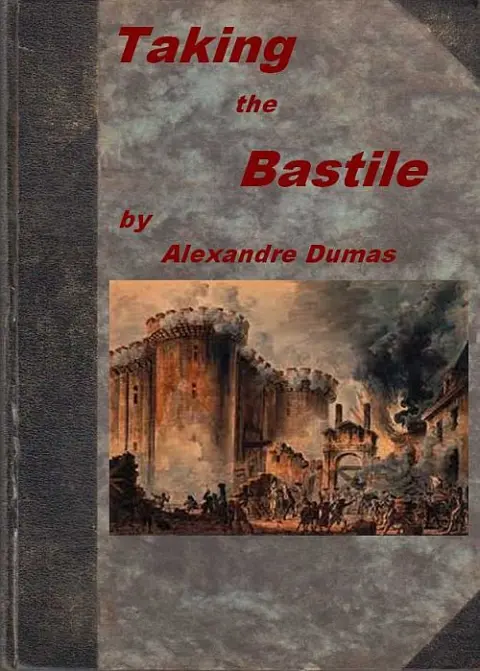
THE CLASSIC COLLECTION · 1891
"Taking the Bastile; Or, Pitou the Peasant" by Alexandre Dumas is a historical novel written in the late 19th century. The story centers around the tumultuous period of the French Revolution, focusing on the character of Ange Pitou, a peasant boy who becomes embroiled in the unfolding events and strives to find his place amidst the chaos. Dumas weaves a tale of heroism, societal change, and the quest for liberty, encapsulated in the dramatic moment of storming the Bastille. The opening portion of the novel introduces us to a young man named Gilbert, who ventures through the snow-covered countryside to find a peasant woman, Madeline Pitou. He brings with him an infant to be raised at her cottage, a child whose birth has been surrounded by tragedy as both parents have died. As Gilbert entrusts the child to Madeline, he expresses both hope and sorrow for the boy's future. Through his interactions with Madeline and her family, we see the warmth and complexities of rural life, as well as the undercurrents of change looming on the horizon. The introduction sets the stage for the emergence of the protagonist, Ange Pitou, hinting at themes of loss, parental bonds, and the significant impact of the upcoming revolution on personal and societal levels.
Introduction adapted from the source catalogue; source summaries may be automatically generated.
Free to read · English · 76,316 words · No account needed
MAKE TIME FOR A GOOD BOOK
On by default. Untick to stop anonymous reading totals. Each page counts after 10 seconds in view. How this works.
Anonymous counting is on unless you have switched it off.
The Queen was reposing after the day of felicitation. She had her janissaries around her, her cohort of young bravoes, and having reckoned up her foes, she was wishful for the onslaught.
Had she not the defeat of the Fourteenth of July, the Loss of the
Bastile, to avenge?
She treated Andrea with the former friendship for a time deadened in her bosom. But Charny? she only looked where he was when she was forced to give him an order. But this was no spite against the family, for it was noticed that she paid special attention to young Valence Charny, the hussar who had been given her Austrian rosette at the officers' dinner.
Indeed, as he was crossing the gallery to announce to the Master of the Buckhound's that the King would go hunting that day, Marie Antoinette who came out of the chapel, perceived him and greeted him.
"The King goes hunting?" she repeated; "what a mistake when the weather is threatening--is it not, Andrea?"
"Yes," answered the lady of honor absently.
"Where will the chase be?"
"In Meudon Wood, my lady."
"Well, accompany him and watch over him."
At this moment the head of the Charnys appeared. He smiled to Andrea
and remarked:
"That is advice which my brother will bear in mind during the dangers to the King as well as during his pleasures."
At the sound of the voice, for she had not seen him coming, Marie Antoinette started and rejoined with studied rudeness:
"I should have been astonished if that speech had come from any but your lordship, for it contains a foreboding."
Andrea saw her husband blanch, but he bowed without retort. He noticed her surprise that he bore it so patiently, for he quickly said:
"I am most unhappy that I can no longer speak to the Queen without
offense."
"The 'No longer' was spoken with a fine actor's due stress on the
important words in a line.
"Speech is only bad when the intention is so," snapped the Queen, through her teeth, locked with anger.
"The ear hears hostilely when the mind is hostile," was the repartie of Charny, more aptly than politely.
"I shall wait to reply till the Count of Charny is happier in his
attacks," went on the Queen.
"And I shall wait to attack till the Queen's Most Excellent Majesty is more happy in servitors than lately."
Andrea grasped her husband's hand hastily and prepared to go out of the gallery with him, when a glance from her mistress retained her.
"In short, what does your husband have to say to me?" she inquired.
Your reading position is saved on this browser. Take it to another device with a library code. Reading pages adapt to text, rather than matching a printed edition.
Alexandre Dumas
Alexandre Dumas & Auguste Maquet
Alexandre Dumas
Alexandre Dumas
BEHIND THE BOOK
This eBook is for the use of anyone anywhere in the United States and most other parts of the world at no cost and with almost no restrictions whatsoever. You may copy it, give it away or re-use it under the terms of the Project Gutenberg License included with this eBook or online at www.gutenberg.org. If you are not located in the United States, you will have to check the laws of the country where you are located before using this eBook. Read the source licence.
The original source file, including credits and licence, is retained by this library. Request an original-format copy at no charge. Please include the book title and Project Gutenberg identifier #45424.
KEEP YOUR CURIOSITY GOING
Cécile Tormay

Moritz Busch
Coulson Kernahan
John L. Ransom

Maurice Baring
Frances Wright