
Love and liberty
Alexandre Dumas
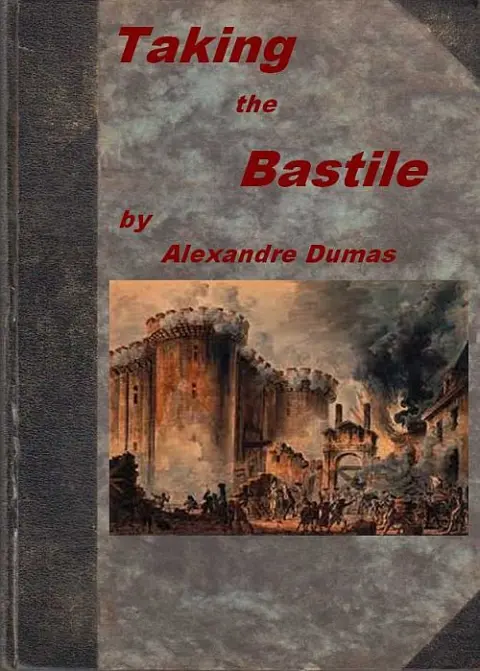
THE CLASSIC COLLECTION · 1891
"Taking the Bastile; Or, Pitou the Peasant" by Alexandre Dumas is a historical novel written in the late 19th century. The story centers around the tumultuous period of the French Revolution, focusing on the character of Ange Pitou, a peasant boy who becomes embroiled in the unfolding events and strives to find his place amidst the chaos. Dumas weaves a tale of heroism, societal change, and the quest for liberty, encapsulated in the dramatic moment of storming the Bastille. The opening portion of the novel introduces us to a young man named Gilbert, who ventures through the snow-covered countryside to find a peasant woman, Madeline Pitou. He brings with him an infant to be raised at her cottage, a child whose birth has been surrounded by tragedy as both parents have died. As Gilbert entrusts the child to Madeline, he expresses both hope and sorrow for the boy's future. Through his interactions with Madeline and her family, we see the warmth and complexities of rural life, as well as the undercurrents of change looming on the horizon. The introduction sets the stage for the emergence of the protagonist, Ange Pitou, hinting at themes of loss, parental bonds, and the significant impact of the upcoming revolution on personal and societal levels.
Introduction adapted from the source catalogue; source summaries may be automatically generated.
Free to read · English · 76,316 words · No account needed
MAKE TIME FOR A GOOD BOOK
On by default. Untick to stop anonymous reading totals. Each page counts after 10 seconds in view. How this works.
Anonymous counting is on unless you have switched it off.
While the King was learning to fight Revolution like a philosopher, and recreate himself with a spiritualistic seance, the Queen was rallying the combative around her in her rooms.
She sat at a table, with priests, courtiers, generals and her ladies surrounding her. At the doorways young officers, full of ardor and courage, rejoiced in the riots which gave them a chance to show their military gifts as at a tourney under view of their queens of beauty.
The Queen was no longer the sweet girl whom we saw in our work entitled "Balsamo the Magician," or the fair princess who went to Mesmer's Baths, with Princess Lamballe: but the haughty and imperious Queen who was neither Marie Antoinette, nor Queen of France, but the Austrian Eagless.
She looked up as Prince Lambesq arrived, dusty, splashed, his boots torn and his sabre bent so as not to be sheathed properly.
"Well, my lord," she said, "You come from Paris. What are the people
doing?"
"Killing and burning."
"From madness or malice?"
"From ferocity."
"Nay, prince," she replied, after meditating: "the people are not ferocious. Hide nothing from me. Is it delirium or hate?"
"I believe it is hate at the point of delirium."
"Against me?"
"What does it matter?" said Dreux Breze, stepping forward. "The people may hate any one, saving your Majesty."
The Queen did not notice the flattery.
"The people," replied Lambesq, "are acting in hatred of--all above
them."
"Good, that is the truth at last?" exclaimed the royal lady resolutely;
"I feel that is so."
"I am speaking as a soldier," continued the cavalrist.
"Speak so. What is to be done?"
"Nothing."
"What?" cried she, emboldened by the protest from among the gold-laced coat and gold-hilted sword wearers, "nothing? do you, a Lorraine prince, tell this to the Queen of France when the people are killing and burning?"
A fresh murmur, this time approbative, hailed her speech. She turned, embraced all the gathering with flaring eyes, and tried to distinguish whose flamed the most brightly, thinking they would be the most loyal.
"Do nothing," repeated the prince, "for the Parisians will cool down if not irritated--they are warlike only when teased. Why give them the honors of a war and the risks of a battle? Keep tranquil, and in three days Paris will not talk about the matter."
"But the Bastile?"
"Shut the doors and trap all those who are inside."
Some laughs sounded among the groups.
"Take care, prince," said the lady; "now you are going to the other extreme, and too much encouraging me."
Your reading position is saved on this browser. Take it to another device with a library code. Reading pages adapt to text, rather than matching a printed edition.
Alexandre Dumas
Alexandre Dumas & Auguste Maquet
Alexandre Dumas
Alexandre Dumas
BEHIND THE BOOK
This eBook is for the use of anyone anywhere in the United States and most other parts of the world at no cost and with almost no restrictions whatsoever. You may copy it, give it away or re-use it under the terms of the Project Gutenberg License included with this eBook or online at www.gutenberg.org. If you are not located in the United States, you will have to check the laws of the country where you are located before using this eBook. Read the source licence.
The original source file, including credits and licence, is retained by this library. Request an original-format copy at no charge. Please include the book title and Project Gutenberg identifier #45424.
KEEP YOUR CURIOSITY GOING
Cécile Tormay

Moritz Busch
Coulson Kernahan
John L. Ransom

Maurice Baring
Frances Wright