
Love and liberty
Alexandre Dumas
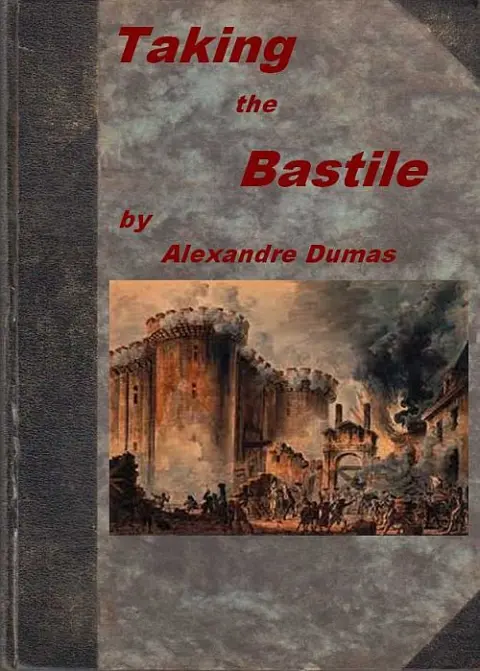
THE CLASSIC COLLECTION · 1891
"Taking the Bastile; Or, Pitou the Peasant" by Alexandre Dumas is a historical novel written in the late 19th century. The story centers around the tumultuous period of the French Revolution, focusing on the character of Ange Pitou, a peasant boy who becomes embroiled in the unfolding events and strives to find his place amidst the chaos. Dumas weaves a tale of heroism, societal change, and the quest for liberty, encapsulated in the dramatic moment of storming the Bastille. The opening portion of the novel introduces us to a young man named Gilbert, who ventures through the snow-covered countryside to find a peasant woman, Madeline Pitou. He brings with him an infant to be raised at her cottage, a child whose birth has been surrounded by tragedy as both parents have died. As Gilbert entrusts the child to Madeline, he expresses both hope and sorrow for the boy's future. Through his interactions with Madeline and her family, we see the warmth and complexities of rural life, as well as the undercurrents of change looming on the horizon. The introduction sets the stage for the emergence of the protagonist, Ange Pitou, hinting at themes of loss, parental bonds, and the significant impact of the upcoming revolution on personal and societal levels.
Introduction adapted from the source catalogue; source summaries may be automatically generated.
Free to read · English · 76,316 words · No account needed
MAKE TIME FOR A GOOD BOOK
On by default. Untick to stop anonymous reading totals. Each page counts after 10 seconds in view. How this works.
Anonymous counting is on unless you have switched it off.
The street appeared void and lonesome to Billet and his friend because the cavalry in chase of the Hyers, had gone through the market and scattered after them in the side streets; but as the pair got nearer the Palais Royale, calling out in a hoarse voice by instinct "Revenge!" men began to appear in doorways, up cellars, out of alleys, from the carriage gateways, mute and frightened at the first, but, when assured that the horse-soldiers had gone on, forming the procession anew, they repeated in a low tone, but soon in a loud one: "Revenge!"
Pitou marched behind the farmer, carrying the Savoyard's cap.
Thus the mournful and ghastly cortege arrived on Palais Royale Place, where a concourse, drunk with wrath, were holding council and soliciting the French troops to help them against the foreign ones.
"What are these men in uniform?" inquired Billet, in front of a company, standing under arms, to bar the road from the Palace main doors to Chartres Street.
"The French Guards," answered several voices.
"Oh," said the countryman, going nearer and showing the body of the Savoyard which was lifeless now: "are you Frenchmen and let us be murdered by foreigners?"
The guardsmen shrank back a step involuntarily.
"Dead?" uttered several.
"Dead--murdered, along with lots more by the Royal German dragoons. Did you not hear the charging cry, the shots, the sword-slashes and the shrieks of the defenseless?"
"Yes," shouted two or three hundred voices: "the people were cut down
on Vendome Square."
"And so are you the people," shouted Billet to the soldiers: "It is cowardice of you to let your brothers be hacked to pieces."
"Cowardice?" muttered some of the men in the ranks, threateningly.
"Yes, I said Cowardice, and I say it again. Look here," Billet went on, taking three steps towards the point where the protest had risen, "perhaps you will shoot me down to prove that you are not cowards?"
"That is all very good," said a soldier; "you are a honest, blunt fellow, my friend, but you are citizens and you do not understand that soldiers are bound by orders."
"Do you mean to say?" said Billet, "that if you receive orders to fire on us, unarmed men, that you, the successors of the Guards who, at Fontenoy, bade the English shoot first,--would do that?"
"I wager I would not," said the soldier.
"Nor I, nor I," echoed several of his comrades.
"Then stop the others firing on us," continued Billet: "To let the Royal Germans cut our throats is tantamount to doing it yourselves."
Your reading position is saved on this browser. Take it to another device with a library code. Reading pages adapt to text, rather than matching a printed edition.
Alexandre Dumas
Alexandre Dumas & Auguste Maquet
Alexandre Dumas
Alexandre Dumas
BEHIND THE BOOK
This eBook is for the use of anyone anywhere in the United States and most other parts of the world at no cost and with almost no restrictions whatsoever. You may copy it, give it away or re-use it under the terms of the Project Gutenberg License included with this eBook or online at www.gutenberg.org. If you are not located in the United States, you will have to check the laws of the country where you are located before using this eBook. Read the source licence.
The original source file, including credits and licence, is retained by this library. Request an original-format copy at no charge. Please include the book title and Project Gutenberg identifier #45424.
KEEP YOUR CURIOSITY GOING
Cécile Tormay

Moritz Busch
Coulson Kernahan
John L. Ransom

Maurice Baring
Frances Wright