
Love and liberty
Alexandre Dumas
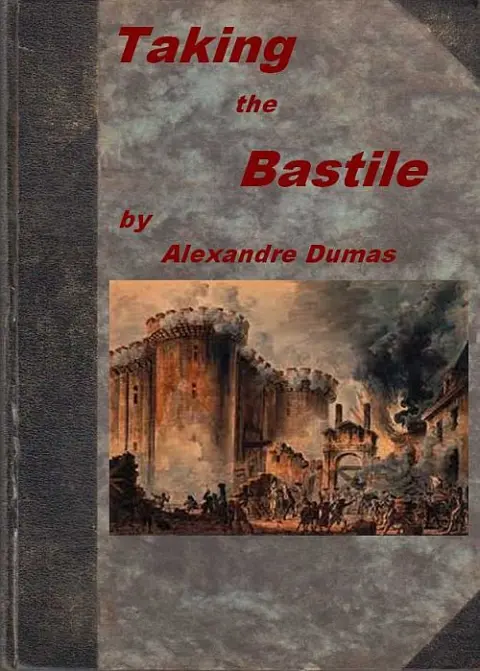
THE CLASSIC COLLECTION · 1891
"Taking the Bastile; Or, Pitou the Peasant" by Alexandre Dumas is a historical novel written in the late 19th century. The story centers around the tumultuous period of the French Revolution, focusing on the character of Ange Pitou, a peasant boy who becomes embroiled in the unfolding events and strives to find his place amidst the chaos. Dumas weaves a tale of heroism, societal change, and the quest for liberty, encapsulated in the dramatic moment of storming the Bastille. The opening portion of the novel introduces us to a young man named Gilbert, who ventures through the snow-covered countryside to find a peasant woman, Madeline Pitou. He brings with him an infant to be raised at her cottage, a child whose birth has been surrounded by tragedy as both parents have died. As Gilbert entrusts the child to Madeline, he expresses both hope and sorrow for the boy's future. Through his interactions with Madeline and her family, we see the warmth and complexities of rural life, as well as the undercurrents of change looming on the horizon. The introduction sets the stage for the emergence of the protagonist, Ange Pitou, hinting at themes of loss, parental bonds, and the significant impact of the upcoming revolution on personal and societal levels.
Introduction adapted from the source catalogue; source summaries may be automatically generated.
Free to read · English · 76,316 words · No account needed
MAKE TIME FOR A GOOD BOOK
On by default. Untick to stop anonymous reading totals. Each page counts after 10 seconds in view. How this works.
Anonymous counting is on unless you have switched it off.
Under the burning July sun the crowds awaited, shuddering with fever. Gonchon's men had joined in with Marat's, the suburbs hailing each other as brothers. Gonchon was at the head of his patriots but Marat had disappeared.
The scene on the open place was terrifying.
On seeing Billet the cheering was tremendous.
"He is a brave man," said Billet to Gonchon, "or rather I should say he is stubborn. He will not surrender the Bastile but will sustain the siege."
"Do you think he will hold out long?"
"To death."
"All right, he shall have that."
"But how many men will be killed by us?" said the farmer, no doubt fearing that he had not the right usurped by generals, kings and emperors, those who take out licenses to kill and maim.
"Rubbish," said Gonchon; "there are too many, since we have not enough for half the population. Is not that about the size of it, boys?" he asked of the bystanders.
"Yes, yes," was the reply in sublime abnegation.
"But the moat?" queried Billet.
"It need be filled up in only one place," responded the beggar's
leader: "and I calculate that we could choke it up altogether, eh,
lads?"
The friends answered unanimously in the affirmative.
"Have it so," said Billet, overpowered.
At this moment, Launay appeared on a terrace, followed by Major Losme and two or three other officers.
"Commence," shouted Gonchon.
The governor turned his back on him.
Gonchon might have put up with a threat but he would not bear contempt: he lifted his gun and fired at him. A man near him fell. Instantly a hundred, nay, a thousand gunshots sounded, as if it were awaited as a signal, and the grey towers were striped with white.
A few seconds' silence succeeded this discharge, as if the assailants were frightened at what they had done.
Then a gush of flame lost in a cloud of smoke crowned the crest of one tower. A detonation thundered. Shrieks of pain were heard in the throngs closely pressed. The first cannonshot had been fired by the royalists, the first blood shed.
The battle between people and Bastile was begun.
An instant previously menacing, the multitudes felt something like terror. By defending itself with so little of its weapons the Bastile seemed impregnable. In this period of concession the majority had no doubt supposed that they would always have their way.
That was a mistake: this cannonshot fired into them gave the measure of the Titanic work they had undertaken.
A firing of muskets, well aimed, from the platform, immediately
followed.
Your reading position is saved on this browser. Take it to another device with a library code. Reading pages adapt to text, rather than matching a printed edition.
Alexandre Dumas
Alexandre Dumas & Auguste Maquet
Alexandre Dumas
Alexandre Dumas
BEHIND THE BOOK
This eBook is for the use of anyone anywhere in the United States and most other parts of the world at no cost and with almost no restrictions whatsoever. You may copy it, give it away or re-use it under the terms of the Project Gutenberg License included with this eBook or online at www.gutenberg.org. If you are not located in the United States, you will have to check the laws of the country where you are located before using this eBook. Read the source licence.
The original source file, including credits and licence, is retained by this library. Request an original-format copy at no charge. Please include the book title and Project Gutenberg identifier #45424.
KEEP YOUR CURIOSITY GOING
Cécile Tormay

Moritz Busch
Coulson Kernahan
John L. Ransom

Maurice Baring
Frances Wright