
Love and liberty
Alexandre Dumas
THE CLASSIC COLLECTION · 1891
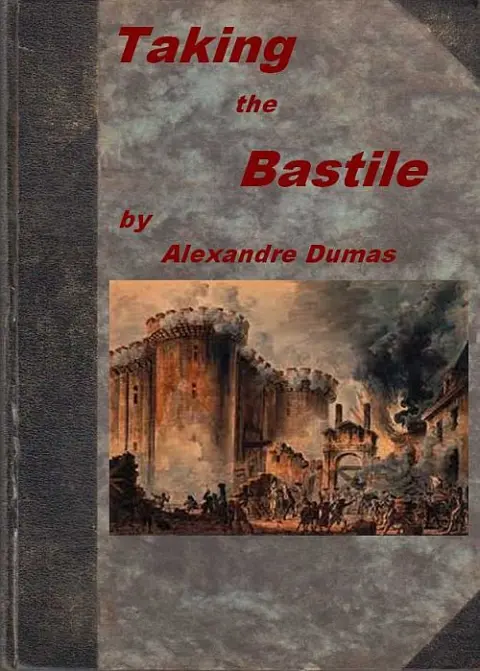
"Taking the Bastile; Or, Pitou the Peasant" by Alexandre Dumas is a historical novel written in the late 19th century. The story centers around the tumultuous period of the French Revolution, focusing on the character of Ange Pitou, a peasant boy who becomes embroiled in the unfolding events and strives to find his place amidst the chaos. Dumas weaves a tale of heroism, societal change, and the quest for liberty, encapsulated in the dramatic moment of storming the Bastille. The opening portion of the novel introduces us to a young man named Gilbert, who ventures through the snow-covered countryside to find a peasant woman, Madeline Pitou. He brings with him an infant to be raised at her cottage, a child whose birth has been surrounded by tragedy as both parents have died. As Gilbert entrusts the child to Madeline, he expresses both hope and sorrow for the boy's future. Through his interactions with Madeline and her family, we see the warmth and complexities of rural life, as well as the undercurrents of change looming on the horizon. The introduction sets the stage for the emergence of the protagonist, Ange Pitou, hinting at themes of loss, parental bonds, and the significant impact of the upcoming revolution on personal and societal levels.
Introduction adapted from the source catalogue; source summaries may be automatically generated.
Free to read · English · 76,316 words · No account needed
MAKE TIME FOR A GOOD BOOK
On by default. Untick to stop anonymous reading totals. Each page counts after 10 seconds in view. How this works.
Anonymous counting is on unless you have switched it off.
On entering her boudoir, the Queen beheld the writer of the missive.
Count George Oliver Charny was a tall man of thirty-five, with a strong countenance warning one of his determination. His bluish grey eyes, quick and piercing as the eagle's, his straight nose, and his marked chin, all gave his physiognomy a martial expression, enhanced by the dashing elegance with which he wore his uniform of Lieutenant in the Royal Lifeguards.
His hands were still quivering under the torn lace ruffles: his sword had been so bent as to fit the sheath badly.
He was pacing the room, a prey to a thousand disquieting thoughts.
"My Lord Charny," cried Marie Antoinette, going straight up to him.
"You, here?"
Seeing that he bowed respectfully, according to the regulations, however, she dismissed her servant, who shut the door.
Hardly giving it the time to close, the lady grasped the nobleman's
hand with force, and said:
"Why have you come here, count?"
"Because I believe it my duty."
"No; your duty was to flee from Versailles; to do as agreed. To obey me; to act like all my friends--who are afraid of my ill fortune. Your duty is to sacrifice nothing for me; to keep away from me."
"Who keeps away from you?"
"The wise. Whence come you?"
"From Paris, boiling with excitement, intoxicated and bathed in blood."
The Queen covered her face with her hands.
"Alas, not one, not even you, brings me good news from that quarter."
"In such a time ask but one thing of the messengers: truth."
"You have an upright soul, my friend, a brave heart. Do not tell me the truth, at present, for mercy's sake. You arrive when my heart is breaking; for the first time my friends overwhelm me with this truthfulness always used by you. It is impossible for me to trifle with it any longer: it flashes out in everything. In the red sky, the air filled with ominous sounds, the courtiers' faces, now pale and serious. No, count, for the first time in your life, do not tell me the truth."
"Your Majesty is ailing?"
"No, but come and sit beside me. George, your brow is burning."
"A volcano is raging there."
"Your hand is cold," for she was pressing it between hers.
"My heart has been touched by the chill of death," he replied.
"Poor George! I told you we had best forget. Let me no longer be the Queen, hated and threatened; but just the woman. What is the realm, the universe to me, whom one loving heart suffices?"
Your reading position is saved on this browser. Take it to another device with a library code. Reading pages adapt to text, rather than matching a printed edition.
Alexandre Dumas
Alexandre Dumas & Auguste Maquet
Alexandre Dumas
Alexandre Dumas
BEHIND THE BOOK
This eBook is for the use of anyone anywhere in the United States and most other parts of the world at no cost and with almost no restrictions whatsoever. You may copy it, give it away or re-use it under the terms of the Project Gutenberg License included with this eBook or online at www.gutenberg.org. If you are not located in the United States, you will have to check the laws of the country where you are located before using this eBook. Read the source licence.
The original source file, including credits and licence, is retained by this library. Request an original-format copy at no charge. Please include the book title and Project Gutenberg identifier #45424.
KEEP YOUR CURIOSITY GOING
Cécile Tormay

Moritz Busch
Coulson Kernahan
John L. Ransom

Maurice Baring
Frances Wright