
Love and liberty
Alexandre Dumas
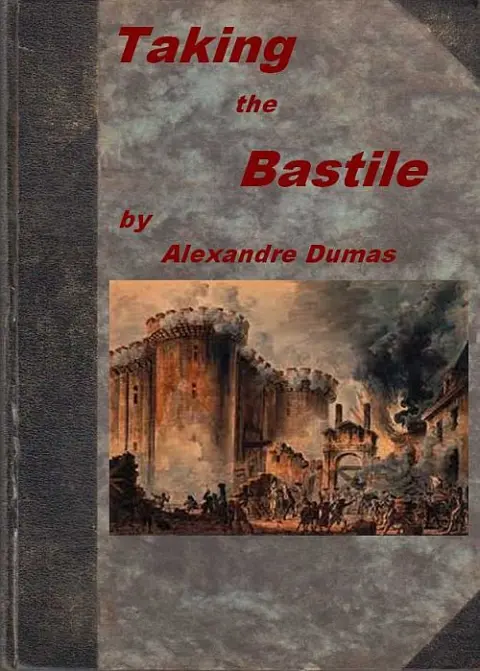
THE CLASSIC COLLECTION · 1891
"Taking the Bastile; Or, Pitou the Peasant" by Alexandre Dumas is a historical novel written in the late 19th century. The story centers around the tumultuous period of the French Revolution, focusing on the character of Ange Pitou, a peasant boy who becomes embroiled in the unfolding events and strives to find his place amidst the chaos. Dumas weaves a tale of heroism, societal change, and the quest for liberty, encapsulated in the dramatic moment of storming the Bastille. The opening portion of the novel introduces us to a young man named Gilbert, who ventures through the snow-covered countryside to find a peasant woman, Madeline Pitou. He brings with him an infant to be raised at her cottage, a child whose birth has been surrounded by tragedy as both parents have died. As Gilbert entrusts the child to Madeline, he expresses both hope and sorrow for the boy's future. Through his interactions with Madeline and her family, we see the warmth and complexities of rural life, as well as the undercurrents of change looming on the horizon. The introduction sets the stage for the emergence of the protagonist, Ange Pitou, hinting at themes of loss, parental bonds, and the significant impact of the upcoming revolution on personal and societal levels.
Introduction adapted from the source catalogue; source summaries may be automatically generated.
Free to read · English · 76,316 words · No account needed
MAKE TIME FOR A GOOD BOOK
On by default. Untick to stop anonymous reading totals. Each page counts after 10 seconds in view. How this works.
Anonymous counting is on unless you have switched it off.
Mistress Billet was a fat woman who honored her husband, delighted in her daughter and fed her field hands as no other housewife did for miles around. So there was a rush to be employed at Billet's.
Pitou appreciated his luck at the full value when he saw the golden loaf placed at his elbow, the pot of cider set on his right, and the chunk of mild-cured bacon before him. Since he lost his mother, five years before, the orphan had never enjoyed such cheer, even on a feast day.
He remembered, too, that his new duties of neatherd and shepherd had been fulfilled by gods and demigods.
Besides Mrs. Billet had the management of the kine and orders were not harsh from Catherine's mouth.
"You shall stay here," said she; "I have made father understand that you are good for a heap of things; for instance, you can keep the accounts----"
"Well, I know the four rules of arithmetic," said Pitou, proudly.
"You are one ahead of me. Here you stay."
"I am glad, for I could not live afar from you. Oh, I beg pardon, but
that came from my heart."
"I do not bear you ill will for that," said Catherine; "it is not your fault if you like us here."
Poor young lambs, they say so much in so few words!
So Pitou did much of Catherine's work and she had more time to make pretty caps and "titivate herself up," to use her mother's words.
"I think you prettier without a cap on," he remarked.
"You may; but your taste is not the rule. I cannot go over to the town and dance without a cap on. That is all very well for fine ladies, who have the right to go bareheaded and wear powder on the hair."
"You beat them all without powder."
"Compliments again, did you learn to make them at Fortier's."
"No, he taught nothing like that."
"Dancing?"
"Lord help us--dancing at Fortier's! he made us cut capers at the end
of the birch."
"So you do not know how to dance? Still you shall come along with me on Sunday, and see Master Isidor Charny dance: he is the best dancer of all the gentlemen round here."
"Who is he?"
"Owner of Boursiennes Manor. He will dance with me next Sunday."
Pitou's heart shrank without his knowing why.
"So you make yourself lovely to dance with him?" he inquired.
"With him and all the rest. You, too, if you like to learn."
Your reading position is saved on this browser. Take it to another device with a library code. Reading pages adapt to text, rather than matching a printed edition.
Alexandre Dumas
Alexandre Dumas & Auguste Maquet
Alexandre Dumas
Alexandre Dumas
BEHIND THE BOOK
This eBook is for the use of anyone anywhere in the United States and most other parts of the world at no cost and with almost no restrictions whatsoever. You may copy it, give it away or re-use it under the terms of the Project Gutenberg License included with this eBook or online at www.gutenberg.org. If you are not located in the United States, you will have to check the laws of the country where you are located before using this eBook. Read the source licence.
The original source file, including credits and licence, is retained by this library. Request an original-format copy at no charge. Please include the book title and Project Gutenberg identifier #45424.
KEEP YOUR CURIOSITY GOING
Cécile Tormay

Moritz Busch
Coulson Kernahan
John L. Ransom

Maurice Baring
Frances Wright