
Love and liberty
Alexandre Dumas
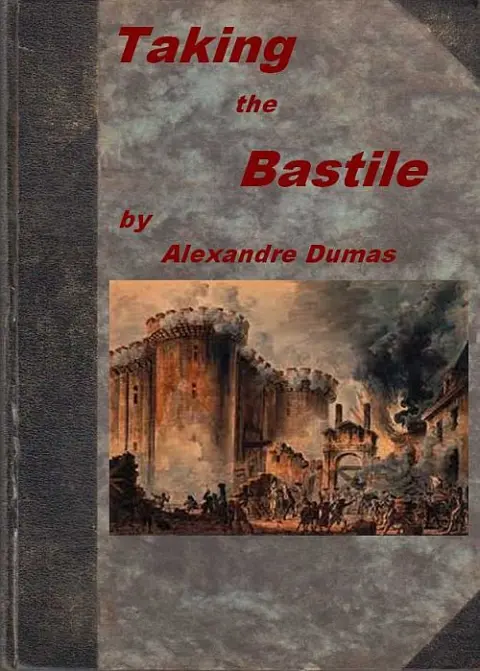
THE CLASSIC COLLECTION · 1891
"Taking the Bastile; Or, Pitou the Peasant" by Alexandre Dumas is a historical novel written in the late 19th century. The story centers around the tumultuous period of the French Revolution, focusing on the character of Ange Pitou, a peasant boy who becomes embroiled in the unfolding events and strives to find his place amidst the chaos. Dumas weaves a tale of heroism, societal change, and the quest for liberty, encapsulated in the dramatic moment of storming the Bastille. The opening portion of the novel introduces us to a young man named Gilbert, who ventures through the snow-covered countryside to find a peasant woman, Madeline Pitou. He brings with him an infant to be raised at her cottage, a child whose birth has been surrounded by tragedy as both parents have died. As Gilbert entrusts the child to Madeline, he expresses both hope and sorrow for the boy's future. Through his interactions with Madeline and her family, we see the warmth and complexities of rural life, as well as the undercurrents of change looming on the horizon. The introduction sets the stage for the emergence of the protagonist, Ange Pitou, hinting at themes of loss, parental bonds, and the significant impact of the upcoming revolution on personal and societal levels.
Introduction adapted from the source catalogue; source summaries may be automatically generated.
Free to read · English · 76,316 words · No account needed
MAKE TIME FOR A GOOD BOOK
On by default. Untick to stop anonymous reading totals. Each page counts after 10 seconds in view. How this works.
Anonymous counting is on unless you have switched it off.
Gilbert had retired into a window recess, while the King paced the Bulls-eye Hall, called on account of a round window in the wall, thinking now of public matters, then of his visitor's persistence though nothing but news from Paris ought to have enchained him.
Suddenly the door opened and the lady entered, dressed in the extreme of the showy and fantastic fashion of Marie Antoinette and her court.
She was lovely, this Countess Charny, with a peerless figure and her hand was aristocratic to the utmost with which she played with a small cane.
"She, Andrea Taverney!" muttered Gilbert, involuntarily shrinking
behind the curtains.
"My lady, I ask your presence for a little information," began the monarch, seeing nothing of Gilbert's emotion.
"I am ready to satisfy your Majesty." The voice attracted the doctor
who came a little forward.
"A week ago, or so, a blank letter under the royal seal was delivered to Minister Necker," went on the King, "for the arrest----"
Gilbert had his eye on the lady, who was pale, feverish and fretful as if bent under the weight of a secret.
"This warrant was applied for by your ladyship and countersigned by the Queen. I say this to refresh your memory. Why do you not say something, countess?"
"It is true, your Majesty," she faltered, in a feverish abstraction, "I wrote for the letter, filled up the blanks, and the Queen backed it."
"Will you please tell me what crime the person committed for whom the measure was taken?" demanded Louis.
"Sire, I may not do that, but I shall say the crime was great."
"Then you should do so to the object," continued the King; "what you refuse the King Louis XVI., you cannot Doctor Gilbert."
He stepped aside to discover the doctor, who opened the curtains and appeared as pale as the staggering lady. She tossed her head backwards as if going to swoon, and only kept her footing by aid of a table. She leaned on it in dull despair, like one whom a snake bite was filling with poison.
"My lady, let me put the question to you which the King addressed,"
said Gilbert.
Andrea's lips moved but no sound struggled forth.
"What did I do to you, lady, that your order threw me into a hideous
dungeon?"
The voice made her leap as if it tore the very soul in her.
Suddenly lowering her cold gaze on him, she replied:
"Sir, I do not know you."
But while she was speaking the mesmerist stared at her with so much fixedness and his glance was so charged with invincible boldness that her own lost lustre under his.
Your reading position is saved on this browser. Take it to another device with a library code. Reading pages adapt to text, rather than matching a printed edition.
Alexandre Dumas
Alexandre Dumas & Auguste Maquet
Alexandre Dumas
Alexandre Dumas
BEHIND THE BOOK
This eBook is for the use of anyone anywhere in the United States and most other parts of the world at no cost and with almost no restrictions whatsoever. You may copy it, give it away or re-use it under the terms of the Project Gutenberg License included with this eBook or online at www.gutenberg.org. If you are not located in the United States, you will have to check the laws of the country where you are located before using this eBook. Read the source licence.
The original source file, including credits and licence, is retained by this library. Request an original-format copy at no charge. Please include the book title and Project Gutenberg identifier #45424.
KEEP YOUR CURIOSITY GOING
Cécile Tormay

Moritz Busch
Coulson Kernahan
John L. Ransom

Maurice Baring
Frances Wright