
Love and liberty
Alexandre Dumas
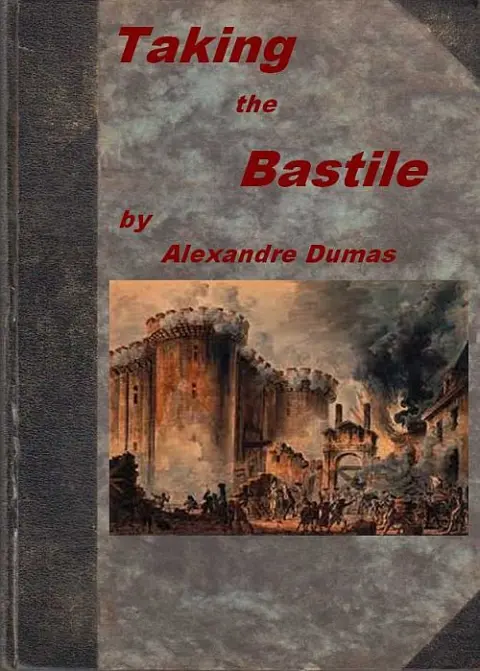
THE CLASSIC COLLECTION · 1891
"Taking the Bastile; Or, Pitou the Peasant" by Alexandre Dumas is a historical novel written in the late 19th century. The story centers around the tumultuous period of the French Revolution, focusing on the character of Ange Pitou, a peasant boy who becomes embroiled in the unfolding events and strives to find his place amidst the chaos. Dumas weaves a tale of heroism, societal change, and the quest for liberty, encapsulated in the dramatic moment of storming the Bastille. The opening portion of the novel introduces us to a young man named Gilbert, who ventures through the snow-covered countryside to find a peasant woman, Madeline Pitou. He brings with him an infant to be raised at her cottage, a child whose birth has been surrounded by tragedy as both parents have died. As Gilbert entrusts the child to Madeline, he expresses both hope and sorrow for the boy's future. Through his interactions with Madeline and her family, we see the warmth and complexities of rural life, as well as the undercurrents of change looming on the horizon. The introduction sets the stage for the emergence of the protagonist, Ange Pitou, hinting at themes of loss, parental bonds, and the significant impact of the upcoming revolution on personal and societal levels.
Introduction adapted from the source catalogue; source summaries may be automatically generated.
Free to read · English · 76,316 words · No account needed
MAKE TIME FOR A GOOD BOOK
On by default. Untick to stop anonymous reading totals. Each page counts after 10 seconds in view. How this works.
Anonymous counting is on unless you have switched it off.
"They are the people's," corrected Billet, whereupon the other who knew the speaker was incapable of wronging a man to the extent of a mustard-seed, went up to the nearest corpse with multiplied caution, and making sure he was lifeless, he took his musket, cartridge-box and sabre.
He wanted to take his hamlet but had his doubts about the defensive armor being "confisticatable" like the offensive arms; while deliberating he listened towards Vendome Square.
"It seems to me that the Royal Germans are coming back again," he said.
Indeed a troop of horse was heard coming at the walking gait.
"Quick, quick, they are returning," said Pitou.
"Billet looked around to see what means of resistance were offered, but the place was almost deserted.
"Let us be off," said he.
He went down Chartres Street, followed by Pitou who dragged the sabre after him by the scabbard-straps, not knowing how it ought to be hooked up till Billet showed him.
"You looked like a traveling-tinker," he said.
On Louis XV. Square they met the column, started off to go over the river to the Invalides but stopped short. The bridges and the Champs Elysées were blocked.
"Try the Tuileries Garden bridge," suggested Billet.
It was quite a simple proposition; the mob accepted it and followed Billet: but swords shining half way to the Gardens indicated that cavalry intercepted the march to that bridge.
"These confounded dragoons are everywhere," grumbled the farmer.
"I believe we are caught," said his friend.
"Nonsense, five or six thousand men are to be caught, and we are that
strong."
The dragoons came forward, slowly, but it was an advance.
"The Royale Street is left us," said Billet; "come this way, Ange."
But a line of soldiers shut this street up.
"It looks as though you were right," said the countryman.
"Alas!" sighed Ange, who had followed him like his shadow.
All his regret at not being wrong was shown in the single word by the
tone it was spoken in.
By its clamor and motion the mob showed that it was no less sensible than he about the quandary all were in.
Indeed, by a skillful manoeuvre, Prince Lambesq had encircled the rioters in a bow of iron, the cord being represented by the Tuileries garden-wall, hard to climb over, and the drawbridge railing, almost impossible to force. Billet judged that the position was bad. Still, being a cool fellow, full of resources when the emergency rose, he looked round him. Seeing a pile of lumber by the riverside, he said:
"I have a notion, Pitou; come along."
Your reading position is saved on this browser. Take it to another device with a library code. Reading pages adapt to text, rather than matching a printed edition.
Alexandre Dumas
Alexandre Dumas & Auguste Maquet
Alexandre Dumas
Alexandre Dumas
BEHIND THE BOOK
This eBook is for the use of anyone anywhere in the United States and most other parts of the world at no cost and with almost no restrictions whatsoever. You may copy it, give it away or re-use it under the terms of the Project Gutenberg License included with this eBook or online at www.gutenberg.org. If you are not located in the United States, you will have to check the laws of the country where you are located before using this eBook. Read the source licence.
The original source file, including credits and licence, is retained by this library. Request an original-format copy at no charge. Please include the book title and Project Gutenberg identifier #45424.
KEEP YOUR CURIOSITY GOING
Cécile Tormay

Moritz Busch
Coulson Kernahan
John L. Ransom

Maurice Baring
Frances Wright