
Love and liberty
Alexandre Dumas
THE CLASSIC COLLECTION · 1891
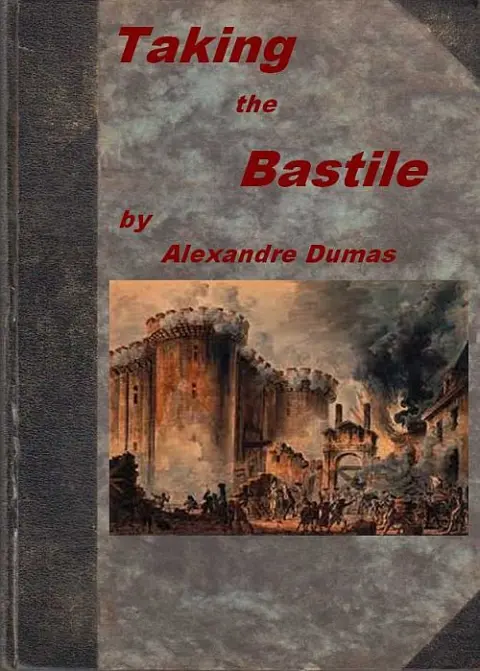
"Taking the Bastile; Or, Pitou the Peasant" by Alexandre Dumas is a historical novel written in the late 19th century. The story centers around the tumultuous period of the French Revolution, focusing on the character of Ange Pitou, a peasant boy who becomes embroiled in the unfolding events and strives to find his place amidst the chaos. Dumas weaves a tale of heroism, societal change, and the quest for liberty, encapsulated in the dramatic moment of storming the Bastille. The opening portion of the novel introduces us to a young man named Gilbert, who ventures through the snow-covered countryside to find a peasant woman, Madeline Pitou. He brings with him an infant to be raised at her cottage, a child whose birth has been surrounded by tragedy as both parents have died. As Gilbert entrusts the child to Madeline, he expresses both hope and sorrow for the boy's future. Through his interactions with Madeline and her family, we see the warmth and complexities of rural life, as well as the undercurrents of change looming on the horizon. The introduction sets the stage for the emergence of the protagonist, Ange Pitou, hinting at themes of loss, parental bonds, and the significant impact of the upcoming revolution on personal and societal levels.
Introduction adapted from the source catalogue; source summaries may be automatically generated.
Free to read · English · 76,316 words · No account needed
MAKE TIME FOR A GOOD BOOK
On by default. Untick to stop anonymous reading totals. Each page counts after 10 seconds in view. How this works.
Anonymous counting is on unless you have switched it off.
"The dragoons, here come the dragoons!" yelled many at the same time as the gathering began to retire over the square to get away up Richelieu Street.
At a distance but approaching, they heard the clatter of heavy cavalry.
"To arms, to arms," cried the runaways.
"Plague on you," said Billet, throwing down the dead Savoyard, "Lend us your guns if you will not use them."
"Hold on till you see whether we won't use them," said the soldier whom Billet had addressed, as he snatched back the musket which the farmer had torn from his grip. "Bite your cartridges, boys--and make the Austrians bite the dust if they interfere with these good fellows."
"Ay, they shall see," said the soldiers, carrying their hands from the cartridge-boxes to their mouths.
"Thunder," muttered Billet, stamping his foot: "why did I not bring my old duck-gun along? But one of these pesky Austrians may be laid out and I can get his carbine."
"In the meantime," said a voice, "taking this gun--it is ready loaded."
A stranger slipped a handsome fowling-piece into Billet's hands.
At this very instant, the dragoons rushed into the square, upsetting
everybody they ran against.
The officer commanding the French Guards came out three steps to the
front.
"Halloa, you gentlemen of the heavy dragoons," he called out. "Halt,
please."
Whether the cavalry did not hear him, or did not want to hear him, or, again, were carried on by the impetus of a charge too violent to check, the Germans wheeled by a half-turn to the right and trampled down an old man and a woman who disappeared under the hoofs.
"Fire," roared Billet, "why don't you fire?"
He was near the officer and the order might have been taken as coming from him. Anyway, the French Guards carried their muskets to the shoulder, and delivered a volley which stopped the dragoons short.
"Here, gentlemen of the Guards," said a German officer, coming before the squadron thrown into disorder, "do you know you are firing on us?"
"Yes, by heaven we know it, and you shall know it, too." So Billet retorted, taking aim at the speaker and dropping him with the shot.
Thereupon the reserve rank of the Guards made a discharge and the Germans, seeing that they had trained soldiery to deal with and not citizens who broke and fled at the first shot, pulled round and made off for Vendome Square in the midst of a formidable outburst of hoots and cheers of triumph so that some horses broke loose and smashed their heads against the store shutters.
"Hurrah for the French Guards!" shouted the multitude.
Your reading position is saved on this browser. Take it to another device with a library code. Reading pages adapt to text, rather than matching a printed edition.
Alexandre Dumas
Alexandre Dumas & Auguste Maquet
Alexandre Dumas
Alexandre Dumas
BEHIND THE BOOK
This eBook is for the use of anyone anywhere in the United States and most other parts of the world at no cost and with almost no restrictions whatsoever. You may copy it, give it away or re-use it under the terms of the Project Gutenberg License included with this eBook or online at www.gutenberg.org. If you are not located in the United States, you will have to check the laws of the country where you are located before using this eBook. Read the source licence.
The original source file, including credits and licence, is retained by this library. Request an original-format copy at no charge. Please include the book title and Project Gutenberg identifier #45424.
KEEP YOUR CURIOSITY GOING
Cécile Tormay

Moritz Busch
Coulson Kernahan
John L. Ransom

Maurice Baring
Frances Wright