
Love and liberty
Alexandre Dumas
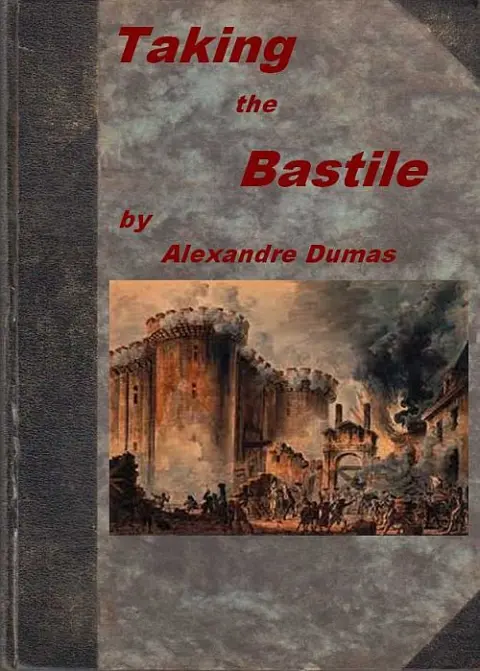
THE CLASSIC COLLECTION · 1891
"Taking the Bastile; Or, Pitou the Peasant" by Alexandre Dumas is a historical novel written in the late 19th century. The story centers around the tumultuous period of the French Revolution, focusing on the character of Ange Pitou, a peasant boy who becomes embroiled in the unfolding events and strives to find his place amidst the chaos. Dumas weaves a tale of heroism, societal change, and the quest for liberty, encapsulated in the dramatic moment of storming the Bastille. The opening portion of the novel introduces us to a young man named Gilbert, who ventures through the snow-covered countryside to find a peasant woman, Madeline Pitou. He brings with him an infant to be raised at her cottage, a child whose birth has been surrounded by tragedy as both parents have died. As Gilbert entrusts the child to Madeline, he expresses both hope and sorrow for the boy's future. Through his interactions with Madeline and her family, we see the warmth and complexities of rural life, as well as the undercurrents of change looming on the horizon. The introduction sets the stage for the emergence of the protagonist, Ange Pitou, hinting at themes of loss, parental bonds, and the significant impact of the upcoming revolution on personal and societal levels.
Introduction adapted from the source catalogue; source summaries may be automatically generated.
Free to read · English · 76,316 words · No account needed
MAKE TIME FOR A GOOD BOOK
On by default. Untick to stop anonymous reading totals. Each page counts after 10 seconds in view. How this works.
Anonymous counting is on unless you have switched it off.
"These rogues of larned folk," he broke forth, shaking his fist at the town, "look at them training up the youth in the way they should not go, in laziness and idleness. What good is such a sluggard to his brothers, I want to know?"
"Not much," said Pitou; "luckily I have no brothers."
"By brothers I mean all mankind," continued the farmer; "are not all
men brothers, hey?"
"The Scripture says so."
"And equals," proceeded the other.
"That is another matter," said the younger man; "if I had been the equal of Father Fortier I guess he would not have given me the whip so often; if I were the equal of my aunt, she would not have driven me from home."
"I tell you that all men are brothers and we shall soon prove this to the tyrants," said Billet. "I will take you into my house to prove it."
"You will? but, just think, I eat three pounds of bread a day, with
butter and cheese to boot."
"Pooh, I see you will not be dear to feed," said the farmer, "we will
keep you."
"Have you nothing else to ask father, Pitou?" inquired Catherine.
"Nothing, miss."
"What did you come along for?"
"Just to keep you company."
"Well, you are gallant, and I accept the compliment for what it is
worth," said the girl, "but you came to ask news about your guardian,
Pitou."
"So I did. That is funny--I forgot it."
"You want to speak about our worthy Dr. Gilbert?" said the farmer, with a tone indicating the degree of deep consideration in which he held his landlord.
"Just so," answered Pitou; "but I am not in need now; since you house me, I can tranquilly wait till he returns from America."
"You will not have to wait long, for he has returned."
"You don't say so; when?"
"I cannot exactly say: but he was at Havre a week ago; for I have a parcel in my saddlebags that comes from him and was handed me at Villers Cotterets, and here it is."
"How do you know it is from him?"
"Because there is a letter in it."
"Excuse me, daddy," interrupted Catherine, "but you boast that you
cannot read."
"So I do! I want folks to say: 'There is old Farmer Billet, who owes nothing to nobody--not even the schoolmaster: for he has made himself all alone.' I did not read the letter but the rural constabulary quarter-master whom I met there."
"What does he say--that he still is content with you?"
"Judge for yourself."
Out of a leather wallet he took a letter which he held to his daughter,
who read:
Your reading position is saved on this browser. Take it to another device with a library code. Reading pages adapt to text, rather than matching a printed edition.
Alexandre Dumas
Alexandre Dumas & Auguste Maquet
Alexandre Dumas
Alexandre Dumas
BEHIND THE BOOK
This eBook is for the use of anyone anywhere in the United States and most other parts of the world at no cost and with almost no restrictions whatsoever. You may copy it, give it away or re-use it under the terms of the Project Gutenberg License included with this eBook or online at www.gutenberg.org. If you are not located in the United States, you will have to check the laws of the country where you are located before using this eBook. Read the source licence.
The original source file, including credits and licence, is retained by this library. Request an original-format copy at no charge. Please include the book title and Project Gutenberg identifier #45424.
KEEP YOUR CURIOSITY GOING
Cécile Tormay

Moritz Busch
Coulson Kernahan
John L. Ransom

Maurice Baring
Frances Wright