
Love and liberty
Alexandre Dumas
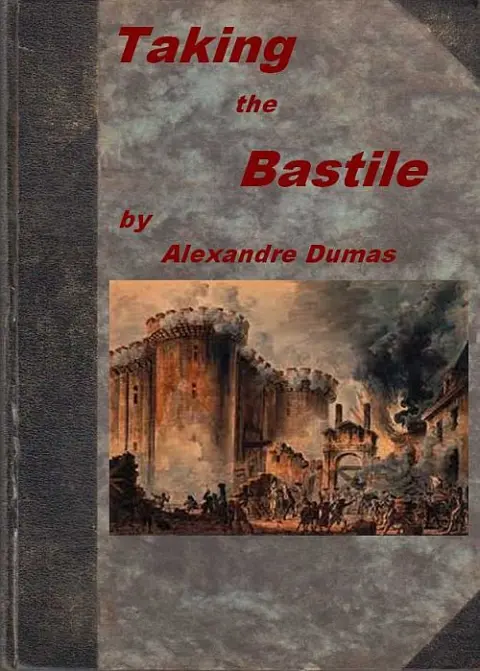
THE CLASSIC COLLECTION · 1891
"Taking the Bastile; Or, Pitou the Peasant" by Alexandre Dumas is a historical novel written in the late 19th century. The story centers around the tumultuous period of the French Revolution, focusing on the character of Ange Pitou, a peasant boy who becomes embroiled in the unfolding events and strives to find his place amidst the chaos. Dumas weaves a tale of heroism, societal change, and the quest for liberty, encapsulated in the dramatic moment of storming the Bastille. The opening portion of the novel introduces us to a young man named Gilbert, who ventures through the snow-covered countryside to find a peasant woman, Madeline Pitou. He brings with him an infant to be raised at her cottage, a child whose birth has been surrounded by tragedy as both parents have died. As Gilbert entrusts the child to Madeline, he expresses both hope and sorrow for the boy's future. Through his interactions with Madeline and her family, we see the warmth and complexities of rural life, as well as the undercurrents of change looming on the horizon. The introduction sets the stage for the emergence of the protagonist, Ange Pitou, hinting at themes of loss, parental bonds, and the significant impact of the upcoming revolution on personal and societal levels.
Introduction adapted from the source catalogue; source summaries may be automatically generated.
Free to read · English · 76,316 words · No account needed
MAKE TIME FOR A GOOD BOOK
On by default. Untick to stop anonymous reading totals. Each page counts after 10 seconds in view. How this works.
Anonymous counting is on unless you have switched it off.
"You are right, my boy, by a blamed sight--you see I can make rhymes, if I like to try. It strikes me that you have the makings in you of something better than a scholard, and that it is a deused lucky thing that you try something else--mainly at the present time. As a farmer I know which way the wind blows, and it is rough for priests. So then, as you are an honest lad and larned," here Pitou bowed at being so styled for the first time--"you can get along without the black gown."
Catherine, who was setting the chickens and pigeons on the ground, was listening with interest to the dialogue.
"It looks hard to win a livelihood," said the lad.
"What do you know how to do?"
"I can make birdlime and snare game. I can mock the birds' songs, eh,
Miss Kate?"
"He can whistle like a blackbird."
"But whistling is not a trade," commented Billet.
"Just what I say to myself, by Jingo!"
"Oh, you can swear--that is a manly accomplishment, any how."
"Oh, did I? I beg your pardon, farmer."
"Don't mention it," said the rustic. "I rip out myself sometimes. Thunder and blazes!" he roared to his horse, "can't you be quiet? these devilish Percherons must always be grazing and jerking. Are you lazy," he continued to the lad.
"I don't know. I have never worked at anything but learning Greek and Latin, and they do not tempt me much."
"A good job--that shows that you are not such a fool, as I took you
for," said Billet.
His hearer opened his eyes immeasurably; this was the first time he had heard this order of ideas, subversive of all the theories set up for him previously.
"I mean, are you easily tired out?"
"Bless you, I can go ten leagues and never feel it."
"Good, we are getting on; we might train you a trifle lower and make some money on you as a runner."
"Train me lower," said Pitou, looking at his slender figure, bony arms and stilt-like legs; "I fancy I am thin now as it is."
"In fact, you are a treasure, my friend," replied the yeoman, bursting
into laughter.
Pitou was stepping from one surprise to another; never had he been
esteemed so highly.
"In short, how are you at work?"
"Don't know; for I never have worked."
The girl laughed, but her father took the matter seriously.
Your reading position is saved on this browser. Take it to another device with a library code. Reading pages adapt to text, rather than matching a printed edition.
Alexandre Dumas
Alexandre Dumas & Auguste Maquet
Alexandre Dumas
Alexandre Dumas
BEHIND THE BOOK
This eBook is for the use of anyone anywhere in the United States and most other parts of the world at no cost and with almost no restrictions whatsoever. You may copy it, give it away or re-use it under the terms of the Project Gutenberg License included with this eBook or online at www.gutenberg.org. If you are not located in the United States, you will have to check the laws of the country where you are located before using this eBook. Read the source licence.
The original source file, including credits and licence, is retained by this library. Request an original-format copy at no charge. Please include the book title and Project Gutenberg identifier #45424.
KEEP YOUR CURIOSITY GOING
Cécile Tormay

Moritz Busch
Coulson Kernahan
John L. Ransom

Maurice Baring
Frances Wright