
Love and liberty
Alexandre Dumas
THE CLASSIC COLLECTION · 1891
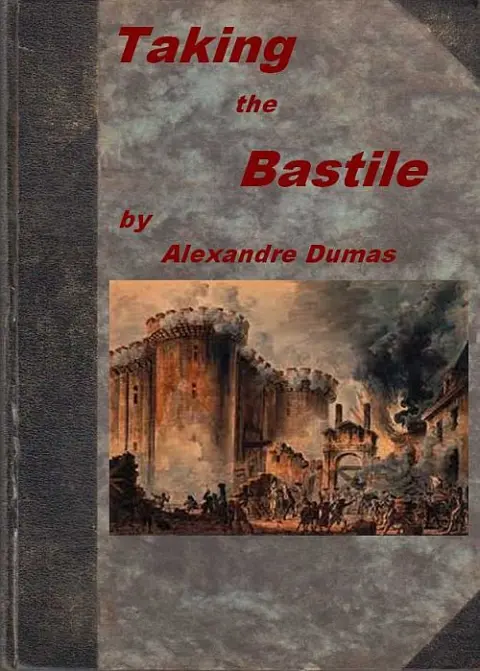
"Taking the Bastile; Or, Pitou the Peasant" by Alexandre Dumas is a historical novel written in the late 19th century. The story centers around the tumultuous period of the French Revolution, focusing on the character of Ange Pitou, a peasant boy who becomes embroiled in the unfolding events and strives to find his place amidst the chaos. Dumas weaves a tale of heroism, societal change, and the quest for liberty, encapsulated in the dramatic moment of storming the Bastille. The opening portion of the novel introduces us to a young man named Gilbert, who ventures through the snow-covered countryside to find a peasant woman, Madeline Pitou. He brings with him an infant to be raised at her cottage, a child whose birth has been surrounded by tragedy as both parents have died. As Gilbert entrusts the child to Madeline, he expresses both hope and sorrow for the boy's future. Through his interactions with Madeline and her family, we see the warmth and complexities of rural life, as well as the undercurrents of change looming on the horizon. The introduction sets the stage for the emergence of the protagonist, Ange Pitou, hinting at themes of loss, parental bonds, and the significant impact of the upcoming revolution on personal and societal levels.
Introduction adapted from the source catalogue; source summaries may be automatically generated.
Free to read · English · 76,316 words · No account needed
MAKE TIME FOR A GOOD BOOK
On by default. Untick to stop anonymous reading totals. Each page counts after 10 seconds in view. How this works.
Anonymous counting is on unless you have switched it off.
"I am rather of the doctor's opinion," said the monarch.
"Say you are eager to enjoy this triumph," said the Queen.
"The King is right, and his eagerness proves the accuracy of his judgment on men and events. The sooner his Majesty is, the greater will be his triumph: by delay the gain may be lost. This promptness will change the King's position and make the act in some way his order. Lose time, Sire, and their demand will be an order."
"Not to-day, Master Gilbert," said the Queen, "to-morrow. Grant me till then, and I swear not to oppose the movement."
"But who knows what will happen meanwhile?" expostulated the King in despair. "Marie, you seem doomed to ruin me. The Assembly will send me some addresses which will rob me of all the merit in taking the first step."
Gilbert nodded.
"Better so," said the Queen with sullen fury, "refuse and preserve your regal dignity: go not to Paris but wage war from here; and if we must die here, let us fall like rulers, like masters, like Christians, who cling to their God as to their crown."
The King saw from her excitement that he must give way.
"But what do you expect between whiles?" he inquired: "A reinforcement from Germany? or news from town?"
It was a coat of mail which the King refused to wear, but her misapprehension of the monarch who knew he was not of the times when kings wore armor, cost a precious time.
Without other safeguard than Gilbert's breast, as the latter rode in the coach beside the monarch, the visit to Paris was made.
In the Queen's drive, in the Champs Elysées, Mayor Bailly offered him
the city keys, saying:
"Sire, I bring your Majesty the keys of the good city. They are the same offered to Henry Fourth. He won his people, but the people have now won their King."
On the return, all having passed smoothly, crossing Louis XV. Place, a shot was fired from across the river and Gilbert felt a stroke. The bullet had hit one of his steel vest buttons and glanced off into the crowd and killed an unfortunate woman.
The King heard her scream and heard the shot.
"Burning powder in my honor?" he said.
"Yes, Sire," was Gilbert's easy reply.
It was never known what hand fired this regicidal shot which justified the Queen's fear that her husband would be assassinated.
While all was festivity at Paris, gloom settled down on Versailles at eventide. With darkness came its retinue of fears and sinister visions, when suddenly uproar was heard at the end of the town.
Your reading position is saved on this browser. Take it to another device with a library code. Reading pages adapt to text, rather than matching a printed edition.
Alexandre Dumas
Alexandre Dumas & Auguste Maquet
Alexandre Dumas
Alexandre Dumas
BEHIND THE BOOK
This eBook is for the use of anyone anywhere in the United States and most other parts of the world at no cost and with almost no restrictions whatsoever. You may copy it, give it away or re-use it under the terms of the Project Gutenberg License included with this eBook or online at www.gutenberg.org. If you are not located in the United States, you will have to check the laws of the country where you are located before using this eBook. Read the source licence.
The original source file, including credits and licence, is retained by this library. Request an original-format copy at no charge. Please include the book title and Project Gutenberg identifier #45424.
KEEP YOUR CURIOSITY GOING
Cécile Tormay

Moritz Busch
Coulson Kernahan
John L. Ransom

Maurice Baring
Frances Wright