
Love and liberty
Alexandre Dumas
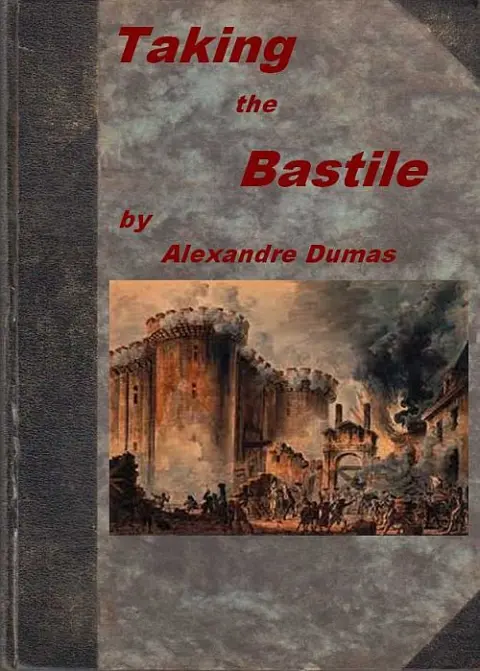
THE CLASSIC COLLECTION · 1891
"Taking the Bastile; Or, Pitou the Peasant" by Alexandre Dumas is a historical novel written in the late 19th century. The story centers around the tumultuous period of the French Revolution, focusing on the character of Ange Pitou, a peasant boy who becomes embroiled in the unfolding events and strives to find his place amidst the chaos. Dumas weaves a tale of heroism, societal change, and the quest for liberty, encapsulated in the dramatic moment of storming the Bastille. The opening portion of the novel introduces us to a young man named Gilbert, who ventures through the snow-covered countryside to find a peasant woman, Madeline Pitou. He brings with him an infant to be raised at her cottage, a child whose birth has been surrounded by tragedy as both parents have died. As Gilbert entrusts the child to Madeline, he expresses both hope and sorrow for the boy's future. Through his interactions with Madeline and her family, we see the warmth and complexities of rural life, as well as the undercurrents of change looming on the horizon. The introduction sets the stage for the emergence of the protagonist, Ange Pitou, hinting at themes of loss, parental bonds, and the significant impact of the upcoming revolution on personal and societal levels.
Introduction adapted from the source catalogue; source summaries may be automatically generated.
Free to read · English · 76,316 words · No account needed
MAKE TIME FOR A GOOD BOOK
On by default. Untick to stop anonymous reading totals. Each page counts after 10 seconds in view. How this works.
Anonymous counting is on unless you have switched it off.
"Which I grieve you should share," added Louis.
"Allow me to say, Sire, that the future may not be so lamentable," interposed Gilbert, who pitied the dethroned rulers; "a despotic monarchy has ceased, but a constitutional one commences."
"Am I the man to found that in France?" asked the King.
"Why not?" exclaimed the Queen, catching some hope from Gilbert's
suggestion.
"Madam, I see clearly. From the day when I walk among men like themselves, I lose all the factitious strength necessary to govern France as the Louis before me did. The French want a master and one who will wield the sword. I feel no power to strike."
"Not to strike those who would rob your children of their estate," cried the Queen, "and who wish to break the lilies on your crown?"
"What am I to answer? if I answer No, I raise in you one of those storms which embitter my life. You know how to hate--so much the better for you. You can be unjust; I do not reproach you, for it is an excellent trait in the lordly. Madam, we must resign ourselves: it takes strength to push ahead this car with scythe-bladed wheels, and we lack strength."
"That is bad, for it will run over our children," sighed Marie
Antoinette.
"I know it, but we shall not be pushing it."
"We can draw it back, Sire."
"Oh, beware," said Gilbert, deeply, "it will crush you then."
"Let him speak what the newspapers have been saying for a week past. At any rate he wraps up the bitterness of his free speech," said the King. "In short, I shall go to Paris."
"Who knows but you will find it the gulf I fear?" said the Queen in a hollow, irritated voice. "The assassin may be there with his bullet, who will know among a thousand threatening fists, which holds the dagger?"
"Fear nothing of that sort, they love me," said Louis.
"You make me pity you for saying that. They love you who slay and mangle and cut the throats of your representatives? The Governor of the Bastile was your image. They killed that brave and faithful servitor, as they would kill you in his stead. The more easy as they know you and that you would turn the other cheek to the smiter. If you are killed, what about my children?" concluded the Queen.
"Madam," struck in Gilbert, deeming it time he intervened, "the King is so respected that I fear that his entry will be like that of Juggernaut, under whose wheels the fanatics will throw themselves to be crushed. This march into Paris will be a triumphal progress."
Your reading position is saved on this browser. Take it to another device with a library code. Reading pages adapt to text, rather than matching a printed edition.
Alexandre Dumas
Alexandre Dumas & Auguste Maquet
Alexandre Dumas
Alexandre Dumas
BEHIND THE BOOK
This eBook is for the use of anyone anywhere in the United States and most other parts of the world at no cost and with almost no restrictions whatsoever. You may copy it, give it away or re-use it under the terms of the Project Gutenberg License included with this eBook or online at www.gutenberg.org. If you are not located in the United States, you will have to check the laws of the country where you are located before using this eBook. Read the source licence.
The original source file, including credits and licence, is retained by this library. Request an original-format copy at no charge. Please include the book title and Project Gutenberg identifier #45424.
KEEP YOUR CURIOSITY GOING
Cécile Tormay

Moritz Busch
Coulson Kernahan
John L. Ransom

Maurice Baring
Frances Wright