THE CLASSIC COLLECTION✦An outlaw’s diary: the CommuneCLASSIC FREE BOOKS
An outlaw’s diary: the Commune
Cécile Tormay
THE CLASSIC COLLECTION · 1904
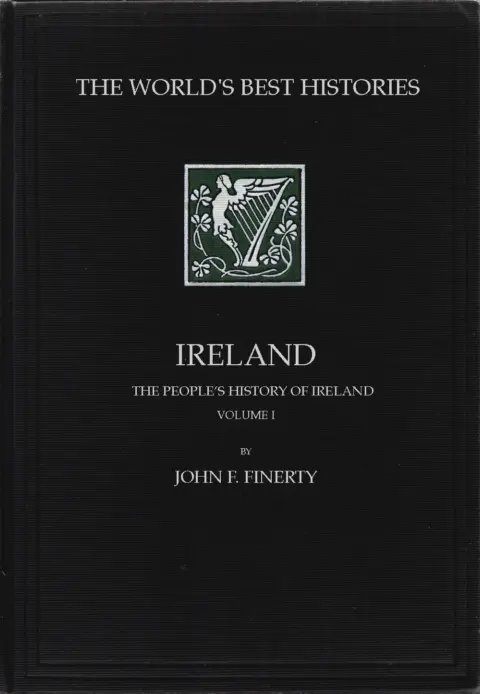
"Ireland: The People's History of Ireland, Volume 1" by John F. Finerty is a historical account written in the early 20th century. The text delves into the rich and complex history of Ireland, addressing the narrative from ancient times through significant events, such as the Reformation and invasions. It aims to provide a comprehensive understanding of the people and culture of Ireland, particularly for those unfamiliar with its past. At the start of the volume, Finerty discusses geographical and physical characteristics of Ireland, outlining its divisions into provinces and detailing the nation's fertile land and vibrant resources. The text emphasizes the importance of Ireland's history, noting the influence of its early inhabitants, the establishment of social structures, and the impact of various invasions, including the Danish and Norman incursions. Finerty aims to illuminate the contributions of the Irish people to the wider world and their enduring legacy, especially as it relates to the Irish diaspora in America.
Introduction adapted from the source catalogue; source summaries may be automatically generated.
Free to read · English · 128,763 words · No account needed
MAKE TIME FOR A GOOD BOOK
On by default. Untick to stop anonymous reading totals. Each page counts after 10 seconds in view. How this works.
Anonymous counting is on unless you have switched it off.
ULSTER was subdued, for a time, but, in Munster, the younger branch of the Geraldines, known as Earls of Desmond, rose against the edicts of Elizabeth and precipitated that long, sanguinary, and dreary conflict known as the Geraldine War. Most of the Irish and Anglo-Irish chiefs of the southern province bore a part in it, and it only terminated after a murderous struggle, stretching over nearly seven years. The Desmonds and their allies gained many successes, but lack of cohesion, as always, produced the inevitable result—final defeat. South Munster became a desert. Elizabeth’s armies systematically destroyed the growing crops, and, at last, famine accomplished for England what the sword could not have done. The Munster Geraldines were mainly led by Sir James Fitzmaurice, a kinsman of the earl, who was a brave man and an accomplished soldier. The earl himself, and his brother, Sir John Fitzgerald, had been summoned to London by the queen, and were made prisoners and placed in the Tower, after the usual treacherous fashion. After a period of detention, they were transferred, as state prisoners, to Dublin Castle, but managed to effect their escape (doubtless by the connivance of friendly officials) on horseback and reached their own country in due time. The earl, foolishly, held aloof from Fitzmaurice until a dangerous crisis was reached, when he threw himself into the struggle and, in defence of his country and religion, lost all he possessed. The Pope and King of Spain, in the Catholic interest, sent men and money, but the Papal contingent, led by an English military adventurer, named Stukley, was diverted from its purpose, and never reached Ireland. The Spanish force—less than a thousand men—was brought to Ireland by Fitzmaurice himself. He had made a pilgrimage to Spain for that purpose. Smerwick Castle, on the Kerry coast, was their point of debarkation. With unaccountable timidity, Earl Desmond made no sign of an alliance, and Fitzmaurice was in search of other succor, when he fell, in a petty encounter with the De Burgos of Castle Connell. The Spaniards, who occupied Smerwick, were besieged by a large Anglo-Irish force, under the Earl of Ormond and other veteran chiefs. They made a gallant and desperate defence, but they were invested by land and sea, and were perfectly helpless against the shower of shot and shell rained upon them night and day by the English batteries. Seeing that further resistance was useless, the Spanish commander finally surrendered at discretion, but, disgraceful to relate, Lord Deputy De Grey refused quarter and the hapless Spaniards were butchered to the last man. It is not pleasant to have to state that among the fierce besiegers were the celebrated Sir Walter Raleigh, the great English poet Edmund Spenser, and Hugh O’Neill, then serving Elizabeth, “for policy’s sake,” in a subordinate capacity, but afterward destined to be the most formidable of all her Irish foes. The Munster Geraldines were exterminated, except for a few collateral families—the Knight of Kerry, the Knight of Glin, and some other chiefs whose titles still survive. But the great House of Desmond vanished forever from history, when Garret Fitzgerald, the last earl, after all his kinsmen had fallen in the struggle, was betrayed and murdered by a mercenary wretch, named Moriarty, in a peasant’s hut in Kerry, not far from Castle Island. The assassin and his brutal confederates decapitated the remains and sent the poor old head to Elizabeth, in London, who caused it to be spiked over the “traitor’s gate” of the Tower. So ended the Geraldine revolt, which raged in Munster from 1578 to 1584, until all that fair land was a desert and a sepulchre. The bravest battle fought during its continuance was that of Glendalough, in the summer of 1580. This was on the soil of Leinster, and the victory was won by the heroic Clan O’Byrne, of Wicklow, led by the redoubtable chief, Fiach MacHugh. The English, who were led by Lord De Grey in person, suffered a total rout, and the Lord Deputy, at the head of the few terrified survivors, fled in disgrace to Dublin, leaving behind him the dead bodies of four of his bravest and ablest captains—Audley, Cosby, Carew, and Moore.
Your reading position is saved on this browser. Take it to another device with a library code. Reading pages adapt to text, rather than matching a printed edition.
BEHIND THE BOOK
This eBook is for the use of anyone anywhere in the United States and most other parts of the world at no cost and with almost no restrictions whatsoever. You may copy it, give it away or re-use it under the terms of the Project Gutenberg License included with this eBook or online at www.gutenberg.org. If you are not located in the United States, you will have to check the laws of the country where you are located before using this eBook. Read the source licence.
The original source file, including credits and licence, is retained by this library. Request an original-format copy at no charge. Please include the book title and Project Gutenberg identifier #67845.
KEEP YOUR CURIOSITY GOING
Cécile Tormay

Moritz Busch
John L. Ransom
Frances Wright
Cécile Tormay

Mabel Potter Daggett