THE CLASSIC COLLECTION✦An outlaw’s diary: the CommuneCLASSIC FREE BOOKS
An outlaw’s diary: the Commune
Cécile Tormay
THE CLASSIC COLLECTION · 1904
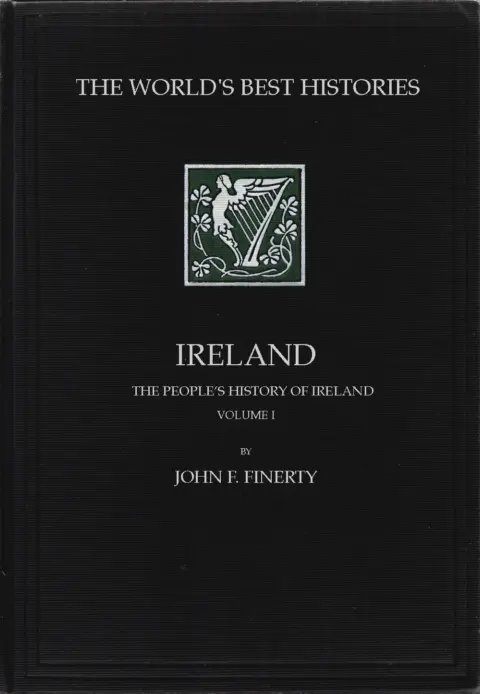
"Ireland: The People's History of Ireland, Volume 1" by John F. Finerty is a historical account written in the early 20th century. The text delves into the rich and complex history of Ireland, addressing the narrative from ancient times through significant events, such as the Reformation and invasions. It aims to provide a comprehensive understanding of the people and culture of Ireland, particularly for those unfamiliar with its past. At the start of the volume, Finerty discusses geographical and physical characteristics of Ireland, outlining its divisions into provinces and detailing the nation's fertile land and vibrant resources. The text emphasizes the importance of Ireland's history, noting the influence of its early inhabitants, the establishment of social structures, and the impact of various invasions, including the Danish and Norman incursions. Finerty aims to illuminate the contributions of the Irish people to the wider world and their enduring legacy, especially as it relates to the Irish diaspora in America.
Introduction adapted from the source catalogue; source summaries may be automatically generated.
Free to read · English · 128,763 words · No account needed
MAKE TIME FOR A GOOD BOOK
On by default. Untick to stop anonymous reading totals. Each page counts after 10 seconds in view. How this works.
Anonymous counting is on unless you have switched it off.
THE Irish people, having settled down to the Christian form of worship, were enjoying “life, liberty, and the pursuit of happiness,” building churches and colleges, and sending out a stream of saints and scholars to the rest of Europe, when, about the end of the eighth century, the restless Norsemen, universally called “Danes” in Ireland, swept down in their galleys by thousands on the Irish coasts, and, after many fierce conflicts, succeeded in establishing colonies at the mouths of many of the great rivers of the island. There they built fortified towns, from which they were able to sally forth by sea or land to change their base of operations and establish new conquests. Dublin at the mouth of the Liffey, Drogheda at the mouth of the Boyne, Wexford at the mouth of the Slaney, Waterford at the mouth of the Suir, and Limerick at the estuary of the Shannon, are all cities founded by the Danes, who were natural traders and fierce warriors. They did not confine their attentions exclusively to Ireland, but, about the same period, conquered Saxon England, ruling completely over it; and they established a strong colony on the north coast of France, which is called Normandy to this day, and from which sprang, by a combination of Scandian with Gallic blood, the greatest race of warriors—the Romans, perhaps, excepted—the world has known.
The native Irish met their fierce invaders with dauntless courage, but they had been so long at peace that they were no longer expert in the use of arms, and the Danes were all-powerful on the seas. Those Norsemen were pagans, and had no respect for revealed religion, literature, works of art, architecture, or, in, short, anything except land-grabbing and plunder. It must be remembered that most of northern Europe, at the period written of, was in a benighted state, and that Great Britain itself was barely emerging from the intellectual and spiritual gloom of the Dark Ages. The Norse invaders, whenever successful in their enterprises against the Irish chiefs, invariably demolished the churches and colleges, murdered the priests, monks, and nuns—often, however, carrying the latter into captivity—and burned many of the priceless manuscripts, the pride and the glory of the illustrious scholarship of ancient Ireland. In the middle portion of the ninth century—about 840—when Nial III was Ard-Righ of Ireland, came the fierce Dane Turgesius, at the head of an immense fleet and army. He at once proceeded to ravage the exposed portions of the coast, and then forced his way inland, laying the country under tribute of all kinds as he advanced. He made prisoners of Irish virgins and married them, by main force, to his barbarous chiefs. He even occupied the celebrated monastery of Clonmacnois and its university as a headquarters, converted the great altar into a throne, and issued his murderous edicts from that holy spot. Clonmacnois, translated into English, means “the Retreat of the Sons of the Noble,” and was the Alma Mater of the princes and nobility of Ireland. This crowning outrage, coupled with insults offered to Irish ladies, finally aroused the spirit of burning vengeance in the breasts of the Irish people. Tradition says that thirty handsome young men, disguised as maidens, attended a feast given at Clonmacnois by Turgesius and his chiefs. When the barbarians were sated and had fallen into a drunken stupor, the youths rose upon and slew them all. The body of Turgesius, with a millstone tied around the neck, was thrown into a neighboring lake. Then the nation, under the brave Nial III, rose and drove the Norsemen back to the seacoast, where they rallied. Another raid on the interior of the island was attempted, but repelled. Sad to relate, the gallant King Nial, while attempting to save the life of a retainer who fell into the Callan River, was himself drowned, to the great grief of all Ireland. The name of the river in which he perished was changed to the Ownarigh (Ownaree) or King’s River—a designation which, after the lapse of ages, it still retains.
Your reading position is saved on this browser. Take it to another device with a library code. Reading pages adapt to text, rather than matching a printed edition.
BEHIND THE BOOK
This eBook is for the use of anyone anywhere in the United States and most other parts of the world at no cost and with almost no restrictions whatsoever. You may copy it, give it away or re-use it under the terms of the Project Gutenberg License included with this eBook or online at www.gutenberg.org. If you are not located in the United States, you will have to check the laws of the country where you are located before using this eBook. Read the source licence.
The original source file, including credits and licence, is retained by this library. Request an original-format copy at no charge. Please include the book title and Project Gutenberg identifier #67845.
KEEP YOUR CURIOSITY GOING
Cécile Tormay

Moritz Busch
John L. Ransom
Frances Wright
Cécile Tormay

Mabel Potter Daggett