THE CLASSIC COLLECTION✦An outlaw’s diary: the CommuneCLASSIC FREE BOOKS
An outlaw’s diary: the Commune
Cécile Tormay
THE CLASSIC COLLECTION · 1904
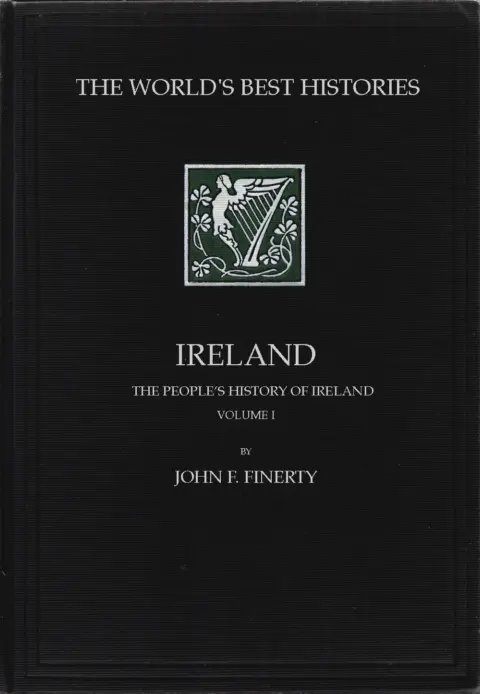
"Ireland: The People's History of Ireland, Volume 1" by John F. Finerty is a historical account written in the early 20th century. The text delves into the rich and complex history of Ireland, addressing the narrative from ancient times through significant events, such as the Reformation and invasions. It aims to provide a comprehensive understanding of the people and culture of Ireland, particularly for those unfamiliar with its past. At the start of the volume, Finerty discusses geographical and physical characteristics of Ireland, outlining its divisions into provinces and detailing the nation's fertile land and vibrant resources. The text emphasizes the importance of Ireland's history, noting the influence of its early inhabitants, the establishment of social structures, and the impact of various invasions, including the Danish and Norman incursions. Finerty aims to illuminate the contributions of the Irish people to the wider world and their enduring legacy, especially as it relates to the Irish diaspora in America.
Introduction adapted from the source catalogue; source summaries may be automatically generated.
Free to read · English · 128,763 words · No account needed
MAKE TIME FOR A GOOD BOOK
On by default. Untick to stop anonymous reading totals. Each page counts after 10 seconds in view. How this works.
Anonymous counting is on unless you have switched it off.
The Peace of Paris—Agrarian Warfare in Ireland—Judicial Murder of Father Sheehy—All who Swore Against Him Die Violent Deaths—Societies
THE Peace of Paris, 1763, brought the Seven Years’ War to a conclusion on the Continent of Europe. Frederick the Great retained Silesia, formerly an Austrian province, to which he had no just title; and there were other territorial changes of less importance. England had triumphed over the French interest in America; for Wolfe’s victory of the Plains of Abraham, at Quebec, in September, 1759, decided the game of war in favor of the British, although other battles were fought by the opposing forces after that event.
Agrarian oppression in Ireland, particularly in the South, had caused the peasantry to organize themselves into secret societies for mutual protection. It was thus that the famous “White Boys” of the last century—so-called from wearing linen shirts, or white woolen jackets, over their other clothes, so as to give them a uniform appearance—came into existence. Their methods were crude, wild, often fierce and sometimes cruel. They defied the law because they had found no element of protection in it. Rather had they found it, as administered by the landlord oligarchy, in whose hands it was placed by the evil genius of England, an instrument of intolerable oppression. No justice was to be obtained by any appeal they might make to their tyrants, and so they resorted to what an Irish orator has called “the wild justice of revenge.” As usual, some naturally bad men found their way into these organizations, and often vented their malice on individuals in the name of the trampled people. The landlords took advantage of the commission of crime to get up another “Popish plot” scare, and succeeded in making shallow and timid people accept the slander as truth. The real object of the “White Boys” was to secure low rentals on tillage land, and to preserve “commonage rights”—that is, grazing lands in common at a nominal cost, or else free, something that had long been the usage—for their stock. The landlords, not satisfied with levying exorbitant rents, and grown, if possible, harder and more greedy than ever, finally abolished and fenced in “the commons.” This action aroused the fury of the peasantry, particularly in the Munster counties, and they collected in large bodies and demolished the landlords’ fences. This gave the tyrants an excuse to call for military aid—the argument being that the people were in arms against “the crown,” which, of course, was false. The poor peasantry struck at their nearest and most visible oppressors, and never thought about “the crown.” The king was, to them, very like a myth. It would seem that many of the poorer Protestants joined with the Catholics in the demonstration against the inclosures, which, of course, showed the absurdity of the “Popish plot” story. Still, the affair was not to terminate until it begot a cruel tragedy. The parish priest of Clogheen, County Tipperary, in 1765, was the Rev. Nicholas Sheehy, a high-minded and saintly man, whose heart was deeply touched by the sufferings of the poor tenants, whose ardent and eloquent champion he became. The Cromwellian “aristocracy” of the county, headed by the Bagnals, the Maudes, the Bagwells, the Tolers, and a parson named Hewitson, resolved to get rid of Father Sheehy, and only waited for a good chance to insnare him in their toils. Two years previous to the date already given, they had had the young priest arrested on a charge of swearing in “White Boys,” but, because of insufficient evidence, he was acquitted. Soon after he was released, one Bridge, who had been a principal witness against him, mysteriously disappeared. The oligarchs had the priest arrested immediately on a charge of murder. The witnesses employed to appear against him were a horse-stealer, named Toohey, a vagrant youth named Lonergan, and an immoral woman, named Dunlea. He had lain in Clonmel jail, heavily ironed, for several months before he was brought to trial. The prosecution did not have their witnesses fully instructed. At last, March 12, 1765, Father Sheehy was brought up for trial. He succeeded in proving an alibi, but that was of no avail. His destruction was determined upon, and, on March 15, he suffered execution by hanging and subsequent decapitation. This atrocious murder aroused the anger of the country. Protestants and Catholics alike joined in execrating the crime. Yet, he was not the only victim. In May of the same year, Edward Sheehy, a cousin, and two other young farmers, were convicted and hanged on the same testimony that had sent Father Sheehy to his untimely grave. McGee says: “The fate of their enemies is notorious; with a single exception, they met deaths violent, loathsome, and terrible. Maude died insane, Bagwell in idiocy; one of the jury committed suicide, another was found dead in a privy, a third was killed by his horse, a fourth was drowned, a fifth shot, and so through the entire list. Toohey was hanged for felony, the prostitute, Dunlea, fell into a cellar and was killed, and the lad, Lonergan, after enlisting as a soldier, died of a loathsome disease in a Dublin infirmary.”
Your reading position is saved on this browser. Take it to another device with a library code. Reading pages adapt to text, rather than matching a printed edition.
BEHIND THE BOOK
This eBook is for the use of anyone anywhere in the United States and most other parts of the world at no cost and with almost no restrictions whatsoever. You may copy it, give it away or re-use it under the terms of the Project Gutenberg License included with this eBook or online at www.gutenberg.org. If you are not located in the United States, you will have to check the laws of the country where you are located before using this eBook. Read the source licence.
The original source file, including credits and licence, is retained by this library. Request an original-format copy at no charge. Please include the book title and Project Gutenberg identifier #67845.
KEEP YOUR CURIOSITY GOING
Cécile Tormay

Moritz Busch
John L. Ransom
Frances Wright
Cécile Tormay

Mabel Potter Daggett