THE CLASSIC COLLECTION✦An outlaw’s diary: the CommuneCLASSIC FREE BOOKS
An outlaw’s diary: the Commune
Cécile Tormay
THE CLASSIC COLLECTION · 1904
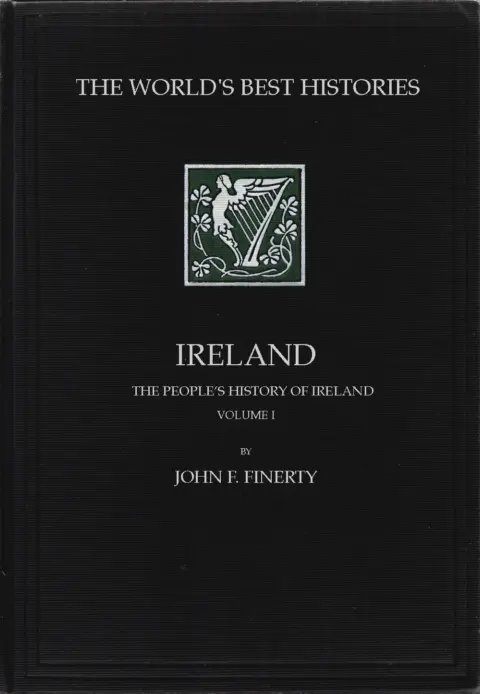
"Ireland: The People's History of Ireland, Volume 1" by John F. Finerty is a historical account written in the early 20th century. The text delves into the rich and complex history of Ireland, addressing the narrative from ancient times through significant events, such as the Reformation and invasions. It aims to provide a comprehensive understanding of the people and culture of Ireland, particularly for those unfamiliar with its past. At the start of the volume, Finerty discusses geographical and physical characteristics of Ireland, outlining its divisions into provinces and detailing the nation's fertile land and vibrant resources. The text emphasizes the importance of Ireland's history, noting the influence of its early inhabitants, the establishment of social structures, and the impact of various invasions, including the Danish and Norman incursions. Finerty aims to illuminate the contributions of the Irish people to the wider world and their enduring legacy, especially as it relates to the Irish diaspora in America.
Introduction adapted from the source catalogue; source summaries may be automatically generated.
Free to read · English · 128,763 words · No account needed
MAKE TIME FOR A GOOD BOOK
On by default. Untick to stop anonymous reading totals. Each page counts after 10 seconds in view. How this works.
Anonymous counting is on unless you have switched it off.
BESIDES St. Ruth, the chief officers killed on the Irish side were, according to Story’s account, General Lord Kilmallock, General Lord Galway, Brigadier-General Connel (O’Connell), Brigadier-General W. Mansfield Barker, Brigadier-General Henry M. J. O’Neill, Colonel Charles Moore, his lieutenant-colonel and major; Colonel David Bourke, Colonel Ulick Bourke, Colonel Connor McGuire, Colonel James Talbot, Colonel Arthur, Colonel Mahony, Colonel Morgan, Major Purcell, Major O’Donnell, Major Sir John Everard, with several others of superior rank, “besides, at least, five hundred captains and subordinate officers.” This latter statement has been challenged by Irish historians, who claim that non-commissioned officers were included in the list. Story omitted from the number of superior officers slain the name of Colonel Felix O’Neill, Judge-Advocate-General of the Irish army, whose body was found on the field. Of the less than five hundred Irish prisoners taken, twenty-six were general or field officers, including General Lord Duleek, General Lord Slane, General Lord Bophin, General Lord Kilmaine, General Dorrington, General John Hambleton (Hamilton), Brigadier-General Tuite, Colonel Walter Bourke, Colonel Gordon O’Neill, Colonel Butler, Colonel O’Connell (ancestor of Daniel O’Connell), Colonel Edmund Madden, Lieutenant-Colonel John Chappel, Lieutenant-Colonel John Butler, Lieutenant-Colonel Baggot, Lieutenant-Colonel John Border, Lieutenant-Colonel McGinness, Lieutenant-Colonel Rossiter, Lieutenant-Colonel McGuire, Major Patrick Lawless, Major Kelly, Major Grace, Major William Bourke, Major Edmund Butler, Major Edmund Broghill, Major John Hewson, “with 30 captains, 25 lieutenants, 23 ensigns, 5 cornets, 4 quartermasters, and an adjutant.”
Chaplain Story, to whom, with all his faults, we are much indebted for the details of this momentous battle—one of the few “decisive battles” of the world—says: “We [the English and their allies] lost 73 officers, who were killed in this action, with 111 wounded, as appears by the inserted lists [vide his History of the “Wars in Ireland”] of both horse and foot, given in two days after by the general’s command, and sent to the king.” The lists referred to acknowledged, also, 600 soldiers killed and 906 wounded. The allied losses were, no doubt, underestimated for political effect in England, which had been taught that one Englishman could kill any number of Irishmen without much fear of a fatal result to himself. And this superstition was useful, we believe, to the morale of the British soldiers of the period, whose stomachs failed them so notably when they were “up against” the defences of Limerick, as will be seen hereafter. Captain Taylor, a Williamite writer, who was present at the battle and published a graphic account of it, says that the loss of the allies (British, Dutch, Danes, Germans, and Huguenots) was little less than that of the Irish, most of the latter having fallen in the retreat after the death of General St. Ruth. Of the Anglo-Dutch troopers, there were killed by the Irish cavalry at the pass of Urachree, in the early part of the fight, 202, and wounded 125, thus showing the superior strength, reach of arm, and dexterity of the Irish horsemen. In hand-to-hand conflicts, whether mounted or on foot, the Irish soldiery, in whatever service, ever excelled, with sword or battle-axe, pike or bayonet. Clontibret and the Yellow Ford, Benburb and Fontenoy, Almanza and Albuera, Inkerman and Antietam bear witness to the truth of this assertion. As a charging warrior, the Irishman has never been surpassed, and, no matter how bloodily repulsed, an Irish regiment or an Irish army is ever willing to try again. There may be soldiers as brave as they, but none are braver, even when they fight in causes with which they have no natural sympathy. It may be set down as a military axiom that the Irish soldier is, by force of untoward circumstances, frequently a mercenary, but rarely, or never, a coward.
Your reading position is saved on this browser. Take it to another device with a library code. Reading pages adapt to text, rather than matching a printed edition.
BEHIND THE BOOK
This eBook is for the use of anyone anywhere in the United States and most other parts of the world at no cost and with almost no restrictions whatsoever. You may copy it, give it away or re-use it under the terms of the Project Gutenberg License included with this eBook or online at www.gutenberg.org. If you are not located in the United States, you will have to check the laws of the country where you are located before using this eBook. Read the source licence.
The original source file, including credits and licence, is retained by this library. Request an original-format copy at no charge. Please include the book title and Project Gutenberg identifier #67845.
KEEP YOUR CURIOSITY GOING
Cécile Tormay

Moritz Busch
John L. Ransom
Frances Wright
Cécile Tormay

Mabel Potter Daggett