
Life of Edwin Forrest, the American Tragedian. Volume 2 (of 2)
William Rounseville Alger & Horatio, Jr. Alger
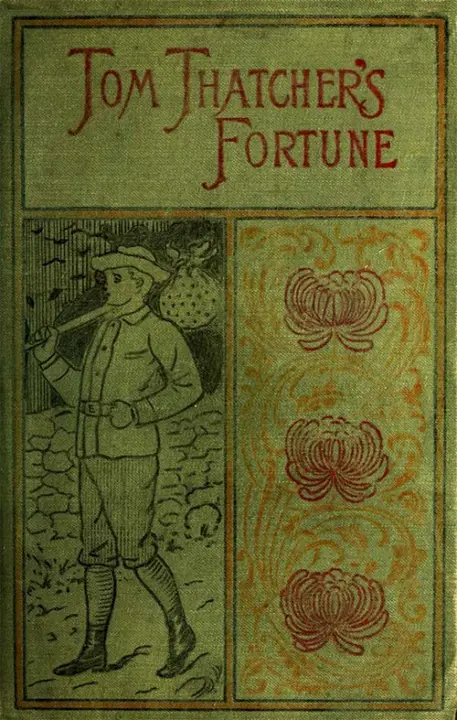
THE CLASSIC COLLECTION · 1888
"Tom Thatcher's Fortune" by Horatio Alger, Jr. is a novel written in the late 19th century. This coming-of-age tale revolves around Tom Thatcher, a sixteen-year-old boy who works in a shoe factory to support his family after his father's mysterious death during a gold rush in California. The story explores themes of social class, ambition, and resilience as Tom navigates his challenges and seeks a better life for himself and his family. The opening of the novel introduces us to Tom Thatcher, a hardworking boy who has just come home from a long day at the shoe factory, where he earns a meager wage. He shares dinner with his mother and little sister Tillie, conveying the family's struggles after losing their father. Through a conversation about his father's last letter and his missed fortune, we learn about Tom's determination to uncover the truth about his father's disappearance. The narrative sets the stage for Tom's journey filled with rivalry, self-discovery, and a yearning for a brighter future, while hinting at the contrast between his humble life and that of the wealthy characters in his world.
Introduction adapted from the source catalogue; source summaries may be automatically generated.
Free to read · English · 75,554 words · No account needed
MAKE TIME FOR A GOOD BOOK
On by default. Untick to stop anonymous reading totals. Each page counts after 10 seconds in view. How this works.
Anonymous counting is on unless you have switched it off.
“That is exactly what I am doing,” answered Tom, with a smile at
Rupert’s bewilderment.
“Come, that’s nonsense. You are only trying to fool me.”
“If you want to see me at work, you can come with me. I am going to the minister’s study now.”
“I suppose you are copying for him,” said Rupert, with sudden
enlightenment.
“You have guessed right.”
“What does he pay you?” inquired Rupert, curiously.
“I am paid fifty cents for three hours’ work. That is what your father paid me for the whole day.”
“It won’t last long,” said Rupert, shortly, comforting himself with this thought, as he walked away.
That was exactly what Tom told himself. It would not last long. He felt that he must be looking out for something else, and, though at present employed, he felt uneasy.
He had the afternoon to himself, and occasionally he got a small job to do, which made a trifling addition to his income. But, of course, this was precarious.
The post-office was located in the village store, and the storekeeper, or one of his clerks, distributed the mail. Tom went there one afternoon to buy a half-pound of tea, and a couple of pounds of sugar for his mother, for their purchases were necessarily of an economical character, when the clerk who was waiting upon him, said:
“I believe there’s a letter for you in the office.”
“Is there?” asked Tom, rather surprised, for the family correspondence
was very limited.
“Yes; here it is--a letter from New York; and it’s for you.”
Tom opened the letter and hurriedly glanced at the signature.
His heart gave a sudden bound.
It was signed by the man who, he supposed, had perished in the flames at the recent fire--Darius Darke!
Over the top was written:
“Strictly confidential.”
It ran thus:
“This will seem to you like a voice from the grave. Doubtless you supposed that I was consumed in the burning barn. I wish all except yourself to believe this. When, therefore, you have read this letter, burn or otherwise destroy it, so that there may be no chance of my secret being discovered. I wish to see you as soon as possible, for reasons which I will explain when we meet. Come to New York on Monday, and meet me at twelve o’clock noon, or if you cannot reach the city so early, at three o’clock, in front of the Astor House. I inclose money to defray your expenses. “DARIUS DARKE.”
This letter occupied one page of commercial note-paper. Between the two leaves was tucked a ten-dollar bill.
“Who was your letter from?” asked the clerk.
Your reading position is saved on this browser. Take it to another device with a library code. Reading pages adapt to text, rather than matching a printed edition.
William Rounseville Alger & Horatio, Jr. Alger

William Rounseville Alger & Horatio, Jr. Alger

Horatio, Jr. Alger

Horatio, Jr. Alger
BEHIND THE BOOK
This eBook is for the use of anyone anywhere in the United States and most other parts of the world at no cost and with almost no restrictions whatsoever. You may copy it, give it away or re-use it under the terms of the Project Gutenberg License included with this eBook or online at www.gutenberg.org. If you are not located in the United States, you will have to check the laws of the country where you are located before using this eBook. Read the source licence.
The original source file, including credits and licence, is retained by this library. Request an original-format copy at no charge. Please include the book title and Project Gutenberg identifier #56896.
KEEP YOUR CURIOSITY GOING
Cécile Tormay

Moritz Busch
Coulson Kernahan
John L. Ransom

Maurice Baring
Frances Wright