
Life of Edwin Forrest, the American Tragedian. Volume 2 (of 2)
William Rounseville Alger & Horatio, Jr. Alger
THE CLASSIC COLLECTION · 1888
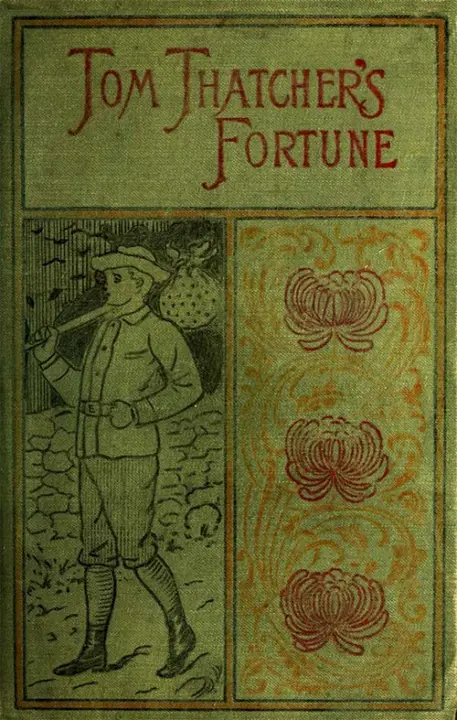
"Tom Thatcher's Fortune" by Horatio Alger, Jr. is a novel written in the late 19th century. This coming-of-age tale revolves around Tom Thatcher, a sixteen-year-old boy who works in a shoe factory to support his family after his father's mysterious death during a gold rush in California. The story explores themes of social class, ambition, and resilience as Tom navigates his challenges and seeks a better life for himself and his family. The opening of the novel introduces us to Tom Thatcher, a hardworking boy who has just come home from a long day at the shoe factory, where he earns a meager wage. He shares dinner with his mother and little sister Tillie, conveying the family's struggles after losing their father. Through a conversation about his father's last letter and his missed fortune, we learn about Tom's determination to uncover the truth about his father's disappearance. The narrative sets the stage for Tom's journey filled with rivalry, self-discovery, and a yearning for a brighter future, while hinting at the contrast between his humble life and that of the wealthy characters in his world.
Introduction adapted from the source catalogue; source summaries may be automatically generated.
Free to read · English · 75,554 words · No account needed
MAKE TIME FOR A GOOD BOOK
On by default. Untick to stop anonymous reading totals. Each page counts after 10 seconds in view. How this works.
Anonymous counting is on unless you have switched it off.
“Mr. Simpson thinks he can get along without me.”
“How is that?” asked Casey, in surprise.
Tom briefly told under what circumstances he had been discharged.
“That’s a pity,” said Casey, in a sympathizing tone. “I can’t justify John Simpson in that.”
“You don’t want a pegger, do you, Mr. Casey?”
“Not unless one of my boys leave me. I’d like to take you on; but I have no vacancy. As soon as there is one, you may depend on my sending for you.”
“Thank you, sir. That is all I can ask.”
“How much did Mr. Simpson pay you?” asked Casey.
“Fifty cents a day.”
“That is poor. Why, I pay sixty, and out of town more is paid.”
“I know that; but it wouldn’t pay me to go out of town as long as
mother lives here.”
“That’s true. Well, Tom, I hope you will find something to do. You may depend on hearing from me when I have a vacancy.”
Tom thanked him and left the shop. He had been kindly received; but kind words wouldn’t pay the baker’s and grocer’s bills, and he felt rather sober.
A few rods from Casey’s shop he met his friend Harry Julian, who also expressed his surprise at seeing Tom on the street at that time in the day.
Tom gave an explanation.
Harry looked concerned, for he was strongly attached to Tom, and he very well understood what a serious matter it was to him and his mother for him to be out of work.
He reflected a moment, and his face brightened as something occurred to
him.
“Tom,” he said, “will you do me a favor?”
“Of course I will, Julian.”
“Then let me lend you this,” and before Tom understood what he meant, he had thrust something into his vest-pocket.
Tom drew it out, unfolded it, and found it to be a five-dollar bill.
“Thank you, Harry,” he said; “but I can’t take this.”
“Why not? Remember, I ask it as a favor to me.”
“But it isn’t that; it is a favor to me.”
“Well, are you too proud to accept a favor from your friend Harry? Listen, Tom,” he added, rapidly. “You know father is very well off, and he gives me a dollar a week as an allowance. I don’t spend it all, and so I happen to have five dollars on hand. I really have no use for it. Now won’t you take it?”
“You are very kind, Harry, but I have some money in my pocket.”
“How much?”
“A dollar and a half.”
Your reading position is saved on this browser. Take it to another device with a library code. Reading pages adapt to text, rather than matching a printed edition.
William Rounseville Alger & Horatio, Jr. Alger

William Rounseville Alger & Horatio, Jr. Alger

Horatio, Jr. Alger

Horatio, Jr. Alger
BEHIND THE BOOK
This eBook is for the use of anyone anywhere in the United States and most other parts of the world at no cost and with almost no restrictions whatsoever. You may copy it, give it away or re-use it under the terms of the Project Gutenberg License included with this eBook or online at www.gutenberg.org. If you are not located in the United States, you will have to check the laws of the country where you are located before using this eBook. Read the source licence.
The original source file, including credits and licence, is retained by this library. Request an original-format copy at no charge. Please include the book title and Project Gutenberg identifier #56896.
KEEP YOUR CURIOSITY GOING
Cécile Tormay

Moritz Busch
Coulson Kernahan
John L. Ransom

Maurice Baring
Frances Wright