
Life of Edwin Forrest, the American Tragedian. Volume 2 (of 2)
William Rounseville Alger & Horatio, Jr. Alger
THE CLASSIC COLLECTION · 1888
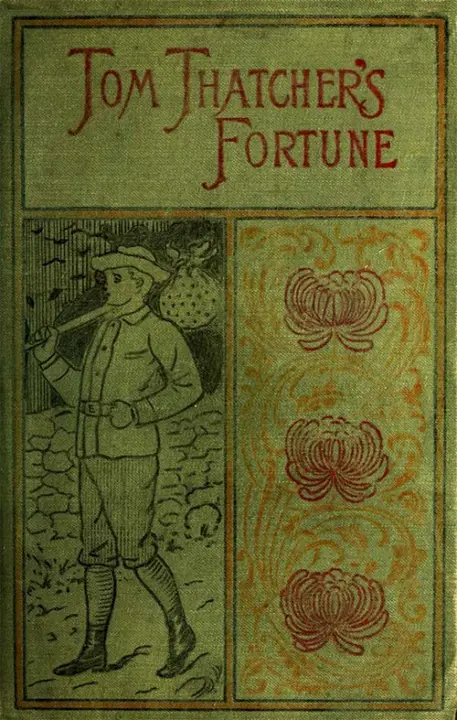
"Tom Thatcher's Fortune" by Horatio Alger, Jr. is a novel written in the late 19th century. This coming-of-age tale revolves around Tom Thatcher, a sixteen-year-old boy who works in a shoe factory to support his family after his father's mysterious death during a gold rush in California. The story explores themes of social class, ambition, and resilience as Tom navigates his challenges and seeks a better life for himself and his family. The opening of the novel introduces us to Tom Thatcher, a hardworking boy who has just come home from a long day at the shoe factory, where he earns a meager wage. He shares dinner with his mother and little sister Tillie, conveying the family's struggles after losing their father. Through a conversation about his father's last letter and his missed fortune, we learn about Tom's determination to uncover the truth about his father's disappearance. The narrative sets the stage for Tom's journey filled with rivalry, self-discovery, and a yearning for a brighter future, while hinting at the contrast between his humble life and that of the wealthy characters in his world.
Introduction adapted from the source catalogue; source summaries may be automatically generated.
Free to read · English · 75,554 words · No account needed
MAKE TIME FOR A GOOD BOOK
On by default. Untick to stop anonymous reading totals. Each page counts after 10 seconds in view. How this works.
Anonymous counting is on unless you have switched it off.
“Money has evidently hardened his heart. What are you going to do?”
“I must try to find something else to do, or else go to the poor-house.”
“You won’t go to the poor-house. You don’t look like that kind of a boy. I wish I had John Simpson’s money and shop. I’d employ you at double his wages.”
“Thank you for your kind intentions, sir,” said Tom.
The tramp looked so far from being a capitalist, and, judging again from his appearance, his prospect of becoming a capitalist seemed so poor, that Tom did not gain much encouragement from his last words.
“At present I am quite unable to help you, but it may not be always so,” continued the stranger.
“Thank you, sir,” said Tom, politely.
He reflected that a man’s generous feelings were of little account if
he had no money.
“I see you want to go in,” said the tramp. “Don’t let me keep you. I think I’ll go and make a call on John Simpson.”
“You’ll find him at home, sir. That is, he was at home twenty minutes
since.”
“All right. I guess I’ll find him.”
Just as the stranger was leaving, Tom, impelled by the thought he might some time want to secure further information from this man, who appeared to have met his father in California, asked him:
“Would you be kind enough to tell me your name, sir?”
“My name! What do you want of my name?” demanded the tramp.
“Except John Simpson, who will tell me nothing, I have never before met any one who knew anything of my father’s life in California. I might wish to meet you again and ask you more questions.”
“I will take care that you have a chance to meet me some time,” said the other, after a pause. “At present I prefer not to mention my name.”
“Suppose I want to write to you?”
“Then you may address your letter to Darius Darke, New York
Post-office.”
“Darius Darke.”
“Yes; I don’t think you will forget that name. It isn’t my real name, of course. Sorry I haven’t got a card to offer you,” he added, with grim humor.
“I shall remember the name.”
As Tom entered his humble home, he asked himself:
“Why did Mr. Simpson misrepresent the amount of father’s treasure? Of course he knew that he was deceiving me.”
But this question was easier to ask than to answer.
Your reading position is saved on this browser. Take it to another device with a library code. Reading pages adapt to text, rather than matching a printed edition.
William Rounseville Alger & Horatio, Jr. Alger

William Rounseville Alger & Horatio, Jr. Alger

Horatio, Jr. Alger

Horatio, Jr. Alger
BEHIND THE BOOK
This eBook is for the use of anyone anywhere in the United States and most other parts of the world at no cost and with almost no restrictions whatsoever. You may copy it, give it away or re-use it under the terms of the Project Gutenberg License included with this eBook or online at www.gutenberg.org. If you are not located in the United States, you will have to check the laws of the country where you are located before using this eBook. Read the source licence.
The original source file, including credits and licence, is retained by this library. Request an original-format copy at no charge. Please include the book title and Project Gutenberg identifier #56896.
KEEP YOUR CURIOSITY GOING
Cécile Tormay

Moritz Busch
Coulson Kernahan
John L. Ransom

Maurice Baring
Frances Wright