
Life of Edwin Forrest, the American Tragedian. Volume 2 (of 2)
William Rounseville Alger & Horatio, Jr. Alger
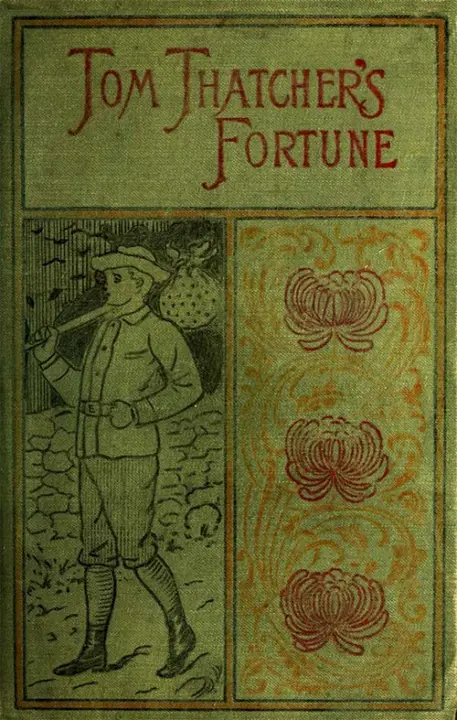
THE CLASSIC COLLECTION · 1888
"Tom Thatcher's Fortune" by Horatio Alger, Jr. is a novel written in the late 19th century. This coming-of-age tale revolves around Tom Thatcher, a sixteen-year-old boy who works in a shoe factory to support his family after his father's mysterious death during a gold rush in California. The story explores themes of social class, ambition, and resilience as Tom navigates his challenges and seeks a better life for himself and his family. The opening of the novel introduces us to Tom Thatcher, a hardworking boy who has just come home from a long day at the shoe factory, where he earns a meager wage. He shares dinner with his mother and little sister Tillie, conveying the family's struggles after losing their father. Through a conversation about his father's last letter and his missed fortune, we learn about Tom's determination to uncover the truth about his father's disappearance. The narrative sets the stage for Tom's journey filled with rivalry, self-discovery, and a yearning for a brighter future, while hinting at the contrast between his humble life and that of the wealthy characters in his world.
Introduction adapted from the source catalogue; source summaries may be automatically generated.
Free to read · English · 75,554 words · No account needed
MAKE TIME FOR A GOOD BOOK
On by default. Untick to stop anonymous reading totals. Each page counts after 10 seconds in view. How this works.
Anonymous counting is on unless you have switched it off.
As he spoke, the doctor advanced to the bell-rope. He walked with his back toward the door, and as he did so my old friend Jack, the magpie, came hop-hop-hopping in, and his thievish eye at once fell upon the silver specs, which the enraged man had laid down on the very spot on the table where before he had laid the case which had so disgraced me in his eyes.
Jack quietly hopped upon his old quarters in the armchair and as quickly possessed himself of the envied trophy, and I became the innocent witness of another theft much greater than the last.
Deeper disgrace to me, I thought; but as the doctor was evidently sure I was the culprit, and was not likely to accept any explanation from me, I thought it best to keep quiet, though by this I no doubt made myself Jack’s accessory.
A servant answered the bell, and he was requested to send my father hither, and, of course, my father came.
“Well, doctor, what can I have the pleasure of doing for you?” he inquired. “You appear agitated--what is the matter?”
“Look here, sir, if you please,” said the doctor to my father. “I laid my spectacle-case on the table where you see my glasses,” and here he pointed to the table, and my father looked on the spot indicated, and said:
“Where, doctor, where? I see no glasses.”
We were all standing some distance from the table, and the doctor could not see what was on it; he only spoke from the knowledge that he had placed his spectacles on the table, to which he now drew near, when, to his great surprise, and to my greater amusement, he made the same discovery that my father had done, that there were no glasses there.
“Why, sir, not five minutes ago I laid my glasses on this spot!” he exclaimed, giving the table rather a loud rap with his knuckles, which did not harm the table, though it did the knuckles, as the doctor’s screwed-up face indicated. “There, sir, exactly there--and now you see with your own eyes that both case and spectacles are gone!”
“It is a very mysterious occurrence, Dr. Millbank,” remarked my father.
“I cannot say that I see any mystery about it, sir; I am no believer in spiritualism, but I am in logic. I laid the spectacles and case there on that table. They are now gone--no one has been in the room but Master Charles.”
“Ergo, Master Charles must have them,” interrupted my father. “That is the true inference of your logic.”
Your reading position is saved on this browser. Take it to another device with a library code. Reading pages adapt to text, rather than matching a printed edition.
William Rounseville Alger & Horatio, Jr. Alger

William Rounseville Alger & Horatio, Jr. Alger

Horatio, Jr. Alger

Horatio, Jr. Alger
BEHIND THE BOOK
This eBook is for the use of anyone anywhere in the United States and most other parts of the world at no cost and with almost no restrictions whatsoever. You may copy it, give it away or re-use it under the terms of the Project Gutenberg License included with this eBook or online at www.gutenberg.org. If you are not located in the United States, you will have to check the laws of the country where you are located before using this eBook. Read the source licence.
The original source file, including credits and licence, is retained by this library. Request an original-format copy at no charge. Please include the book title and Project Gutenberg identifier #56896.
KEEP YOUR CURIOSITY GOING
Cécile Tormay

Moritz Busch
Coulson Kernahan
John L. Ransom

Maurice Baring
Frances Wright