
Life of Edwin Forrest, the American Tragedian. Volume 2 (of 2)
William Rounseville Alger & Horatio, Jr. Alger
THE CLASSIC COLLECTION · 1888
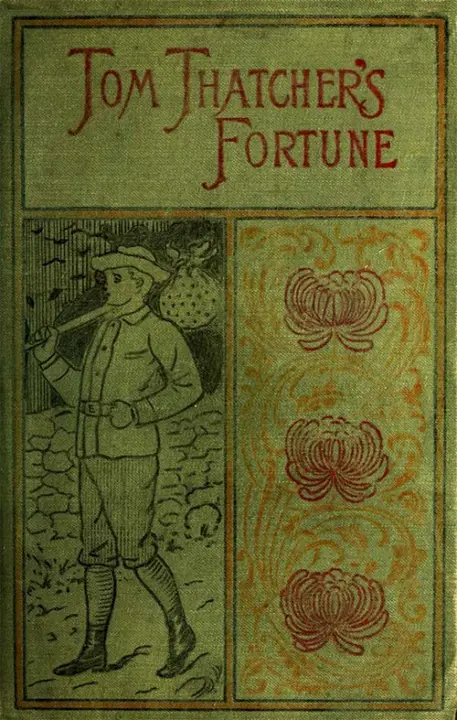
"Tom Thatcher's Fortune" by Horatio Alger, Jr. is a novel written in the late 19th century. This coming-of-age tale revolves around Tom Thatcher, a sixteen-year-old boy who works in a shoe factory to support his family after his father's mysterious death during a gold rush in California. The story explores themes of social class, ambition, and resilience as Tom navigates his challenges and seeks a better life for himself and his family. The opening of the novel introduces us to Tom Thatcher, a hardworking boy who has just come home from a long day at the shoe factory, where he earns a meager wage. He shares dinner with his mother and little sister Tillie, conveying the family's struggles after losing their father. Through a conversation about his father's last letter and his missed fortune, we learn about Tom's determination to uncover the truth about his father's disappearance. The narrative sets the stage for Tom's journey filled with rivalry, self-discovery, and a yearning for a brighter future, while hinting at the contrast between his humble life and that of the wealthy characters in his world.
Introduction adapted from the source catalogue; source summaries may be automatically generated.
Free to read · English · 75,554 words · No account needed
MAKE TIME FOR A GOOD BOOK
On by default. Untick to stop anonymous reading totals. Each page counts after 10 seconds in view. How this works.
Anonymous counting is on unless you have switched it off.
“Very natural, but I always thought it was unwise to let him go so far away. Don’t you think so yourself?”
“Perhaps you are right, but I acted for the best. Then there was nothing for Tom to do here. You had dismissed him from the shop.”
“Yes, I know, but I would have taken him back again after awhile.”
“Why didn’t you tell him so. Then he would have been here now.”
“Things may turn out for the best after all, Mrs. Thatcher,” said Mr. Simpson, evading a direct reply. “Meanwhile, I came in to see if there was any way in which I could help you.”
Mrs. Thatcher looked surprised. John Simpson was about the last person from whom she would have expected an offer of assistance.
“In what way?” she asked.
“I was thinking you might want to raise money on the place,” suggested
Simpson, blandly.
“I do need money,” said the widow, hesitatingly.
“Of course you do; you couldn’t well help it,” said the manufacturer briskly. “Now I have come here prepared to make you an offer.”
“Well, sir?” said Mrs. Thatcher, inquiringly.
“I will lend you four hundred dollars at six per cent. interest, and take a mortgage on the house and lot.”
“That is less than half the value of the place,” said the widow.
“What can you be thinking of, Mrs. Thatcher? Pray at what sum do you
value this property?”
“It ought to be worth a thousand dollars.”
John Simpson shook his head.
“It wouldn’t bring over six hundred,” he said.
“That can’t be possible,” said Mrs. Thatcher, anxiously.
“It is not only possible, but true,” said the rich man, positively. “Property has depreciated dreadfully, dreadfully.”
“Then I don’t know what is going to become of us if Tom doesn’t come back,” said Mrs. Thatcher, in a tone of discouragement.
“Oh, something will turn up,” said Simpson, carelessly. “Well, widow, about the mortgage, what do you say?”
“I will consult Mr. Julian.”
John Simpson frowned.
“He is a minister. What does he know about business?”
“He has business of his own to attend to. Besides, he is my friend.”
“Better say the word now, widow. I may draw back from the agreement.”
“Then I must apply to some one else. Even according to your own statement the place is worth six hundred dollars, and ought to command as large a mortgage anywhere.”
“I said it wouldn’t fetch six hundred dollars.”
“I will not take such an important step, Mr. Simpson, without
consulting some one.”
“Very well,” said Simpson, displeased, “take your own way, but it will be at your own risk.”
Your reading position is saved on this browser. Take it to another device with a library code. Reading pages adapt to text, rather than matching a printed edition.
William Rounseville Alger & Horatio, Jr. Alger

William Rounseville Alger & Horatio, Jr. Alger

Horatio, Jr. Alger

Horatio, Jr. Alger
BEHIND THE BOOK
This eBook is for the use of anyone anywhere in the United States and most other parts of the world at no cost and with almost no restrictions whatsoever. You may copy it, give it away or re-use it under the terms of the Project Gutenberg License included with this eBook or online at www.gutenberg.org. If you are not located in the United States, you will have to check the laws of the country where you are located before using this eBook. Read the source licence.
The original source file, including credits and licence, is retained by this library. Request an original-format copy at no charge. Please include the book title and Project Gutenberg identifier #56896.
KEEP YOUR CURIOSITY GOING
Cécile Tormay

Moritz Busch
Coulson Kernahan
John L. Ransom

Maurice Baring
Frances Wright