
Life of Edwin Forrest, the American Tragedian. Volume 2 (of 2)
William Rounseville Alger & Horatio, Jr. Alger
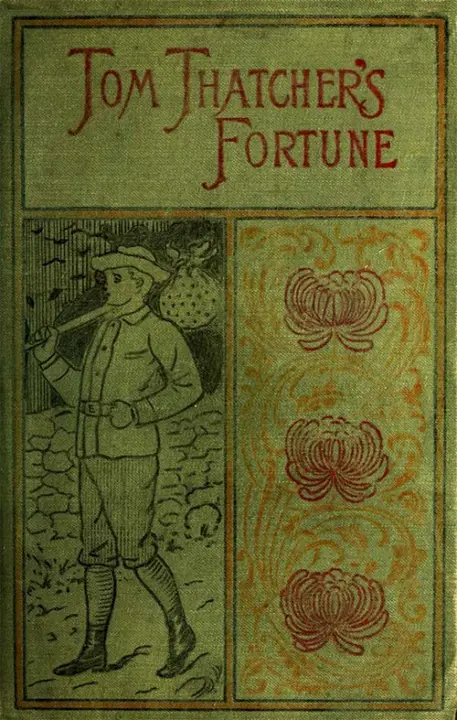
THE CLASSIC COLLECTION · 1888
"Tom Thatcher's Fortune" by Horatio Alger, Jr. is a novel written in the late 19th century. This coming-of-age tale revolves around Tom Thatcher, a sixteen-year-old boy who works in a shoe factory to support his family after his father's mysterious death during a gold rush in California. The story explores themes of social class, ambition, and resilience as Tom navigates his challenges and seeks a better life for himself and his family. The opening of the novel introduces us to Tom Thatcher, a hardworking boy who has just come home from a long day at the shoe factory, where he earns a meager wage. He shares dinner with his mother and little sister Tillie, conveying the family's struggles after losing their father. Through a conversation about his father's last letter and his missed fortune, we learn about Tom's determination to uncover the truth about his father's disappearance. The narrative sets the stage for Tom's journey filled with rivalry, self-discovery, and a yearning for a brighter future, while hinting at the contrast between his humble life and that of the wealthy characters in his world.
Introduction adapted from the source catalogue; source summaries may be automatically generated.
Free to read · English · 75,554 words · No account needed
MAKE TIME FOR A GOOD BOOK
On by default. Untick to stop anonymous reading totals. Each page counts after 10 seconds in view. How this works.
Anonymous counting is on unless you have switched it off.
“Good-morning, sir,” responded Mrs. Thatcher, coldly.
“I hear your son is away. You must miss him.”
“I do miss him, Mr. Simpson.”
“Has he gone far?”
“He has gone to the West.”
“Far West?”
“I have not heard from him lately.”
“Ha! There is something she wishes to conceal,” thought John Simpson.
“I am afraid he won’t get back the money his traveling expenses must
cost him.”
“He was obliged to do something, Mr. Simpson. There was no chance left
for him in Wilton.”
“When you write to him, tell him that I will give him back his old place if he sees fit to come back.”
“I will tell him,” said Mrs. Thatcher, but she expressed no gratitude,
for she felt none.
Why did John Simpson make this offer? Because he wanted to keep Tom away from California. After so many years, there seemed little enough chance of the boy’s learning anything of the circumstances attending his father’s fate, but a guilty conscience makes men cowards, and John Simpson was troubled with an uneasy idea that some time, in some way to him unknown his crime might be made known.
There was another circumstance that puzzled him. How did Tom Thatcher obtain the necessary funds for so expensive a journey? Probably, he said to himself, Mrs. Thatcher had mortgaged her house, and given Tom the money. He determined to find out if he could.
“You must excuse what I am about to say, Mrs. Thatcher,” he began, clearing his throat to begin with, “but I am afraid you did a foolish thing in raising money on your place to pay the expenses of such a wild-goose chase.”
“Who told you I had mortgaged my place, Mr. Simpson?” demanded the widow, looking the rich man full in the face.
“Why, no one,” stammered the squire, taken aback by her directness, “but I of course inferred it, knowing that Tom had no money of his own.”
“Then you inferred a mistake,” said Mrs. Thatcher. “The place is not
mortgaged.”
“You don’t say so!” said Simpson, more than ever bewildered.
“I do not propose to mortgage my place at present.”
“When you do,” said Simpson, recovering himself, “come to me. I will do as well by you as any one.”
It would indeed have suited him to obtain a lien upon Mrs. Thatcher’s humble homestead, that he might have her in his power.
She neither said yes nor no, but “I will bear in mind your offer, Mr.
Simpson.”
Your reading position is saved on this browser. Take it to another device with a library code. Reading pages adapt to text, rather than matching a printed edition.
William Rounseville Alger & Horatio, Jr. Alger

William Rounseville Alger & Horatio, Jr. Alger

Horatio, Jr. Alger

Horatio, Jr. Alger
BEHIND THE BOOK
This eBook is for the use of anyone anywhere in the United States and most other parts of the world at no cost and with almost no restrictions whatsoever. You may copy it, give it away or re-use it under the terms of the Project Gutenberg License included with this eBook or online at www.gutenberg.org. If you are not located in the United States, you will have to check the laws of the country where you are located before using this eBook. Read the source licence.
The original source file, including credits and licence, is retained by this library. Request an original-format copy at no charge. Please include the book title and Project Gutenberg identifier #56896.
KEEP YOUR CURIOSITY GOING
Cécile Tormay

Moritz Busch
Coulson Kernahan
John L. Ransom

Maurice Baring
Frances Wright