
Life of Edwin Forrest, the American Tragedian. Volume 2 (of 2)
William Rounseville Alger & Horatio, Jr. Alger
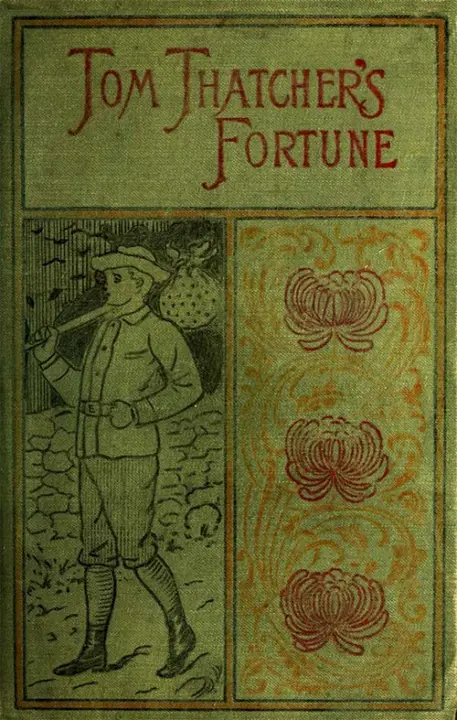
THE CLASSIC COLLECTION · 1888
"Tom Thatcher's Fortune" by Horatio Alger, Jr. is a novel written in the late 19th century. This coming-of-age tale revolves around Tom Thatcher, a sixteen-year-old boy who works in a shoe factory to support his family after his father's mysterious death during a gold rush in California. The story explores themes of social class, ambition, and resilience as Tom navigates his challenges and seeks a better life for himself and his family. The opening of the novel introduces us to Tom Thatcher, a hardworking boy who has just come home from a long day at the shoe factory, where he earns a meager wage. He shares dinner with his mother and little sister Tillie, conveying the family's struggles after losing their father. Through a conversation about his father's last letter and his missed fortune, we learn about Tom's determination to uncover the truth about his father's disappearance. The narrative sets the stage for Tom's journey filled with rivalry, self-discovery, and a yearning for a brighter future, while hinting at the contrast between his humble life and that of the wealthy characters in his world.
Introduction adapted from the source catalogue; source summaries may be automatically generated.
Free to read · English · 75,554 words · No account needed
MAKE TIME FOR A GOOD BOOK
On by default. Untick to stop anonymous reading totals. Each page counts after 10 seconds in view. How this works.
Anonymous counting is on unless you have switched it off.
“Yes,” said he, “I suppose your father was murdered for his money. How much did he have? Well, probably five thousand dollars, more or less. I had considerably more, having met with greater luck than he.”
“At what place did you leave father, Squire Simpson?”
“It was at a place called Rocky Gulch. I don’t know what they call it
now.”
“Didn’t father say anything about coming home when you left him?”
“He hadn’t fixed upon any time. He wanted to increase his pile. I suppose he felt dissatisfied because he hadn’t as much as I. He would have done better to come home with me.”
“I wish he had,” said Tom, sadly.
“Of course, it would have been better for him and for his family, but it can’t be helped now. I wonder you should bring up this old matter now. It can do no possible good. It was the Lord’s will that your father should be taken away, and we must submit to His will. It’s wicked to murmur against the plans of Providence.”
The rich man said all this in a brisk, business-like manner, as if he were quite reconciled to what had happened.
“Still,” said Tom, “we can’t help thinking of how changed our circumstances would have been if father had come home as you did.”
“Yes, yes; but you haven’t anything to complain of. You live comfortably, don’t you? I give you employment in my shop,” he added, pompously, “out of regard to your father’s memory.”
“Yes, sir, you give me employment,” said Tom, slowly.
He could not be brought to think this a very great favor, since he was only paid what other boys were for the same labor.
“How long have you been at work in the shop?”
“Three years.”
“Then for three years I have put you in a way of earning your living.”
“It is rather hard to live on fifty cents a day,” said Tom.
“Then, I take it, your errand here is to ask for higher wages?” said
Simpson, quickly.
“No, sir; the thought never entered my mind when I came here.”
“I suppose you wouldn’t accept it if it were offered,” said Simpson,
with a slight sneer.
“Yes, sir, I should.”
“I thought so.”
“But not as a favor. I think I earn more money.”
“What gives you that idea?” demanded his employer displeased.
“In Tompkins peggers are paid seventy cents a day.”
“Then you are at liberty to go there and find work,” said Simpson,
roughly.
Your reading position is saved on this browser. Take it to another device with a library code. Reading pages adapt to text, rather than matching a printed edition.
William Rounseville Alger & Horatio, Jr. Alger

William Rounseville Alger & Horatio, Jr. Alger

Horatio, Jr. Alger

Horatio, Jr. Alger
BEHIND THE BOOK
This eBook is for the use of anyone anywhere in the United States and most other parts of the world at no cost and with almost no restrictions whatsoever. You may copy it, give it away or re-use it under the terms of the Project Gutenberg License included with this eBook or online at www.gutenberg.org. If you are not located in the United States, you will have to check the laws of the country where you are located before using this eBook. Read the source licence.
The original source file, including credits and licence, is retained by this library. Request an original-format copy at no charge. Please include the book title and Project Gutenberg identifier #56896.
KEEP YOUR CURIOSITY GOING
Cécile Tormay

Moritz Busch
Coulson Kernahan
John L. Ransom

Maurice Baring
Frances Wright