
Life of Edwin Forrest, the American Tragedian. Volume 2 (of 2)
William Rounseville Alger & Horatio, Jr. Alger
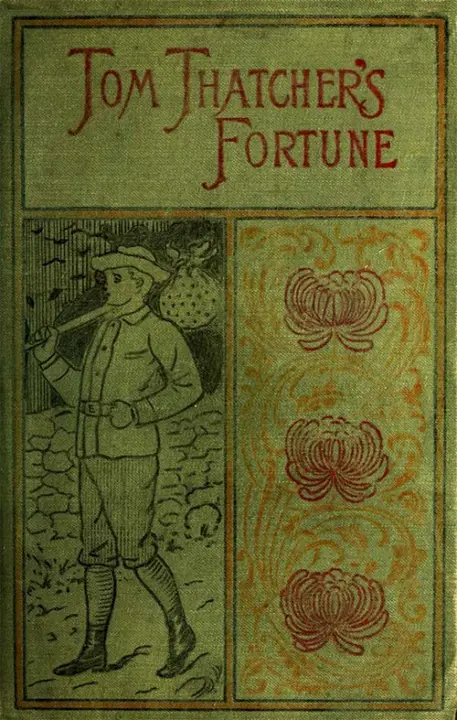
THE CLASSIC COLLECTION · 1888
"Tom Thatcher's Fortune" by Horatio Alger, Jr. is a novel written in the late 19th century. This coming-of-age tale revolves around Tom Thatcher, a sixteen-year-old boy who works in a shoe factory to support his family after his father's mysterious death during a gold rush in California. The story explores themes of social class, ambition, and resilience as Tom navigates his challenges and seeks a better life for himself and his family. The opening of the novel introduces us to Tom Thatcher, a hardworking boy who has just come home from a long day at the shoe factory, where he earns a meager wage. He shares dinner with his mother and little sister Tillie, conveying the family's struggles after losing their father. Through a conversation about his father's last letter and his missed fortune, we learn about Tom's determination to uncover the truth about his father's disappearance. The narrative sets the stage for Tom's journey filled with rivalry, self-discovery, and a yearning for a brighter future, while hinting at the contrast between his humble life and that of the wealthy characters in his world.
Introduction adapted from the source catalogue; source summaries may be automatically generated.
Free to read · English · 75,554 words · No account needed
MAKE TIME FOR A GOOD BOOK
On by default. Untick to stop anonymous reading totals. Each page counts after 10 seconds in view. How this works.
Anonymous counting is on unless you have switched it off.
“The boy must die!” said the interpreter.
“Then you may kill me, too, you bloody butcher!” exclaimed Peter Brush, tugging fiercely at his fettered hands.
“Calm yourself, friend Brush,” said Lycurgus Spooner. “Let me speak with the Indians. Perhaps I can convince them of their folly.”
“I’d like to argy the point myself,” said Peter.
Of course, Tom had heard all this, and the thought of the fate which seemed inevitable blanched his cheek and sent a cold chill to his heart.
What! at the age of sixteen must he die a violent death, because a young Indian boy was sick, a victim to the cruel superstition of a band of savages?
“God help me!” he murmured, with pale lips. “For the sake of my dear mother and sister, save me from this fearful fate!”
“This is terrible!” ejaculated Peter Brush, while in his excitement the big drops of perspiration gathered on his brow. “Kill me, Mr. Indian, and let the boy live. He is young, and his life is worth more than mine.”
“No good!” said the Indian. “A boy is sick. A boy must die.”
“Mr. Brush,” said Tom gratefully, “I will never forget this unselfish offer. You have offered your life for mine. You are a true friend.”
“But the brutes won’t accept my offer,” said Peter Brush, bitterly. “They are bound to shed your innocent blood, my poor boy. If I only had my revolver here, and loaded, I would kill some of them, or my name isn’t Peter Brush.”
“Be careful what you say, or they will kill you, too,” said Tom, in a
warning voice.
The interpreter stood aside. At a signal from the chief, two men advanced toward Tom. They took him up in their arms, and carried him to a young tree, of slender trunk, and deftly bound him with his back to the tree, facing toward the group.
“Are they going to kill Tom before our very eyes?” said Peter Brush, in
a tone of horror.
“It is indeed terrible!” said Lycurgus Spooner, in a state of agitation
almost as great.
“Oh, Tom, Tom, I wish I’d left you with that swindling Jim Dobson. He would only have robbed you, while I have led you to your death.”
“You couldn’t help it, Mr. Brush,” said Tom, his lips quivering. “It is hard, but I’ll try to meet it.”
“You thought God was going to help you!” exclaimed Brush, bitterly.
“It is not too late yet. He may save me yet. But Mr. Brush, I have a
favor to ask of you.”
“What is it? I will do anything in my power, Tom.”
Your reading position is saved on this browser. Take it to another device with a library code. Reading pages adapt to text, rather than matching a printed edition.
William Rounseville Alger & Horatio, Jr. Alger

William Rounseville Alger & Horatio, Jr. Alger

Horatio, Jr. Alger

Horatio, Jr. Alger
BEHIND THE BOOK
This eBook is for the use of anyone anywhere in the United States and most other parts of the world at no cost and with almost no restrictions whatsoever. You may copy it, give it away or re-use it under the terms of the Project Gutenberg License included with this eBook or online at www.gutenberg.org. If you are not located in the United States, you will have to check the laws of the country where you are located before using this eBook. Read the source licence.
The original source file, including credits and licence, is retained by this library. Request an original-format copy at no charge. Please include the book title and Project Gutenberg identifier #56896.
KEEP YOUR CURIOSITY GOING
Cécile Tormay

Moritz Busch
Coulson Kernahan
John L. Ransom

Maurice Baring
Frances Wright