THE CLASSIC COLLECTION✦Preston Fight; or, The Insurrection of 1715CLASSIC FREE BOOKS
Preston Fight; or, The Insurrection of 1715
William Harrison Ainsworth
THE CLASSIC COLLECTION · 1866
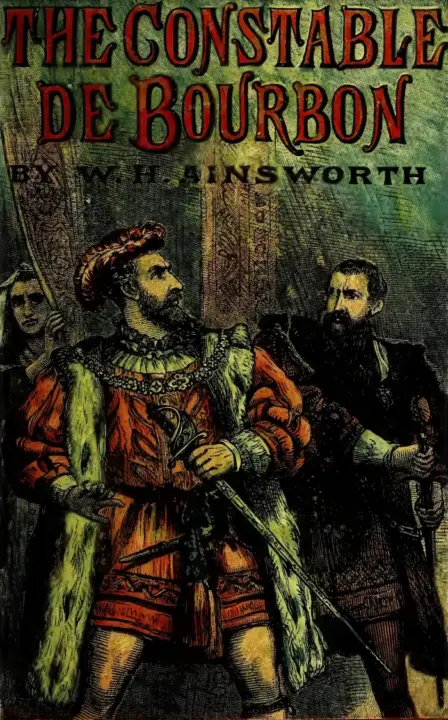
"The Constable De Bourbon" by William Harrison Ainsworth is a historical novel written in the mid-19th century. The narrative unfolds in the context of 16th-century France, focusing on the titular character, Charles de Bourbon, the Constable of France, who navigates the tumultuous political and personal betrayals at the royal court. Themes of ambition, rivalry, and the quest for power resonate throughout the story, highlighting Bourbon's struggles with King François I and the Duchess d'Angoulême. At the start of the novel, we are introduced to a grand cavalcade entering the Forest of Fontainebleau, heralding the arrival of Charles de Bourbon amidst a backdrop of royal and noble pageantry. As the opening unfolds, it meticulously details Bourbon’s illustrious yet contentious background, his noble stature, and the complicated relationships he maintains with the court, especially with the king and the duchess. Bourbon's discontent with his treatment at court, highlighted by past grievances and ambitions, sets the stage for a conflict that alludes to a potential rebellion against the king's authority, suggesting a menacing path forward filled with intrigue and dramatic confrontation.
Introduction adapted from the source catalogue; source summaries may be automatically generated.
Free to read · English · 118,233 words · No account needed
MAKE TIME FOR A GOOD BOOK
On by default. Untick to stop anonymous reading totals. Each page counts after 10 seconds in view. How this works.
Anonymous counting is on unless you have switched it off.
“I have been informed,” replied François, “that, forgetful of your allegiance to me, you have entered into a treasonable league with my enemies the Emperor and Henry VIII. This is what I have been told, cousin, but, as I have said, I am unwilling to believe it.”
“Sire,” replied Bourbon, “you have not been misinformed. Overtures have been made me by the Emperor and the King of England, who thought, not unnaturally, that the treatment I have experienced from your majesty must have deeply dissatisfied me.”
“They thought you were prepared to become a traitor,” cried François. “Foi de gentilhomme! I scarcely expected you to make so frank an avowal. They knew you to be ready to revolt--ha!”
“They knew I had endured wrongs enough to make me a rebel,” rejoined Bourbon. “But they were mistaken, sire--they were mistaken.”
“Then you rejected the offers?” said the king.
“I still indulged hopes that your majesty would render me justice.”
“Justice you shall have, cousin--strict justice,” rejoined the king. “Now listen to me. I suspect--nay, I am certain--that you are engaged in a conspiracy against me, and against the state. The two young Norman seigneurs, Matignon and D'Argouges, have disclosed the treasonable proposition made to them on your part by Lurcy. You look confounded, as well you may. You see I have ample proof of your guilt, but I can obtain plenty more by arresting all your principal adherents who are now assembled in this château. Not one of them can escape me.”
“Be not too sure of that, sire,” said Bourbon.
“You fancy you can protect them,” rejoined the king. “Learn that I am master of your castle. Its courts are filled with my archers--its walls are surrounded by my troops--its keys are in my possession. I have only to give the word to cause your arrest.”
“Your majesty will never give that word,” rejoined Bourbon, calmly.
“Wherefore not?” cried François, striding towards the door, as if with the design of putting his threat into execution. “What ho, there!--who waits?”
But the door was shut, and no one answered the summons, though the king repeated it still more lustily.
“What means this?” he cried, glancing furiously at Bourbon, who had risen from his couch, and thrown off his loose robe, showing that he was armed..
“It means, sire,” replied the Constable, “that the door will not be opened save at my order. Your majesty may be assured,” he added, with stern significance, “that those who enter this chamber will not arrest me.”
“Ha, traitor! do you mean me mischief?” exclaimed the king.
Your reading position is saved on this browser. Take it to another device with a library code. Reading pages adapt to text, rather than matching a printed edition.
William Harrison Ainsworth
William Harrison Ainsworth
William Harrison Ainsworth
William Harrison Ainsworth
BEHIND THE BOOK
This eBook is for the use of anyone anywhere in the United States and most other parts of the world at no cost and with almost no restrictions whatsoever. You may copy it, give it away or re-use it under the terms of the Project Gutenberg License included with this eBook or online at www.gutenberg.org. If you are not located in the United States, you will have to check the laws of the country where you are located before using this eBook. Read the source licence.
The original source file, including credits and licence, is retained by this library. Request an original-format copy at no charge. Please include the book title and Project Gutenberg identifier #49681.
KEEP YOUR CURIOSITY GOING
Cécile Tormay

Moritz Busch
Coulson Kernahan
John L. Ransom

Maurice Baring
Frances Wright