
Love and liberty
Alexandre Dumas
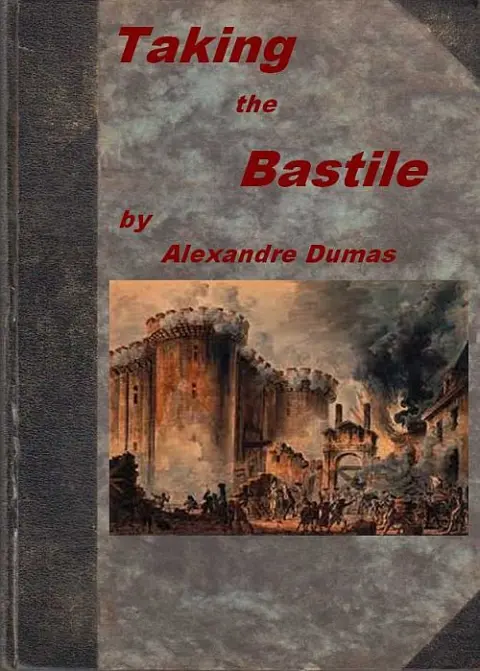
THE CLASSIC COLLECTION · 1891
"Taking the Bastile; Or, Pitou the Peasant" by Alexandre Dumas is a historical novel written in the late 19th century. The story centers around the tumultuous period of the French Revolution, focusing on the character of Ange Pitou, a peasant boy who becomes embroiled in the unfolding events and strives to find his place amidst the chaos. Dumas weaves a tale of heroism, societal change, and the quest for liberty, encapsulated in the dramatic moment of storming the Bastille. The opening portion of the novel introduces us to a young man named Gilbert, who ventures through the snow-covered countryside to find a peasant woman, Madeline Pitou. He brings with him an infant to be raised at her cottage, a child whose birth has been surrounded by tragedy as both parents have died. As Gilbert entrusts the child to Madeline, he expresses both hope and sorrow for the boy's future. Through his interactions with Madeline and her family, we see the warmth and complexities of rural life, as well as the undercurrents of change looming on the horizon. The introduction sets the stage for the emergence of the protagonist, Ange Pitou, hinting at themes of loss, parental bonds, and the significant impact of the upcoming revolution on personal and societal levels.
Introduction adapted from the source catalogue; source summaries may be automatically generated.
Free to read · English · 76,316 words · No account needed
MAKE TIME FOR A GOOD BOOK
On by default. Untick to stop anonymous reading totals. Each page counts after 10 seconds in view. How this works.
Anonymous counting is on unless you have switched it off.
Strange was the sight of this sad and silent edifice, for four centuries threaded solely by the warden and his turnkeys, become the strolling ground of any tatterdemalion: the crowd roamed over the garden, up and down the stairs, buzzing like a swarm of bees, and filling the granite hive with bustle and uproar.
Billet for an instant watched Launay, carried rather than dragged, seeming to hover over the multitude. But he was gone in a space. Billet sighed and looking round him and seeing Pitou, said as he darted towards a tower:
"The Third Bertaudiere."
A trembling jailer was in the way.
"Here you are, captain," he answered: "but I have not the keys, they
were taken from me."
"Brother, lend me your ax," said Billet of a neighbor.
"I give it you, for it is not wanted now we have taken the old den."
Grasping the weapon, Billet dashed into a stairway, conducted by the warder. The latter stopped before a door.
"This is No. Three, Bertaudiere Tower," said he.
"Is the prisoner here, Dr. Gilbert?"
"Don't know the names."
"Only put here a few days ago?"
"Don't know."
"Well, I shall," rejoined the farmer, attacking the door with the ax.
It was of oak, but the splinters flew freely under the chops of the vigorous yeoman. In a short time one could peep into the room. Billet looked in at the cleft. In the beam of light from a grated window in the yard a man was visible in the cell, standing a little back, holding one of his bedslates, he was in the attitude of defense, ready to knock down any one intruding.
Spite of his long beard, pale face and his hair being close cropped,
Billet recognized Gilbert.
"Doctor, doctor, is it you? It is Billet who calls, your friend."
"Are you here, Billet, here?"
"Yes, yes, that's Billet, right here!" shouted the crowd; "we are here, in the Bastile, for we have taken it. You are free!"
"The Bastile is taken and I am free?" repeated the doctor.
Running both hands through the bars of the door he shook it so forcibly that the hinges and lock-bolt seemed likely to shoot out of the pockets. One of the split panels, shattered by Billet, fell clean out and was left in the prisoner's hands.
"Wait, wait," said the rescuer, seeing that such another exertion would exhaust the man's powers, too much excited; "wait."
He redoubled his blows. Through the gap the prisoner could be seen, fallen on his stool, pale as a sceptre and incapable of moving the broken beam again with which he had tried like a Samson to shake the Bastile down.
Your reading position is saved on this browser. Take it to another device with a library code. Reading pages adapt to text, rather than matching a printed edition.
Alexandre Dumas
Alexandre Dumas & Auguste Maquet
Alexandre Dumas
Alexandre Dumas
BEHIND THE BOOK
This eBook is for the use of anyone anywhere in the United States and most other parts of the world at no cost and with almost no restrictions whatsoever. You may copy it, give it away or re-use it under the terms of the Project Gutenberg License included with this eBook or online at www.gutenberg.org. If you are not located in the United States, you will have to check the laws of the country where you are located before using this eBook. Read the source licence.
The original source file, including credits and licence, is retained by this library. Request an original-format copy at no charge. Please include the book title and Project Gutenberg identifier #45424.
KEEP YOUR CURIOSITY GOING
Cécile Tormay

Moritz Busch
Coulson Kernahan
John L. Ransom

Maurice Baring
Frances Wright